733
Posts
552
Followers
Pasadena Media Foundation is dedicated to saving local news. Our publications feature provocative reporting about the Greater Pasadena and Greater Southern California areas.
‘Progress is not a branding exercise.’ Kody Christiansen
By Casey Coss,
15 hours ago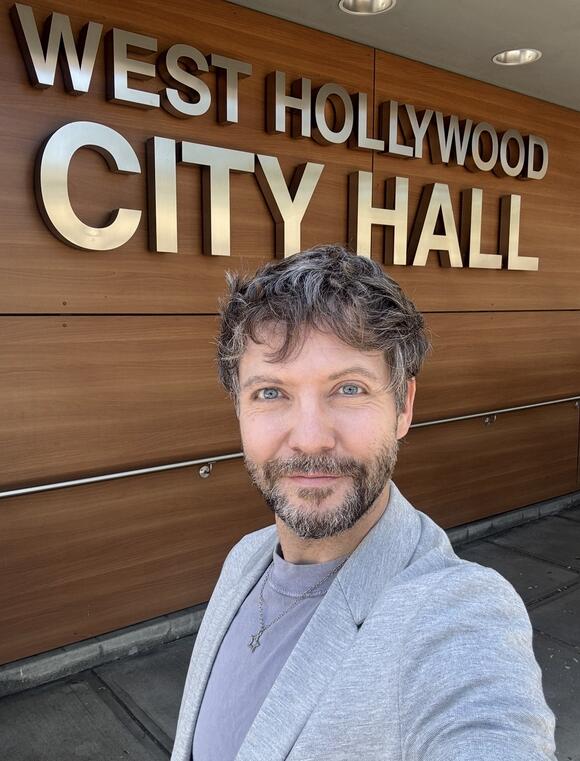
In this social media age when seeking political office is increasingly about candidates running away from their rocky pasts, it’s refreshing to meet a candidate whose life really is an open book. Kody Christiansen, running for one of the three open seats (at large) on the West Hollywood City Council, freely discloses his darkest days and most difficult struggles with drug addiction and homelessness, warts and all.
He wants to share what it took for him to overcome his demons and discipline his mind. And in his case, that discipline, along with drive, led to impressive academic achievements at Harvard University and the University of Cambridge, as well as authoring books and acting in TV and movies. Supported by his current pursuit of a Master of Public Administration at USC, Kody now wants to be considered for a role on the West Hollywood City Council in the upcoming November third election.
I asked Kody a few questions to reveal the character of the candidate behind his campaign platform. He eagerly took on the challenge in response to my queries.
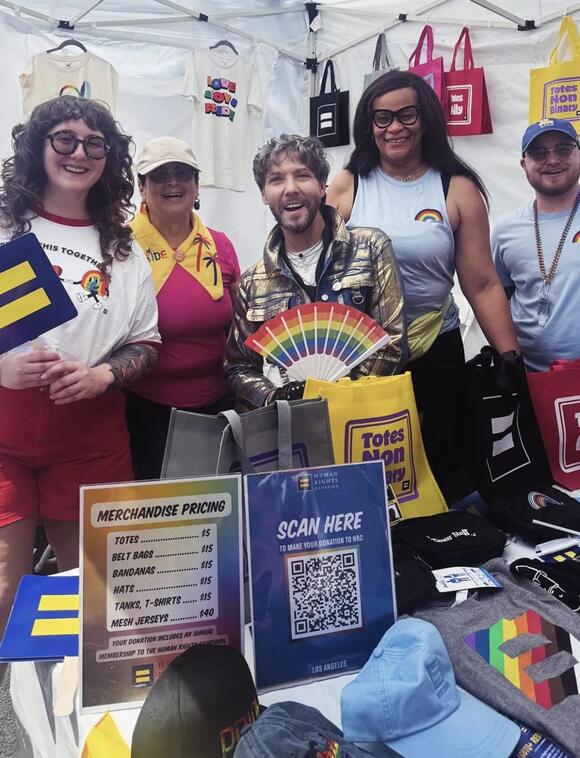
Does your recovery from addiction inform your campaign platform?
Even after eleven years sober, there are still moments when I look at my life and wonder how any of it was possible. There was a time when I was homeless on the Sunset Strip, struggling with addiction and unable to imagine much beyond surviving the day in front of me. Later, I found myself living in a shelter in Queens, New York. At that point, the idea that I would someday study at Harvard and Cambridge, write books, act in television shows and movies, and run for City Council would have sounded impossible. And yet, sobriety gave me the chance to build that life.
I earned degrees from NYU and Harvard, completed a master’s degree at the University of Cambridge, studied film at University College London and am now pursuing a Master of Public Administration at USC. I wrote two award-winning memoirs and built a career as a SAG-AFTRA actor, working in television and film. Now, I am running to serve the same city where the hardest part of my story began.
When I put all of that into one paragraph, it sounds like a neat comeback story. Real recovery was not nearly so tidy, though—no magical montage and no swelling soundtrack. There were appointments, paperwork, setbacks, painful truths, and so many amazing people who kept trying, even during the years when I had stopped trying for myself.
Case managers helped me navigate systems I did not yet understand. Health care professionals cared for me when I was not particularly good at caring for myself. Shelter workers, recovery organizations, counselors, friends and strangers saw possibilities in me that I could not see. Some of them may never know what became of the person they helped on an ordinary Tuesday, but I carry them with me in everything I do.
None of what followed would have been possible without sobriety, and my sobriety did not happen in isolation. It happened because my personal determination met community support. That is why I believe so strongly in wraparound care, including stable housing, physical and mental health care, substance use treatment, identification assistance, case management and a realistic way forward.
Too often, our system asks a person in crisis to become their own case manager. We expect someone who is simply trying to survive to navigate several agencies, keep track of documents, make appointments and advocate for themselves through a maze of disconnected services. Then, when they can’t, we call them resistant. We can do better.
I also believe compassion and accountability must work together. Compassion without a real plan can become another form of abandonment, while accountability without compassion can become punishment. The goal should never be simply to move someone out of sight. It should be to help that person move toward a life they may not yet be able to imagine.
So, yes, my recovery shapes the way I approach these issues because homelessness and addiction are not abstract policy topics to me. I remember what those nights felt like, and I know what becomes possible when the right help reaches someone at the right moment.
I went from being homeless to Harvard and Cambridge, and now, I hope, to City Hall. Not because City Hall is a trophy at the end of my story, but because it is where I can turn survival into service. So many people fought for a future I could not yet see for myself. Now, I want to help build a city that offers that same patience, care and belief to every person still struggling to see a way forward.
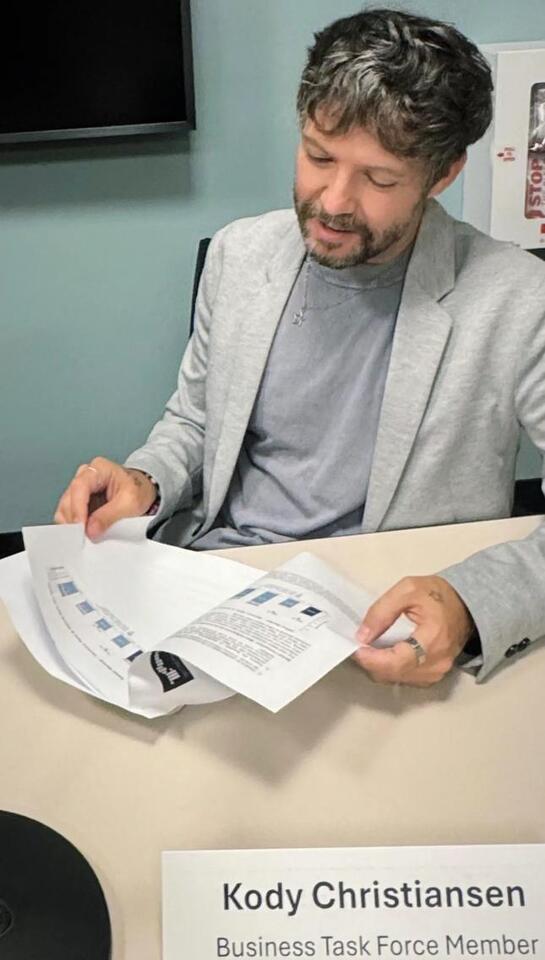
How difficult do you believe it is to govern a city as diverse as West Hollywood?
West Hollywood is less than two square miles, yet we somehow manage to fit an entire country’s worth of opinions inside it. Honestly, that is part of what I love about us.
Governing a city this diverse is difficult, and it should be. If leadership feels too easy, someone is probably not being heard.
Our renters, homeowners, seniors, young people, LGBTQ+ residents, workers, small business owners and individual neighborhoods do not always need or want the same things. A renter worried about losing their apartment, a small business owner trying to stay open, a senior attempting to cross the street safely and a person with a disability navigating an inaccessible sidewalk can all experience the same city very differently. Each of them deserves to be seen and heard.
A community with a conscience is not a community where everyone agrees. It is a community that can disagree without forgetting the humanity of the person on the other side.
Good government does not mean everyone gets everything they want from every decision. It means everyone has a genuine opportunity to be heard, understands how the decision was reached and knows whom that decision is intended to serve.
Having a conscience also means more than saying the right things. Our values must show up in our budget, housing policies, public safety decisions, sidewalks, support for local businesses and treatment of our most vulnerable neighbors.
To me, leadership begins with listening before deciding. It means reaching beyond the same familiar rooms, staying accessible when conversations become uncomfortable and treating residents as partners rather than an audience.
‘Persistence does not frighten me.’
What do you think will be the biggest obstacle(s) to achieving your goals?
The biggest obstacles will be rebuilding public trust and doing the difficult, often quiet work required to turn good ideas into real results.
A thoughtful proposal on a campaign website is only the beginning. Once elected, I would still need the support of at least two other council members, adequate funding, legal and practical review, capable implementation by city staff, and the public’s trust. That means building coalitions without losing the heart of the original idea.
There are also the realities of limited land, finite resources, state mandates and many legitimate priorities competing for attention. Turning an idea into a funded, functioning policy will require meetings, budgets, compromise and the persistence to keep working through the quieter, less visible stages of making it real.
We must also resist the urge to turn every issue into a false choice. We can support more housing while still insisting on thoughtful planning. We can believe in public safety while treating people humanely. We can support bicycle infrastructure where it makes sense while also demanding accessible sidewalks and practical transportation planning. We should be able to hold more than one good idea at a time.
Perhaps the most difficult obstacle will be convincing residents that their participation still matters. Many people have grown tired of speaking at public meetings only to leave feeling that the decision had already been made. Trust is not restored by words alone. It must be earned through transparency, consistent follow-through and leaders who continue showing up after the meeting ends.
Fortunately, persistence does not frighten me. My life is evidence that enormous changes are often built through small steps, repeated faithfully over time.
‘Our problem is not ambition.’
What is West Hollywood’s greatest asset and greatest liability?
West Hollywood’s greatest asset is its people.
West Hollywood may be small, but it has never thought small. It is defined by courage, creativity and a truly remarkable amount of personality packed into less than two square miles.
For generations, people have come here searching for freedom, community and the courage to become more fully themselves. Many arrived because somewhere else did not make room for them. West Hollywood did. It did that for me, too.
We are a city of survivors, artists, activists, entrepreneurs, small business owners, longtime residents, newcomers and chosen families. Some of us are several of those things before lunch. Our residents care deeply, speak loudly and occasionally bring a little spectacular flair to the proceedings. I would not have it any other way.
Our greatest liability is the growing distance between City Hall and the daily lives of the people it serves. Sometimes, in our eagerness to be bold, first or nationally noticed, we forget to ask a very simple question: Does this actually work for the people who live here?
Progress is not a branding exercise. A proposal can sound progressive and still leave residents unheard or fail the very people it was intended to help.
Our problem is not ambition. West Hollywood should be ambitious. The danger is ambition without enough listening, planning and follow-through.
The hopeful part is that our greatest asset is also the solution. When we bring the people of West Hollywood back to the center of every decision, there is very little this city cannot accomplish. That is what I mean when I talk about ‘Putting the WE back in WeHo.’
It is more than a campaign slogan. It is a promise to listen first, lead openly and remember that City Hall belongs to all of us.
Comments
YOU MAY ALSO LIKE
CJ Coombs
The Baby Jane Doe, who was abandoned in 1998 in Northeast Washington D.C. is still a mystery
Baby Jane Doe was found abandoned in Washington, D.C., on March 20, 1998. She would now be 28, according to the National Center for Missing and Exploited Children (NCMEC). As of today, seven missing children from Washington, D.C. are listed with the NCMEC, and the oldest case dates back to 1961. Notably, not all missing children are reported to the NCMEC, but they should be.
Dianna Carney
Three Gentle Giants Found Wandering Together: Now They Just Need Someone to Choose Them
Three Mastiff-mix dogs, Chance, Duncan and Isabel, are ready to trade their wandering days for permanent homes, according to the Scituate Animal Shelter of Massachusetts. The shelter recently introduced them with an invitation to adopters: “Meet Chance, Duncan + Isabel… three VERY big reasons to fall in love,” adding that each dog arrived after being found roaming together in Stoughton and is now looking for “a home of their own.”
CJ Coombs
Missing since 1973 from Creswell, Oregon: Deborah Lee Tomlinson just turned 16 when she disappeared
Deborah Lee "Debbie" Tomlinson has been missing from Creswell, Oregon (Lane County), since October 15, 1973, according to the National Center for Missing and Exploited Children (NCMEC). Her photo above (right) is an age-progressed likeness of how she might have looked at 58, though she would now be 68.
CJ Coombs
Missing since 2024 from Gary, Indiana: Ja'Niyah Aubrielle McMichael was only 13 when she vanished
Ja'Niyah McMichael has been missing from Gary, Indiana, since August 11, 2024, according to the National Center for Missing and Exploited Children (NCMEC). She was only 13 years old. She would now be 15. What happened to Ja'Niyah?
Pasadena Media Foundation is dedicated to saving local news. Our publications feature provocative reporting about the Greater Pasadena and Greater Southern California areas.
733
Posts
552
Followers