undefined
Posts
undefined
Followers
A 'Planetary Wave' Is Heading for California and Could Cause Major Effects
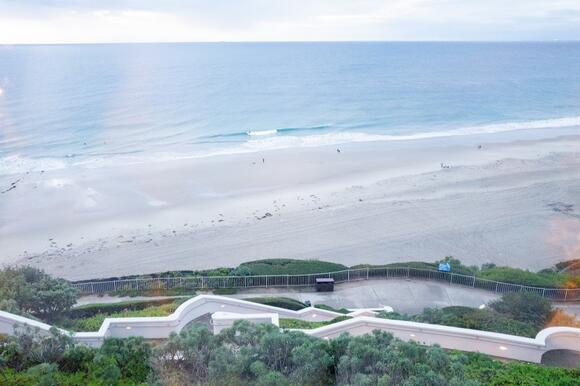
A sprawling ocean disturbance moving toward California could temporarily raise coastal water levels by several inches, increasing the potential for flooding and beach erosion as fall turns to winter.
The phenomenon is called a Kelvin wave, sometimes described as a "planetary wave" because of its enormous scale. Its significance comes from lifting the ocean's background water level, giving high tides and storm-driven surf a higher starting point.
Dillon Amaya, an assistant professor at North Carolina State University, told Patch in a September 15 report that the wave could reach the Los Angeles area in early October and raise coastal sea levels by roughly 6 to 12 inches. The disturbance would then continue north.
That timing is an estimate. Amaya said its arrival depends partly on locating the wave accurately and whether other ocean disturbances interact with it.
The science starts thousands of miles away, in the tropical Pacific.
During El Nino, trade winds that normally blow westward can weaken or briefly reverse. NOAA explains that this generates oceanic Kelvin waves that travel east along the equator. Once they reach the Americas, the disturbance can propagate north along the coast.
NASA reported in May that its Sentinel-6 Michael Freilich satellite had already detected several Kelvin waves in 2026. The satellite measures ocean height down to fractions of an inch, allowing researchers to follow changes that beachgoers would have difficulty spotting.
For California, a few extra inches can matter because they add to other coastal hazards.
NOAA explains that elevated West Coast sea levels allow high tides and strong surf to reach farther inland. Long-term sea-level rise has already reduced the margin between normal water levels and flooding in many coastal communities.
A Kelvin wave can add another temporary increase. If elevated water coincides with a high tide and powerful surf, flooding and erosion could become more severe. The arrival estimate alone does not establish when or where damaging flooding will occur.
The effects could also extend beneath the surface.
In a September 3 update, NOAA Fisheries explained that coastal Kelvin waves deepen the thermocline, the boundary separating warmer upper water from colder water below. Along with changes in winds, this can contribute to unusually warm coastal conditions.
Those changes can affect marine life. NOAA notes that market squid tend to move north during warm periods, with fishing fleets following them. Warmer conditions can also change the food available to young salmon.
Earlier Kelvin waves reached California in May and June, according to NOAA. The agency said their West Coast effects would likely be smaller than those expected this fall and winter.
For residents watching the coast, NOAA points to its Coastal Inundation Dashboard for observed and forecast water levels. As October approaches, the key will be how the elevated ocean overlaps with local tides, surf and storms.
 Add to Preferred Sources


