686
Posts
536
Followers
Pasadena Media Foundation is dedicated to saving local news. Our publications feature provocative reporting about the Greater Pasadena and Greater Southern California areas.
Don’t get rattled: the real story behind SoCal’s most misunderstood neighbor
By Tom Mills,
2 hours ago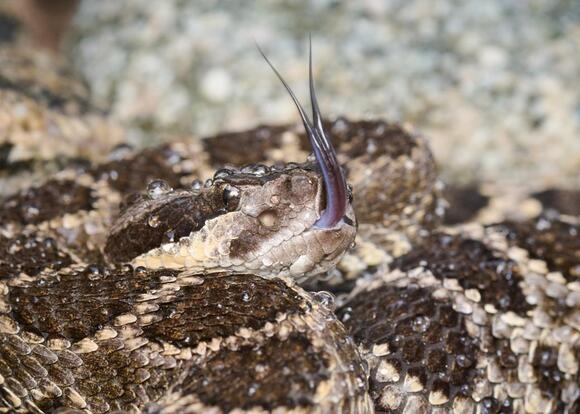
At the time of this writing, three Southern Californians have died following rattlesnake bites this year. A 46-year-old woman was bitten while hiking at Wildwood Regional Park in Thousand Oaks, California and a 25-year-old man was bitten while mountain biking in Irvine on February 1, 2026. According to news reports, he succumbed after spending about a month in intensive care. A third statewide rattlesnake death occurred in Northern California this year, making 2026 an unusually deadly year statewide (about double the historical average of under one death/year). Multiple outlets attribute this specifically to an unseasonably warm late winter that brought snakes out earlier than hikers expected — not increased aggression or population growth.
Understandably, these tragic events generated considerable media attention—and with it, a fair amount of speculation and concern. Are rattlesnake populations increasing? Are rattlesnakes becoming more aggressive? Is their venom becoming more potent? Do we need to control their populations? Should we stop hiking in our natural areas?
Despite these recent incidents, there is little reason to conclude that rattlesnakes are suddenly becoming more dangerous or that we need to fear our local wildlands.
That doesn’t mean rattlesnake bites are something to take lightly. They are serious medical emergencies requiring immediate and sometimes prolonged medical care, and they can result in permanent injury. But death from a rattlesnake bite remains extraordinarily rare. According to the Centers for Disease Control and Prevention, an estimated 7,000 to 8,000 people are bitten by venomous snakes in the United States each year, with only a handful of resulting deaths. In California, there are roughly 200–300 reported rattlesnake bites annually, with an average of zero to one death per year.
So why devote an entire article to rattlesnakes?
Why? Because there is far more to these remarkable animals than their reputation suggests. Rattlesnakes possess an astonishing array of sensory abilities, a highly sophisticated venom-delivery system, an incredibly unique defensive warning system and fascinating hunting and reproductive behaviors. Gaining a better understanding will not only allow us to appreciate them but also keep us safer in their presence.
But full disclosure…I’m an official, card-carrying reptile nut and have been since I was a little boy. I love snakes in general but have a special fascination with rattlesnakes. I spend a lot of time finding them in the field, observing and photographing them.
Meet the Southern Pacific rattlesnake
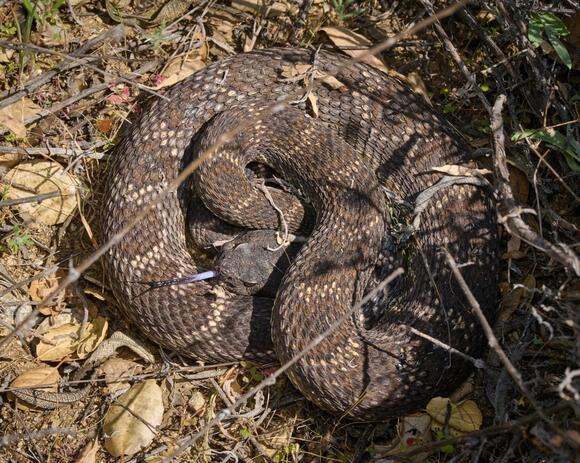
California is home to seven species of rattlesnake, but the snake that concerns most of us here in the Pasadena area is the Southern Pacific rattlesnake, Crotalus oreganus helleri.
This is a large, highly variable snake that reaches roughly 4 1/2 feet in length. It occupies an impressive range of habitats, from coastal dune grassland, riparian corridors, oak woodland, chaparral and high-elevation mountain forests.
And yes, that includes all of the Angeles National Forest.
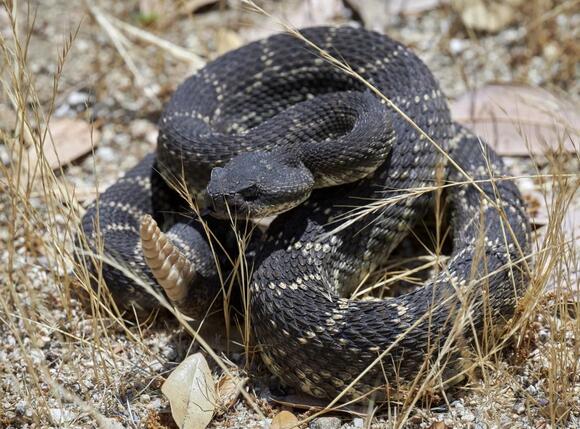
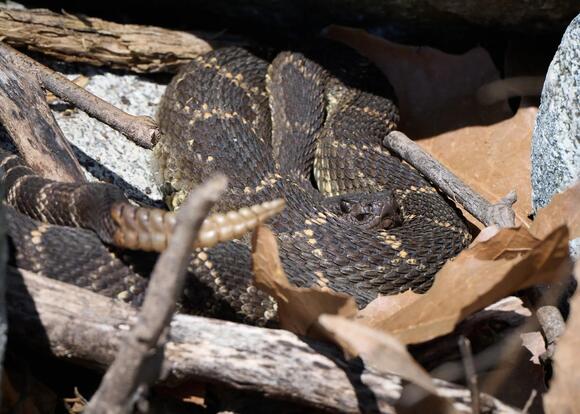
Southern Pacific rattlesnakes can be surprisingly variable in appearance. Young snakes are generally lighter, with dark blotches that contrast sharply against a gray, tan or buff background. As they mature, many become progressively darker. Some old adults can be so dark brown or black that their pattern is difficult to see.
This variability is one reason I always encourage people to learn the basic shape and behavior of a rattlesnake rather than relying entirely on color or pattern for identification.
There are plenty of myths about snakes. Unfortunately, many of them are repeated so often that they begin to sound like facts.
The truth is considerably more interesting.
A snake with superpowers
Like all reptiles, rattlesnakes are ectotherms. They don’t generate and maintain a constant internal body temperature the way mammals and birds do. Instead, they regulate their temperature by moving around within their environment.
That’s why the same snake that may be lying in the morning sunshine can later disappear beneath a rock, log or shrub when the temperature rises.
And rattlesnakes have an astonishing collection of sensory equipment to help them do exactly that.
Sight: Rattlesnakes have reasonably good vision for detecting movement but aren’t particularly good at seeing fine detail. Their eyes contain a high proportion of rod cells, giving them useful low-light vision, along with cone cells that provide some color vision.
Infrared radiation/heat detectors: This is where things get really interesting. Like other pit vipers, rattlesnakes have two heat-sensing organs located between their eyes and nostrils. These are the famous “pits” that give pit vipers their name.
The pits allow a rattlesnake to detect incredibly small temperature differences. In practical terms, these paired heat-sensing pits enable rattlesnakes to build a sort of binocular thermal image of its surroundings, allowing it to detect warm-blooded prey even in darkness.
Research also suggests that these heat-sensing organs play an important role in thermoregulation, helping rattlesnakes locate places to warm themselves—or escape from potentially lethal heat.
Hearing/Vibration: Rattlesnakes don’t have external ears or eardrums, but that doesn’t mean they’re deaf.
They possess an inner ear and a small bone called the columella that allows them to detect low-frequency sounds. They are also extremely sensitive to vibrations transmitted through the ground. For an animal whose entire body is in contact with the earth, this makes perfect sense.
A mouse moving through the vegetation and a hiker approaching along a trail are producing very different vibrations—and the snake is capable of detecting both.
Smell and Taste: Rattlesnakes, like other snakes, have an excellent chemical-sensing system.
Their forked tongue collects scent particles from the air and from surfaces. Those particles are delivered to an organ in the roof of the mouth called the vomeronasal, or Jacobson’s, organ. The forked tongue provides something approaching stereo scent. By comparing chemical information collected by the two sides of the tongue, the snake can determine which direction a scent is coming from.
I think of the Jacobson’s organ as an onboard computer displaying a map of the snake’s world, crisscrossed with scent trails left by other animals.
Some trails are old. Some are new. Some signal food. Others signal danger.
During mating season, female snakes leave pheromone trails that males can follow. And where males follow females, competition can arise.
Male rattlesnakes sometimes engage in spectacular ritualized combat, intertwining their bodies and attempting to push one another to the ground. In rattlesnakes, this can involve the front third of the body being raised dramatically into the air as the two combatants wrestle. It’s one of the stranger—and more entertaining—sights in the local reptile world.
Those fangs aren’t just for show
Rattlesnakes also possess a remarkably sophisticated venom-delivery system.
Their two large, hollow fangs fold backward against the roof of the mouth when not in use. When the snake strikes, the fangs swing forward and inject venom into the victim. The fangs are rather delicate structures and are regularly damaged or broken, only to be replaced by backups that are constantly being grown.
Venom is an extraordinarily complex subject, and there is much more to it than the old “hemotoxic versus neurotoxic” explanation suggests. Southern Pacific rattlesnake venom contains a mixture of compounds that can damage tissue and interfere with normal physiological processes. Southern Pacific venom is notably complex, often combining tissue-damaging components with neurotoxins that target the nervous system.
One thing worth knowing is that rattlesnakes can control the amount of venom they deliver. Not every bite results in the same amount of venom being injected, and some bites are “dry,” meaning little or no venom is delivered.
This brings us to one of the most persistent rattlesnake myths: Baby rattlesnakes are not more dangerous because they can’t control their venom.
They can.
A young rattlesnake is certainly capable of delivering a medically significant bite. Still, the idea that babies automatically inject all of their venom because they haven’t learned to control it is wrong.
If you are bitten:
- Do not waste time identifying the snake.
- Do not cut the wound, apply a tourniquet, or suck out venom.
- Do remove rings, watches, or restrictive clothing near the bite area.
- Do seek immediate emergency medical care.
The snake doesn’t need to be brought along for identification. Modern medical treatment is based on the patient’s condition and appropriate clinical assessment—not on turning the emergency room into a snake-identification contest.
Rattlesnake feeding and defensive behavior
As a snake nut and nature photographer, I spend a fair amount of time looking for rattlesnakes.
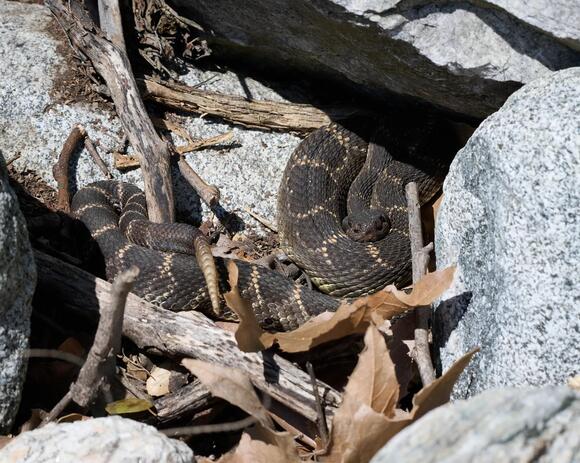
They are actually excellent photographic subjects due to two factors: First, because rattlesnakes are “sit and wait” ambush predators, they are often found coiled up, waiting for prey to pass by. Second, when they perceive a threat, they often assume a coiled defensive stance, facing the threat (in this case, me with my camera).
It is easy to forget that while rattlesnakes are predators, they are also prey. Here in Southern California, they occupy a rather precarious position in the food web. Hawks, owls, herons and egrets may prey upon them, as may bobcats, mountain lions, coyotes, badgers, foxes and humans. Even a well-equipped rattlesnake has plenty of reason to be wary of large animals approaching it.
This helps explain an important aspect of rattlesnake behavior. A rattlesnake does not know whether the large creature approaching it is simply passing by, looking for a meal or about to attack. Its first line of defense is generally to avoid detection. If that fails, it may attempt to retreat or assume a defensive posture. The familiar coil, hiss and rattle are warnings: “I know you’re there. Don’t mess with me.” Many people mistake this behavior as aggression when it is actually born of fear. It is the behavior of an animal trying very hard not to become somebody else’s dinner.
Rather than chasing down their meals, rattlesnakes often position themselves along well-used rodent trails and patiently wait for dinner to come within striking distance. When engaged in this sit-and-wait hunting strategy, they are often found in semi-hidden, protected places along the edges of things like fallen logs, rocks, shrubs and other structures that provide cover and funnel the movements of small mammals.
In places where human habitation abuts natural areas, you may find rattlesnakes taking up positions along your home’s foundation, in flower beds, and often taking advantage of leaking hose bibs.
Young rattlesnakes will also eat lizards. I’ve occasionally found young snakes at the base of large trees, coiled with their heads resting vertically up the trunk waiting f or an unsuspecting lizard to happen by.
Rattlesnakes can climb surprisingly well, too, and may occasionally be found in low shrubs or small trees.
When prey comes within range, the strike is remarkably fast. The snake generally releases the prey almost immediately rather than holding on to it.
The venom does the rest. The snake then follows the dying animal’s scent trail, finds it and swallows the meal head first.
We can’t really appreciate the rattlesnakes’ highly evolved means of securing food until we consider the alternatives.
Non-venomous snakes that prey upon rodents must take an enormous risk each time they feed. Depending on the species, non-venomous snakes employ one of two methods to subdue their prey: constriction or simply overpowering and consuming it alive.
Constrictors – like King Snakes, Gopher Snakes and other local constrictor species – grab prey with their mouth and then suffocate it by wrapping coils around it and squeezing until the prey succumbs. Other species grab prey and consume it alive.
Rodents have large, sharp teeth, and they can put up quite a fight. Many snakes have battle scars from these encounters.
How not to have a bad rattlesnake encounter
So how does all of this information actually help you stay safe?
For starters, understand that rattlesnake habitat may include your own yard.
If you live along the wildland-urban interface, you may share your neighborhood with the same wildlife found in adjacent natural areas. In Southern California’s hot, dry climate, our irrigated yards can actually attract wildlife. Water, shade, vegetation and a steady supply of mice and rats can make a residential landscape a pretty appealing place for a rattlesnake.
When I’m out photographing in rattlesnake country, I pay attention to the same things the snake does: temperature, sunlight, shade and cover.
On a cool spring morning, I’ll look carefully at protected spots receiving direct sunlight. A rattlesnake may be there warming itself.
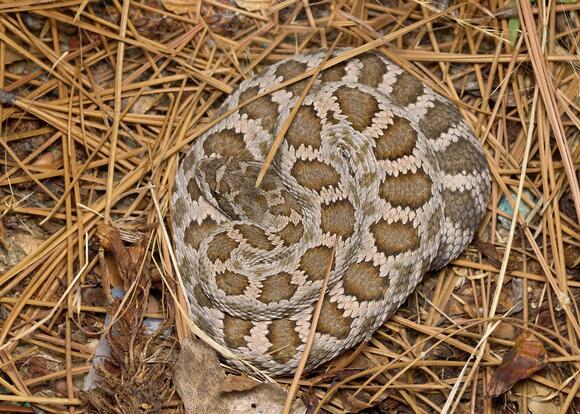
On a hot afternoon, I’ll pay more attention to shaded, sheltered locations where a snake can escape the heat.
During hot summer months, rattlesnakes, like many snakes, become nocturnal. So finding them involves either walking through their habitat with a flashlight or driving on secondary roads that pass through it.
The trick is to start thinking like a rattlesnake.
That doesn’t mean you need to become an expert herpetologist. It simply means understanding that a rattlesnake isn’t sitting out there plotting an attack on you. It is trying to survive. It wants to find food, regulate its body temperature, reproduce and avoid becoming somebody else’s lunch.
Most of the time, that includes avoiding us.
Give it the opportunity.
Stay on the trail when possible. Watch where you put your hands and feet. Don’t step over logs or rocks mindlessly. If you encounter a rattlesnake, give it plenty of room and let it move away.
And remember: that rattle isn’t an invitation to get closer for a better photograph.
I know this one from personal experience.
The best rattlesnake photograph is the one taken from a safe distance.
Publisher's Note: For more images of photogenic snakes by Tom Mills, visit his flicker page.

Comments
YOU MAY ALSO LIKE
CJ Coombs
Missing for 25 years from Phoenix, Arizona: Jesse Gabriel Florez was only 14 when he disappeared
Jesse Gabriel Florez has been missing since September 14, 2001, in Phoenix, Arizona (Maricopa County), according to the National Center for Missing and Exploited Children (NCMEC). His photo above is an age-progressed likeness of his current age of 39.
CJ Coombs
Jim O’Rear
Florida Man’s Poop Fight Goes Completely Off the Rails.
Folks, I’ve said it before and I’ll say it again: Florida is the only place where a disagreement over dog poop can apparently escalate into a felony case, an assault with a scooter, and enough body-cam footage to make Netflix start taking notes.
Margaret Minnicks
Update on Mia Bieniemy's progress after being shot by her son on Sunday in her Virginia home
Mia Bieniemy, wife of Kansas City Chiefs coach Eric Bieniemy, is out of intensive care and making progress, according to a statement released by the Kansas City Chiefs on Wednesday, July 29, 2026.
Pasadena Media Foundation is dedicated to saving local news. Our publications feature provocative reporting about the Greater Pasadena and Greater Southern California areas.
686
Posts
536
Followers