682
Posts
536
Followers
Pasadena Media Foundation is dedicated to saving local news. Our publications feature provocative reporting about the Greater Pasadena and Greater Southern California areas.
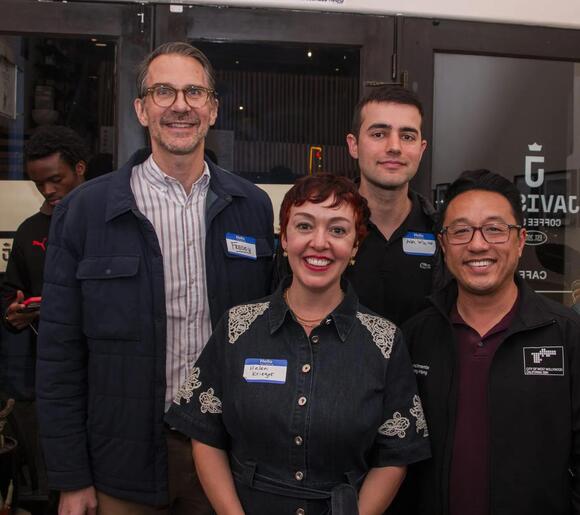
WeHo hasn’t grown in 42 years. Helen Krieger says that’s the problem
By Sheryl Turner,
5 hours ago
Q: There’s been reporting that suggests you oppose a “TODA” (transit-oriented development alternative) plan for SB 79. Is that accurate?
Krieger: No. That’s actually a mischaracterization. A local blog here has reported that I’m not in favor of a TODA plan. For the record, I personally am in favor of SB 79. West Hollywood is a dense city with extensive transit and can benefit from it. But if people want to customize the housing requirements to our city with an alternative plan, I’m fine with that too. What I wouldn’t want to do is use an alternative plan to delay putting anything in place.
Since SB 79 now applies in West Hollywood, I’m fine with developing our own alternative plan, for example, ensuring that housing developments along our commercial corridors have pedestrian-friendly ground-floor commercial space. Some people are nervous that housing will take over the Rainbow District and we won’t have bars anymore. That won’t be the case.
I also think we can look at the smaller neighborhoods. West Hollywood doesn’t have any single-family neighborhoods, but we do have some areas that traditionally had single-family homes and duplexes. In those areas, I’m willing to consider more transitional development so they don’t get seven-story buildings right away. Where I differ from some others calling for a TOD plan is that I don’t think we should put a velvet rope around any neighborhood and say no development. Every neighborhood has to grow a little and do its part.
Q: Why do you feel that way?
Krieger: We haven’t grown housing-wise since we became a city in 1984, so people aren’t used to growing or to change, even though that’s what normally happens in a city. I looked at the statistics: in the 42 years since we became a city, we’ve built 70 percent less housing than in the 40 years before we were a city. We almost ground housing production to a halt through really restrictive zoning laws and regulations.
Before we became a city, every neighborhood was growing and adding units. Then we became a city and suddenly stopped. I don’t think that expectation is healthy, because it means the people who need a city like West Hollywood, like LGBTQ people, people of different races, women, etc., can’t afford to move here. Unfortunately, the places building the most housing right now are places like Texas, and God bless Texas, but it’s not necessarily a place where a woman can go for freedom, or where a trans kid can grow up. It’s not a neutral place.
Q: You support “complete streets.” Can you explain what that means?
Krieger: Since the 1950s and ’60s, traffic engineers’ idea was that you need to move as many cars through a street as quickly as possible. Because of that, more than 99 percent of our public street infrastructure is built for private cars: driving on roads and parking along them. In a highly urban city like West Hollywood, where space is limited, you can’t just add lanes on a street like Fountain Avenue; you’d literally have to tear down houses to do that. We have limited street space, and so far we’ve only built it for cars, leaving everyone else to share it.
If you’re on a bus, you’re stuck in the same traffic as the cars. If you’re on a bike, you have to ride in the lane with cars and hope people don’t hit you, and it’s genuinely hard to ride a bike in traffic because starting and stopping are when a bike loses its balance. So people split lanes, riding between parked cars or between two moving cars, and then drivers say, ‘the bike swerved around me, I almost hit it.’ Well, yes, there was nowhere else for it to go.
Q: Fountain Avenue specifically has come up a lot. What’s the history there?
Krieger: I’ve lived on Fountain Avenue for the ten years I’ve been in West Hollywood, in a few different apartments. It’s where the apartments are cheapest, because it’s a terrible road. Through most of Los Angeles, Fountain is one lane in each direction for four or five miles. But the moment you cross La Brea into West Hollywood, it becomes two lanes in each direction, and you become roughly three times more likely to be killed or seriously injured on that stretch whether you’re a driver, a pedestrian, or a cyclist; the rate is actually a bit higher for pedestrians.
The reason is that in the 1960s, Los Angeles wouldn’t let them widen the rest of Fountain. However, our stretch was still unincorporated land, so they were able to do some really terrible street design here: they cut down all the trees that used to line the street and narrowed the sidewalks to fit a second lane of traffic. The sidewalks have not been ADA-accessible since. In some places there’s 12 inches or less between a street pole and the hedge you can’t get a stroller through, you can’t get two people walking side by side through, you can’t get a dog through, let alone someone with a wheelchair or a walker.
Fountain is also our street with the most apartment buildings; it’s the longest residential street in West Hollywood. People often move there when they’re younger, but then they age in place, and twenty years later they may need a walker on a street with ADA-accessible sidewalks. The city has known for a long time that this needs to be fixed. It’s a lawsuit waiting to happen, honestly. It’s a moral failing; it’s the right thing to do to make it accessible. But you can’t do it without taking away a lane of traffic, and people have gotten used to cutting through Fountain like it’s their own highway.
Q: So what is the city doing about it?
Krieger: Once the city accounted for all the accidents occurring there and residents began asking for a safer street with less speeding, the city decided to widen the sidewalks. In the space left over, which won’t take a full lane, more like an additional 24 inches, they’re putting in bike lanes. The city surveyed residents on whether they wanted bike lanes right next to parked cars, like on Santa Monica Boulevard, or protected bike lanes, and the majority chose protected. To protect them, the city needs additional space, so they’re removing parking on the north side of the street.
The project has two phases. One neighbor has filed a lawsuit arguing that the project needs CEQA review; the city says the project is categorically exempt and is fighting the lawsuit. But phase one should start next month or in October. It’s a temporary pilot: removable, 3D-printed curbs will protect the new bike lanes, and the city will paint out the additional sidewalk space so it feels better and safer to walk, though it won’t be fully ADA-accessible yet. Phase one is funded by a CARB grant from the California Air Resources Board, so polluters are essentially paying for it.
Phase two is where everything becomes permanent: sidewalks get rebuilt, light poles get moved, storm drainage gets relocated, and the city will bury the overhead electrical cables and update that infrastructure while the street is already torn up. Phase two will be more expensive around $40 million and will take more time, which is why it’s second: the city wants to work out any issues during the pilot before making it all permanent.
I support this project. It updates infrastructure we’ve needed for a long time, brings the sidewalks up to ADA standards, and makes the street safer. You have to choose your battles; you can’t treat every street as car-priority-only, because if any change that affects cars gets automatically stopped, you get what’s called induced demand: there’s no way to get around safely except by car, so everyone drives. In denser American cities especially, we have to start sharing street space with other modes of transportation. I’m not saying split it evenly among cars, bikes, and pedestrians. Cars might still get 80 percent of the space, but we do have to give a little on the corridors that are already dangerous and would benefit from it. Fountain is a great example of that.
Q: Where do you stand on Flock camera surveillance?
Krieger: Until a couple of months ago I was on the fence. My thinking was: if we need this technology, we’ll be glad we have it. There was a hit-and-run on Fountain Avenue last year. A driver hit a 27-year-old cyclist and just left him in the middle of the road at 9:30 at night. Luckily, someone driving behind him caught video of the whole thing, including the license plate, and turned it over to police. My thought was: what if that hadn’t happened? Wouldn’t we want cameras that could tell us where that driver went?
But the more I’ve talked to tech people, including people who teach firmware and AI at USC, the more they’ve told me this is a problem. Tech companies often overstate how accurate and detailed their technology actually is. With Flock specifically, there’s a 35 percent error rate: the AI creates a “digital footprint” of a car the license plate plus scratches or dents and tracks it between intersections, but 35 percent of the time it’s wrong.
It’s also not like a red-light or speed camera that only activates when someone breaks the law. It photographs every license plate that passes, 24 hours a day. For a city like West Hollywood, with a large immigrant community, Russian- and Spanish-speaking residents, an LGBTQ community where not everyone is out, and a Planned Parenthood in the city, that matters.
Q: What happens to the data itself?
Krieger: Technically, West Hollywood owns the data, but the tech company possesses it. Even though Flock says it deletes footage after 30 days, they can still aggregate it. That aggregated data doesn’t appear to have the same 30-day deletion limit as the original data. It’s also not anonymized. It’s tied to your name and sits in a system that West Hollywood’s local sheriff’s station says only two people can access, but it also passes through Flock’s own data center and multiple other channels. Flock has worked with the Department of Homeland Security before and has given data to ICE. Police departments elsewhere have used it specifically for immigration enforcement and to investigate people seeking reproductive care. I don’t think it’s a good vendor right now.
Q: So what would you want to do instead?
Krieger: I’d want West Hollywood to develop its own digital privacy policy. The specifics would need to go through a staff report and input from the tech community, but I know San Jose and Chula Vista both have digital privacy policies, and they differ. I believe San Jose allows Flock cameras but has designated certain sensitive areas near schools, reproductive health centers and gay clubs where there are no cameras. Part of our policy could map out where residents can expect privacy and where they can’t.
It could also set out a public engagement process for adopting any new surveillance technology that requires public notice, with a certain number of public meetings, at least one on a weekend, so there’s an agreed process the whole city buys into. It could allow certain cameras but require a human in the loop, as with red-light cameras: a photo is taken only when someone breaks the law, and a person reviews it before a ticket is issued, rather than letting an algorithm decide. It’s something the whole city should have a role in shaping, and residents should be given more notice about.
Q: You mentioned the companies also aren’t fully truthful about not selling data.
Krieger: That’s true. Even if a company says today that it doesn’t sell data to third parties, it could change that policy tomorrow, because it’s not a government entity bound by public standards. They’re a private company whose goal is to make money for shareholders, whether through a future sale of the company or otherwise.
Q: Of everything on your platform, what do you think is most achievable in a single term versus more of a long-term vision?
Krieger: Getting phase two of the Fountain Avenue project started at least beginning that work and identifying the funding, hopefully through grants is something I’m committed to within a four-year term, since that’s the phase most people really care about: the wider, ADA-accessible sidewalks.
What might be a more surprising answer is that I think we can start bringing down housing costs in West Hollywood within a 4-year term. It’s already happening in a small way. The population kept growing statewide, but our own population has stayed basically flat for 42 years, not because people don’t want to move here, but because we haven’t built anywhere for them to go.
Recently, though, state fair-housing and housing-accountability laws have forced some housing to get built here whether the city wanted it or not. At a recent Rent Stabilization Commission meeting, we had a whole city department that monitors rent-controlled buildings, rents and housing stock over time. Staff reported that the average rent in West Hollywood so far in 2026 is $3,119. That blends brand-new market-rate units with someone who’s been in a rent-controlled unit paying maybe $800. It’s high compared to the national average, but it’s actually down just under 2 percent from 2025, and the reasoning was that we’ve added more units. Countywide, LA County added about 15,000 units last year while roughly 28,000 people left the county. Demand went down a little, supply went up a little, and apartment rents in LA County are now at a four-year low.
We can continue that downward trend over four years if we keep building and keep supply up, which means streamlining the permitting process. Right now, it takes about 2 years to secure entitlements for most housing developments. But developers still have to hold the property for two years, pay interest and pay land-use consultants to attend endless city meetings where residents show up to oppose a project.
There was a bill headed to city council a couple of months ago to streamline housing approvals that conform with zoning and state law. It got delayed after some residents filed a complaint, and the council voted to pause all housing-related items until that’s resolved. It’s another example of how even the bill meant to speed up housing keeps getting delayed.
Q: Tell me one thing about you that’s not on your website.
Krieger: I’m a TV writer, mainly in comedy rooms, and I’m a middle child; I have three siblings, so I’m one of two middle kids. Both of those experiences make me a collaborative person who’s willing to listen to others and incorporate their ideas. In television writing, the rule is: don’t point out a problem unless you’re also going to pitch a solution. I notice in politics that people sometimes point out problems, which is called “pulling the thread”: one small critique leads to another and another until the whole sweater is gone and all the work anyone’s done is undone.
There might be a small problem with something, but unless you have a pitch, keep your mouth shut until you find one. Once in a while it’s fine to say, “I don’t have a solution, but here’s the problem.” I think politics should work the same way. Most of the time you should be pitching solutions, because it’s easy to tear something down by saying it won’t work, but the real question is what you’re bringing that’s actually generative and makes things better for people. A city council member should maybe get to say once or twice a year, ‘I don’t have the solution, but I have a problem with this.’ The rest of the time, you should be pitching solutions.

Comments
YOU MAY ALSO LIKE
CJ Coombs
Missing for 25 years from Phoenix, Arizona: Jesse Gabriel Florez was only 14 when he disappeared
Jesse Gabriel Florez has been missing since September 14, 2001, in Phoenix, Arizona (Maricopa County), according to the National Center for Missing and Exploited Children (NCMEC). His photo above is an age-progressed likeness of his current age of 39.
Margaret Minnicks
Update on Mia Bieniemy's progress after being shot by her son on Sunday in her Virginia home
Mia Bieniemy, wife of Kansas City Chiefs coach Eric Bieniemy, is out of intensive care and making progress, according to a statement released by the Kansas City Chiefs on Wednesday, July 29, 2026.
Jim O’Rear
Florida Man’s Poop Fight Goes Completely Off the Rails.
Folks, I’ve said it before and I’ll say it again: Florida is the only place where a disagreement over dog poop can apparently escalate into a felony case, an assault with a scooter, and enough body-cam footage to make Netflix start taking notes.
CJ Coombs
CJ Coombs
The 2021 tragic disappearance of 18-month-old Kytana Ancog in Aiea, Hawaii: Frustrating justice
Kytana Ancog has been missing from Aiea, Hawaii (Honolulu County), since January 31, 2021, according to the National Center for Missing and Exploited Children (NCMEC). She disappeared when she was 18 months old and would now be a beautiful seven-year-old child if she were alive.
Pasadena Media Foundation is dedicated to saving local news. Our publications feature provocative reporting about the Greater Pasadena and Greater Southern California areas.
682
Posts
536
Followers