4K
Posts
10K
Followers
Good food. Good people. Good living. Localish is all about bringing out the good in America’s cities.
Chinatown celebration of 'Hungry Ghosts' seeks to scare away taboos about death
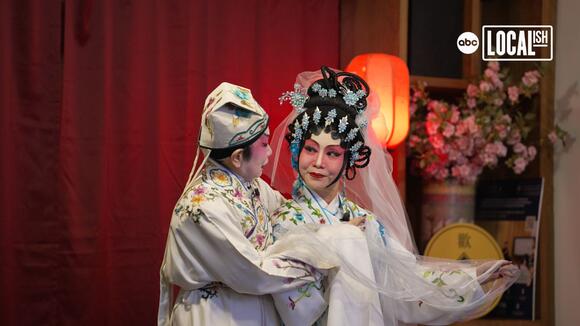
Growing up in Vietnamese Chinese communities in Virginia and Southern California, Harry Trinh was no stranger to the traditions and festivals celebrated in Chinese culture. But of all the festivals celebrated in his family and community, he noticed something different about the topic of death.
"I think a huge thing that happens to festivals about death in Chinese culture is that we don't talk about it," said Trinh. Festivals such as the Hungry Ghost Festival are far less known to people than other traditions, and when they are brought up, the conversations are often centered on taboos and caution: don't go out late at night, hang laundry outside, or do anything that might attract haunting spirits.
Now, as the head of creative of Welcome to Chinatown, a nonprofit supporting small-business entrepreneurship in New York City's Chinatown, Trinh wants to challenge this old notion. On Aug. 30, he hosted the first Hungry Ghost Festival Theater in the organization's event space on the Bowery, celebrating this traditional festival that honors "wandering ghosts" with dozens of audience members.
Taking place in the seventh month of the lunar calendar, the Hungry Ghost Festival honors those who did not receive a proper burial. In Chinese folk belief, this is when the gates of hell open, and the spirits of the deceased wander back to the mortal realm, seeking entertainment and nourishment. In Southern China, Taiwan and other regions with Chinese diaspora communities, people set up altars and offer food for these spirits, and conduct rituals like burning incense and joss paper. They also build temporary stages, where opera performers put on a show, and leave some seats open for the spirits. The purpose of these practices is to bring peace to these spirits and prevent them from haunting the living.
Taking inspirations from celebrations in Asia, Trinh placed a traditional flower plaque above the stage, as well as a little altar on the side stacked with offerings.
The event featured a Cantonese Opera performance of "The Return of Soul at the Peony Pavilion," with a band of musicians from Chinatown. It also highlighted younger Asian American artists, a lot of whom blend Chinese traditional music with contemporary styles.
Through hosting this theater, Trinh wanted not only to introduce the Hungry Ghost Festival to more members of the community, but also shift the focus around it from avoiding taboos to highlighting a unique aspect of how Chinese culture understands death.
"I hope by doing this relatively large-scale event, it gets people talking about how we do have this version of honoring the past, that is past just taboos and not to dos," said Trinh. "but more about how to honor these people who are frankly not paid attention to, or forgotten about."
Comments
YOU MAY ALSO LIKE
Margaret Minnicks
Thomas Smith
CJ Coombs
Missing since 1980 from Chicago, Illinois: Sheila Quinn was four when she vanished from her bedroom
Sheila Renee Quinn has been missing from Chicago, Illinois (Cook County), since February 27, 1980, according to the National Center for Missing and Exploited Children (NCMEC). Her photo above is an age-progressed likeness of how she might have looked at 37, though she would now be 51.
CJ Coombs
The murder remains of "Jane Anchorage Doe 1980," found in Eklutna, Alaska
Jane Anchorage Doe 1980, also known as Eklutna Annie ("Annie"), was discovered in Eklutna, Alaska, on July 17, 1980, according to the National Center for Missing and Exploited Children (NCMEC). Annie was believed to be between the ages of 16 and 25.