724
Posts
551
Followers
Pasadena Media Foundation is dedicated to saving local news. Our publications feature provocative reporting about the Greater Pasadena and Greater Southern California areas.
California approves deer removal plan on Catalina Island
By Barbara Bishop,
6 hours ago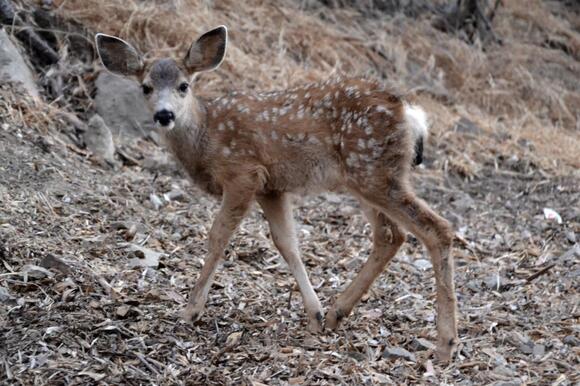

Species that grow nowhere else in the world. Photo: Wikicommons
For nearly a century, mule deer have wandered the rugged hills and quiet canyons of Catalina Island. To generations of residents and visitors, the sight of a deer standing against a lush hillside has become part of the Catalina experience. Yet today, the future of these animals is at the center of an emotional debate about wildlife, conservation and what it means to protect an island.
The story began in the early 1930s, when approximately 22 mule deer were brought to Catalina for sport hunting. They were not native to the island. With no natural predators and nowhere to migrate, their population grew dramatically. By the 1940s, wildlife biologists estimated that roughly 2,000 deer inhabited Catalina.
Over the decades, the deer became a familiar presence. Visitors photographed them, residents encountered them near their homes, and hunters participated in Catalina’s long-running deer-hunting program. But beneath this picturesque scene, scientists and conservationists became increasingly concerned about what the deer were doing to an ecosystem that had evolved without large native herbivores.
According to the Catalina Island Conservancy, deer consume native plants and young seedlings faster than many can recover. The organization says this browsing has contributed to the spread of invasive grass, erosion, loss of wildlife habitat and increased wildfire concerns.
That brings the story to the present—and to controversy.
In January 2026, the California Department of Fish and Wildlife approved a restoration permit allowing the Conservancy to move forward with removing Catalina’s non-native mule deer. After an earlier proposal involving aerial shooting generated intense opposition, the plan was changed. The current program uses trained wildlife professionals working from the ground.

Opponents have challenged the removal effort, arguing that the deer have become a valued part of Catalina and that alternatives should be pursued. Supporters of removal maintain that eliminating the deer is necessary to allow the island’s native ecosystem to recover. The disagreement has brought together residents, conservationists, animal-welfare advocates, hunters and public officials with sharply different views about what Catalina’s future should look like.
This month, after a court declined to halt the initial phase, professional crews began a limited removal expected to affect approximately 200 deer. The larger program is planned to continue over several years. Catalina’s final recreational deer-hunting season is also scheduled for October through December 2026.
The future Catalina envisioned by the Conservancy is one in which native plants return, watersheds recover, and the island becomes more resilient to drought and wildfire. But achieving that vision could ultimately mean the disappearance of the wild mule deer that have roamed Catalina for almost 100 years.
And therein lie difficult questions at the heart of this story: are the Mule Deer population still outsiders, or have generations of life on the island earned them a place in Catalina Island’s future? Generation after generation has been born, lived and died on the island. Today’s deer did not choose to come to California, and removing them raises an ethical question in addition to the ecological question.
Closer to home, Altadena’s Mule Deer tell a different story
Sixty miles from Catalina, the mule deer of the Altadena foothills are facing the opposite question. While Catalina’s herd descends from about 22 animals introduced for sport hunting in the late 1920s and 1930s, the mule deer above Altadena and in Eaton Canyon are native—a long-standing part of the San Gabriel Mountains ecosystem, sharing the landscape with native predators like mountain lions, bobcats and coyotes.
It’s the reverse of Catalina’s dilemma: there, an introduced population without natural checks has been judged incompatible with ecological restoration; here, a native population’s fate is tied to how well the surrounding habitat itself recovers.
That habitat took a direct hit in January 2025, when the Eaton Fire tore through the Altadena foothills, burning much of Eaton Canyon and destroying the Eaton Canyon Nature Center. Deer were among the wildlife displaced as the hillsides were reduced to bare, fire-scarred slopes.
Since then, local researchers have documented a slow return. The Chaney Trail Corridor Project, working with UCLA researchers, has used trail cameras to track wildlife moving back into the burn scar as vegetation regrew—bobcats, coyotes, owls, a mountain lion, and mule deer among them. By the summer of 2026, those same cameras were capturing mule deer fawns being raised along the corridor’s “well-worn paths,” a small but telling sign that the ecosystem is re-establishing itself.
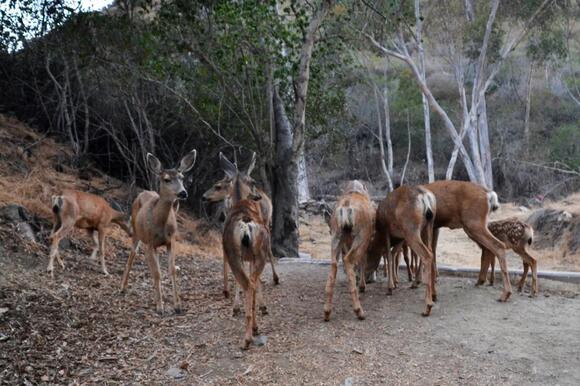
No published count currently puts a number on Altadena’s mule deer population — unlike Catalina, where decades of spotlight surveys have tracked the herd’s size, no comparable local tally appears to exist for the San Gabriel foothills, and confirming one would likely mean reaching out directly to the Chaney Trail Corridor Project or CDFW.
But the contrast is the story: two mule deer populations less than a day’s travel apart, one removed because it was placed in an ecosystem that never evolved to hold it, the other watched, camera-trap by camera-trap, as proof that the ecosystem around it is coming back to life.
Protecting Catalina’s rare native plants and restoring its ecosystem are legitimate conservation goals. So is asking whether every reasonable option has been exhausted before deliberately eliminating an established animal population.
Whatever happens next, the fate of Catalina’s mule deer is more than an ecological decision. These living animals are caught between a human choice made more than 100 years ago and another being made today.
For more information, visit catalinaconservancy.org.


Comments / 2
YOU MAY ALSO LIKE
David Heitz
Cops do more harm than good busting drug dealers, doctor tells Denver council
Yes, Dr. Sarah Axelrath of Colorado Coalition for the Homeless told the Denver City Council Monday. Axelrath, an addiction medicine specialist, said going after drug traffickers doesn’t make people stop using substances. In fact, she said it disrupts “an already potent and unpredictable drug supply.” Demand doesn’t go down after a bust. New players come to market who could be peddling an even more toxic product.
CJ Coombs
Dianna Carney
CJ Coombs
Pasadena Media Foundation is dedicated to saving local news. Our publications feature provocative reporting about the Greater Pasadena and Greater Southern California areas.
724
Posts
551
Followers