660
Posts
518
Followers
Pasadena Media Foundation is dedicated to saving local news. Our publications feature provocative reporting about the Greater Pasadena and Greater Southern California areas.
A Glendale photo exhibit reframes Sickle Cell Disease
By Sheryl Turner,
21 hours ago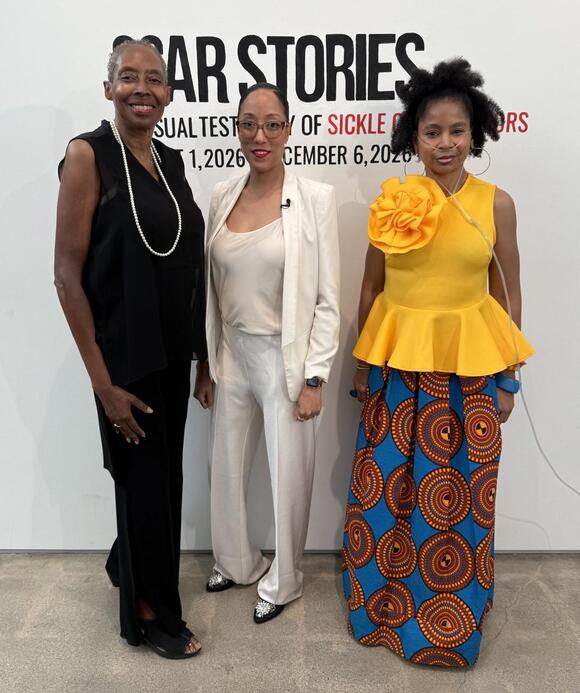
Scar Stories: A Visual Testimony of Sickle Cell Warriors is a thought-provoking and heartwarming photography exhibition at Cayenne Wellness Center, 216 S. Louise Street, in Glendale till December 6.
Sickle cell is a hereditary blood disorder in which red blood cells become hard and sticky, taking on a crescent or sickle shape instead of being round and flexible. This change causes a constant shortage of red blood cells and blocks blood flow in small vessels. It causes fatigue and severe pain. Many people need surgeries due to a variety of complications, and they get scars.
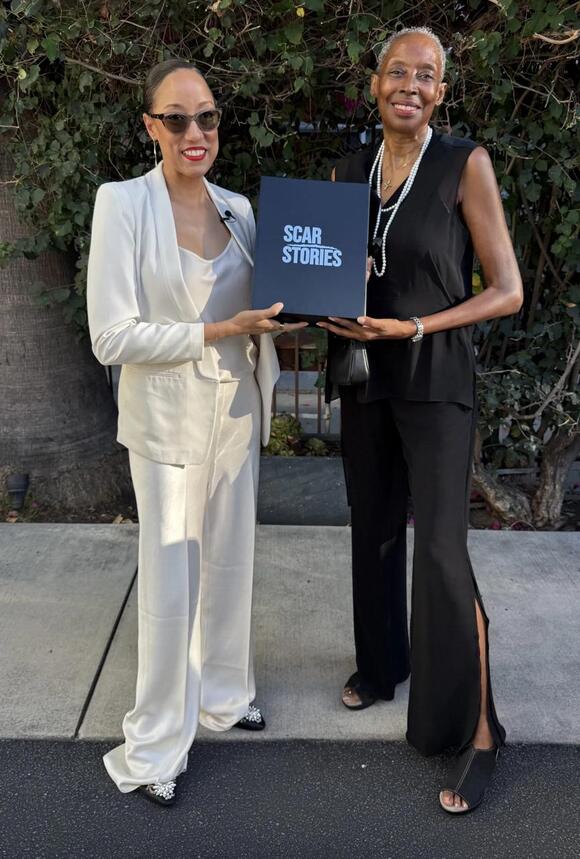
Dr. Carolyn Rowley is the founder and executive director of the Cayenne Wellness Center. She is an advocate for empowering people with sickle cell to thrive. She was diagnosed with sickle cell as a child and dedicated her life to transforming pain to success. Rowley has built partnerships with healthcare providers, government agencies, researchers, and community organizers to increase awareness and improve access to care.
For the photography and story documentation, Rowley sought 100 people with sickle cell to participate and share their stories. The choice of words reflects her positive mindset: not to call them “patients” but “warriors”. In 2005, Tosin Ola, a nurse with sickle cell disease, started a blog and used the term “warrior,” which reflects their resilience and strength.
Rowley’s team worked with a few sickle cell organizations, including Sickle Cell Community Consortium (SC3). They held their warrior convention in Orlando, Florida, last July. In September, Cayenne Wellness Center held its summit in San Jose.
They also have a book to accompany it. There are 58 photographs on the walls, but 174 in the book. The stories were long, and they are not included in the current book.
Rowley said, “Each story ended up being about 4000 words, so there was no way I could publish it this time, and so part two will be the narrative testimonies.”
Heather Avant’s large-scale photographs draw viewers into intimate, close-up encounters with anonymous subjects whose identities remain concealed by the deliberate absence of their faces. By shifting attention away from recognizable features, the images invite contemplation of gesture, texture, vulnerability, and the quiet narratives carried by the human form. Rendered as digital black-and-white prints measuring 24 x 30 inches, each photograph is elegantly presented with a white mat and a black frame, reinforcing the work’s timeless, contemplative quality.
Avant said, “I’m a thriver, not a survivor. Every day is a new lesson; I am a warrior too.” She continued, “We as warriors have lived lives with similar conditions and experiences. By sharing our stories, we connect. We are siblings in this space.”
“It’s beautiful, magnificent, and stunning. The warriors trusted her. They were very vulnerable and courageous.” Rowley said. “There is no longer any shame; many people were hiding it. It’s a story they can tell to share with people what sickle cell disease is.”
Narratives is curated by Dr. Patrise Holden. “I’m a 20-year expert in the field of journalism. I also have sickle cell disease myself, and I’m a storyteller. I had the privilege of interviewing 82 people of the 92 participants that joined this project.” She added, “For each of the 82, I wrote an original biography. Storytelling is an act of revolution.”
Holden was wearing her oxygen tube and talked passionately about interviewing each warrior. “It gives voice to the people who felt voiceless, unseen, and underrepresented, so I think with this project, taking people who historically have felt unseen because most of them, including myself, are diagnosed very early in infancy, so we don’t know anything other than this, so to give t
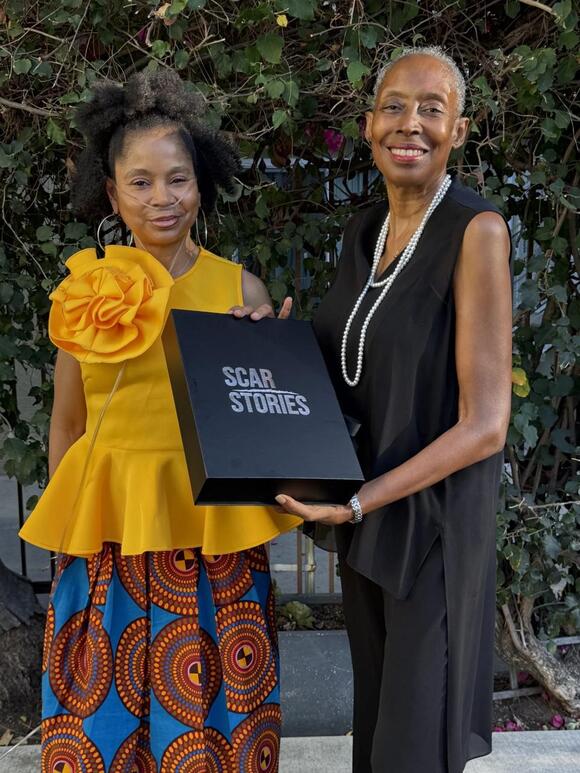
hem a chance to voice without the pain.”
She explained the challenges of living with sickle cell, such as building a life where you just get settled in friendships and a job, only to have it interrupted. That happens from childhood on.
“We had mostly African-American females and males. First, it was disproportionately female, and then the photographer Heather Avant asked me to find males.” Holden said.
She described the process of collecting stories. When asked about how she dealt with the challenges of men opening up, she replied, “ I have a gift with people because I am them. I am the traumatized. I am the unheard person, so you start with how sickle cell affected them in school. After a few minutes, the tears start, and stories pour out.”
Curator James Nicholas Vela said, “For me, the most important thing about curating this exhibition was to paint every single sickle cell warrior in a bright light. That is my role as a curator to make sure that things are perfect and things look incredible.

Comments
YOU MAY ALSO LIKE
Margaret Minnicks
CJ Coombs
Thirteen-year-old Angela Meeker, missing since 1979 in Tacoma: She was going to buy a birthday card
Angela Mae "Angie" Meeker has been missing from Tacoma, Washington (Pierce County), since July 7, 1979, according to the National Center for Missing and Exploited Children (NCMEC). Her photo above is an age-progressed likeness of how she might have looked at 51, though she would now be 61.
Edmond Thorne
David Heitz
Denver drug users can have their substances analyzed before using them
The Harm Reduction Action Center announced in its July newsletter Monday that it now offers on-site, rapid drug testing so drug users know exactly what they’re ingesting. The city purchased the equipment for the drug testing. “We are thankful that the City purchased two FTIR drug checking machines over a year ago,” according to the emailed newsletter. “You'll also remember we have been advocating (read: talking shit) over the past year because those machines were sitting in boxes underneath a desk and not in use while we are in the midst of an overdose crisis.
CJ Coombs
CJ Coombs
Fraternal twins in Pittsburgh, Pennsylvania, disappeared in 2006: Somebody or a system failed them
Inisha Fowler and Ivon Fowler have been missing from Pittsburgh, Pennsylvania (Allegheny County), since September 11, 2006, according to the National Center for Missing and Exploited Children (NCMEC). The date they went missing is being used because it's the last time they were seen together and reported to be alive.
Pasadena Media Foundation is dedicated to saving local news. Our publications feature provocative reporting about the Greater Pasadena and Greater Southern California areas.
660
Posts
518
Followers