659
Posts
517
Followers
Pasadena Media Foundation is dedicated to saving local news. Our publications feature provocative reporting about the Greater Pasadena and Greater Southern California areas.
Two Pasadena residents turned a retirement community into a seniors political organizing hub
By Sheryl Turner,
6 hours ago
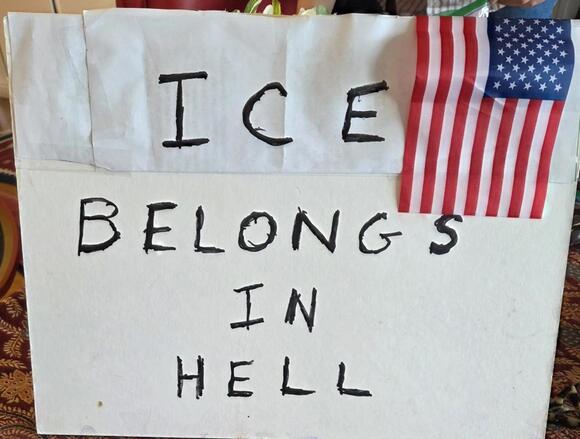
We recently met with Miriam Segall and Alyssa Axeen, two members of a Pasadena senior community, about how, with their hand-lettered signs and waving at honking cars, they created a No Kings protest that ended up looking more like a block party than a political rally. For them, that was exactly the point.
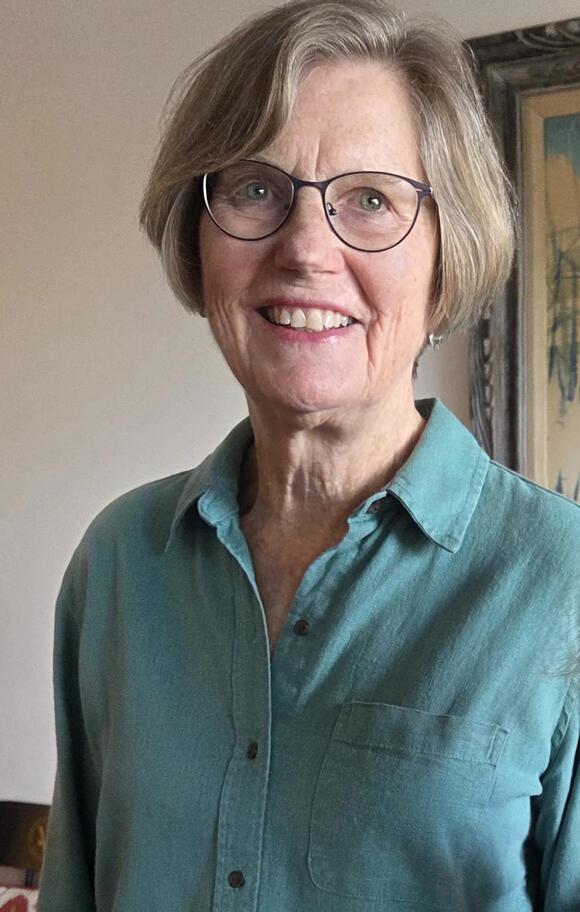
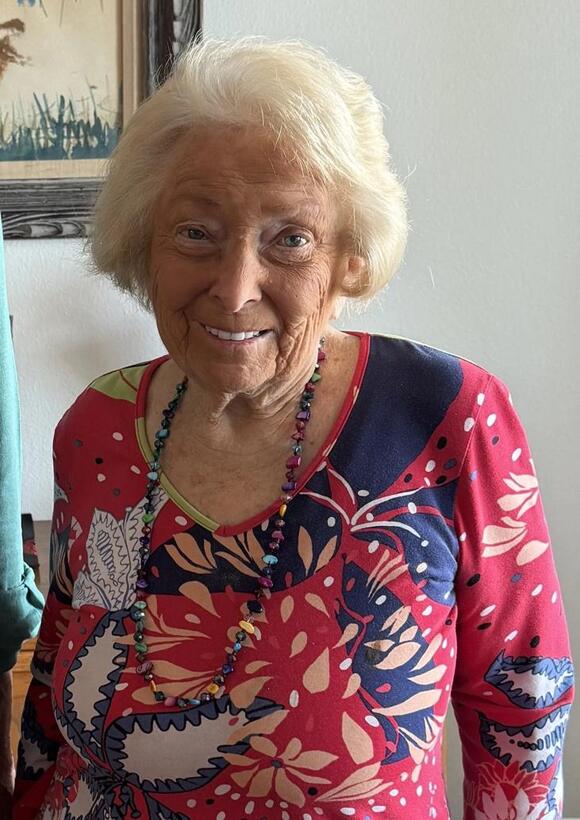
Since the Trump administration returned to power in 2025, Americans have taken to the streets in a wave of protest against what many see as rising threats to democracy, such as ICE raids, the defunding of public education, and the gutting of the Voting Rights Act. Of the resulting demonstrations, the No Kings movement has drawn some of the largest crowds nationwide. But most of the media coverage has focused on the young — on college students and first-time voters — while quietly writing older Americans out of the story, even though seniors vote, organize, and show up at some of the highest rates of any group in the country.
At the local senior community, that oversight would surprise almost no one. For months, Segall and her neighbor Axeen — have served as the unofficial political coordinators of their retirement community, turning a corner near their building into a regular gathering spot for demonstrations, and turning their neighbors into a small, disciplined organizing operation.
Segall, who has lived in the Pasadena area since the 1950s, moved west after her husband, physicist Herb Segall, took a position working alongside Linus Pauling. Axeen, whose husband was a history professor and later dean at Occidental College, has known Segall for years—long before either woman moved into senior community apartments. Before that, Axeen spent years as a teacher at a private girls’ school in Pasadena, where she also helped organize the faculty into a union.
“I’ve done a lot of political work, and I helped organize a union at my school,” she said, “so I’ve had some experience with organizing groups — gently, and sometimes less gently.”
Segall, too, spent her career in education, first as a teacher and later in administration in the Los Angeles Unified School District.
Their organizing expertise has been critical. What began as a postcard-writing campaign connected to the national grassroots organizing group Swing Left — by Segall’s count, “mailing almost a thousand postcards and letters” in the run-up to the election, distributing in batches small enough that no one felt overwhelmed — evolved into something more physical once the first large No Kings demonstration drew the senior living residents to downtown Pasadena. Not everyone could make the walk.
‘As far as I know, nobody’s got social media.’ Alyssa Axeen
“A group said, well, let’s just stay right here,” Segall recalled. So a smaller cluster of neighbors held signs at a corner near their home, while others joined the larger march.
“I think you and I started talking,” Segall said, turning to Axeen, “and said, well, why don’t we just do smaller demonstrations?” That conversation, she said, “was the impetus for beginning a smaller, more frequent” gathering.
It grew from there — 21 people the first time, passed along by word of mouth over dinner, to 57 at the most recent one. There’s no app behind it, no social media page.
“As far as I know, nobody’s got social media,” Axeen said. Segall and Axeen keep their own list of neighbors who’ve asked to be notified, and word travels resident to resident, the way it always has.
What makes the effort work, both women said, is that it asks almost nothing of anyone. They’re careful about how they use that list.
“We try to be discreet about who we encourage to come to these events,” Axeen said. “We’re very careful about not offending anybody, because we’re living in a community where there are differences.” Nobody is asked their party affiliation.
“I don’t look for Democratic people,” Segall said. “I just look for people who would be good at saying something and making a statement. We ask them if they’d like to have a sign. Some say okay, some say I’ll make my own. But we never ask anybody’s party affiliation.”
There is no Democratic club at the senior housing where they live, and no Republican one either.
“The effort here is to educate, to encourage, not to divide,” Alyssa said, “to bring people together where they have things in common, and not emphasize what they’re —” She didn’t finish the sentence.
“That’s one reason I chose this place over other senior communities,” she said. “It’s a very friendly place. Everybody’s trying to get along,” she added, “not to fight.”
For residents with limited mobility or energy, the low bar for entry is the whole strategy.
“It’s incredibly important,” Axeen said, “but you want to make it as easy as possible for people.” Those who can’t stand on a corner for an hour write postcards instead, in batches as small as ten. Those who can’t drive get rides—to the grocery store, to the polls, or, if needed, a Lyft called from the front desk.
“It’s not so difficult to find a ride here,” Segall said. “People are very generous.” Most residents vote by mail, regardless.
“I think most people vote by mail,” Axeen said. “But some people get out to vote too,” Segall added.
The payoff, both women argue, is a voting bloc that outperforms.
“There’s a very high turnout and high participation rate,” Axeen said. “It’s too bad that the public in general misses what a huge voting power seniors have. They’re good voters, they’re faithful voters, and they’re usually steady in one place, whereas younger voters are still moving around — they’re not attached to a community.”
‘It isn’t that we’re sitting eating chocolates.’ Miriam Segall
Of the dozens gathered curbside on the day we visited in January 2026, not one person said they had missed a chance to vote.
Both women pushed back, gently but firmly, on the assumptions that still color how younger generations see them.
“It isn’t that we’re sitting eating chocolates,” Segall said. “This is a very active, intelligent, engaged community, and very willing to do things that could be seen as really boring — like standing on a street corner — but we make it a lot of fun. It’s better together.”
She’s heard the apologies from neighbors who missed a demonstration because of a doctor’s appointment or a bad knee. “They apologize,” she said, “because they wanted to be there.”
The dismissal cuts in the other direction, too. “When you get a certain age,” Axeen said, “they think you’re old, and I don’t know what they think, but they don’t think you can think.” Asked whether that was another way of saying seniors become invisible, she didn’t hesitate: “Exactly.”
No Kings isn’t only a senior effort, either. Down the road, a separate 2026 weekly protest outside a Tesla dealership — organized in part by Pasadena Community College Trustee Tammy Silver, alongside U.S. Rep. Judy Chu and State Senator Sasha Renee Perez — ran for months. Nationwide Tesla protests cut so deeply into the dealership’s sales that it made news.
“It was mostly old people,” Axeen said of the early Tesla turnout, before it broadened into something bigger. Segall sees that pattern often: the group that shows up first, and keeps showing up, tends to be the one that’s been voting the longest.
Segall’s favorite moment from a recent protest had nothing to do with turnout numbers. A couple new to the senior community stood at the corner with their signs when their own adult child walked up from another demonstration, sign in hand.
“This was a really nice generational moment,” Segall said, “of parents and children getting together around the same issue. It was quite wonderful, really, to see everybody together.” It’s the kind of overlap Axeen wishes happened more—younger organizers online, older organizers on the corner, two forces that rarely meet in the middle.
Near the end of the conversation, our talk turned to a certain British royal who had worn a Nazi costume to a party years earlier, seemingly unaware of what it meant.
Segall didn’t miss a beat. “He didn’t know his history,” she said. That’s my point — if they know more history, then they make fewer mistakes.”
It’s as good a summary as any of what Segall and Axeen are doing at their senior living facility — not just organizing rides and postcards and Saturday sign-holding, but making sure the history their generation lived through doesn’t get set down and forgotten.
“Nobody pays attention to seniors,” Segall said early in our conversation, speaking of her neighbors. She and Axeen have spent months proving otherwise.
Comments
YOU MAY ALSO LIKE
Margaret Minnicks
CJ Coombs
Missing since 2009 from a home of chaos: 5-year-old Haleigh Ann-Marie Cummings in Satsuma, Florida
Haleigh Ann Marie Cummings has been missing from Satsuma, Florida (Putnam County), since February 10, 2009, according to the National Center for Missing and Exploited Children (NCMEC). Haleigh's photo shows age-progression to 21 years, though she would now be 22 if alive.
Edmond Thorne
Florida's Once Grand Hollywood Hotel Sits Empty & Rotting: As Developers Circle Her Bones
The century-old Hollywood Beach Resort sits empty, fenced off, and fading in plain sight. Now major developers are moving closer to taking control of one of Broward County’s most valuable oceanfront properties. Will Hollywood’s Grand Lady be restored, reinvented, or erased forever?
CJ Coombs
CJ Coombs
Fraternal twins in Pittsburgh, Pennsylvania, disappeared in 2006: Somebody or a system failed them
Inisha Fowler and Ivon Fowler have been missing from Pittsburgh, Pennsylvania (Allegheny County), since September 11, 2006, according to the National Center for Missing and Exploited Children (NCMEC). The date they went missing is being used because it's the last time they were seen together and reported to be alive.
Pasadena Media Foundation is dedicated to saving local news. Our publications feature provocative reporting about the Greater Pasadena and Greater Southern California areas.
659
Posts
517
Followers