655
Posts
516
Followers
Pasadena Media Foundation is dedicated to saving local news. Our publications feature provocative reporting about the Greater Pasadena and Greater Southern California areas.
‘I don’t believe in one-size-fits-all justice.’ Gloria Marin, Candidate for LA Superior Court Judge
By Sheryl Turner,
2026-05-22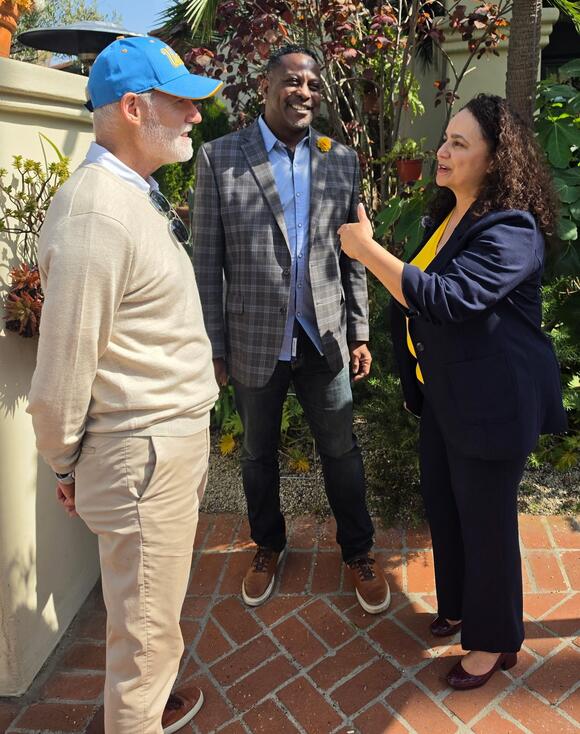
Gloria Marin never expected to run for judge. A 30-year prosecutor steeped in the machinery of criminal justice, she had repeatedly deferred the question posed by colleagues who saw potential in her leadership. But a convergence of personal milestones—a retirement ceremony that reminded her of how long she had served, the passing of a colleague, and the sudden clarity that time is finite—pushed her to act. Now, Marin is poised to become the first Nicaraguan-American judge in her county, armed with an unconventional vision: that a prosecutor can champion second chances while maintaining public safety. Her campaign challenges stereotypes about what a judge should look like, sound like, and believe.
How important is it to you to be the first Nicaraguan-American judge in LA County?
Because there hasn’t been another Nicaraguan judge, that would be very exciting for me if I had the opportunity, because with my culture and background, it would be an honor to represent the Nicaraguan community. We’re a very small percentage of the population in this country, but we’ve been here a while.
How has your immigrant status shaped your career?
I grew up in the shadows as an undocumented person. My family was undocumented. We were all scared, and it was a different time. We had Proposition 187 then. I was basically a Dreamer before DACA was even contemplated. I understand what that feels like. I didn’t have direct contact with ICE agents, but I did benefit from the amnesty provided in the 80s.
Having that experience of going from the shadows into the light and participating fully in the community, with all the same opportunities as anyone else, is a blessing, and I don’t take it for granted. I value it. I cherish it. I grew up feeling like I didn’t belong and was ashamed of being an immigrant. The moment I realized that was wrong was when I was in law school. I was in a criminal procedure class when Senator Gary Hart, a former presidential candidate, came to visit because his son was in the class. As I sat there, I thought, Wow, I’m sitting here now with the exact same chance and opportunity as someone who is the son of a senator and could have been the son of a president. That moment hit me. I realized: I have the same opportunities and chances, and I’m going to take advantage of them and do the best I can. I’m not an outsider. I belong here. I’m just as much part of this community as anyone else.
Tell me about your path to becoming a lawyer.
I was born in Nicaragua. We came here right after the Civil War, around 1980. Getting a law degree was a big accomplishment in our family. At the time, my mom had cancer, and I had gotten into Hastings, which was my first choice. Then things got turned upside down with my mom’s health. So I decided not to go to Hastings and asked Loyola if I could attend a night program instead. I made that decision in April; my mom passed away in June, so she never got to see me go to law school.
What is your current judicial role?
I’m at the LA District Attorney’s office. I’m currently working in the Adult Felonies Division as the Deputy in Charge; before that, I was the Deputy in Charge of the Juvenile office. So I’ve been in management for a while now. I’ve really enjoyed the process of managing an office or a division—you have to make difficult decisions, address staffing problems and improve efficiency. I want to make things work better and more efficiently, and I hope to carry that on. I don’t like things like backlogs. So I’ve worked really hard in my current assignment to fix those types of problems. I think the public deserves more efficiency.
What made you decide to run for judge now?
It’s been something I’ve been thinking about for 10 years. When I was doing more back-to-back trials, more than one judge approached me and asked if I would consider becoming a judge. At that time, I didn’t think I was ready. I said, ‘Oh, that’s not for me at this time.’ That’s something I’ll consider later. I kept putting it off. I had friends who became judges or were appointed to the bench. I went to my pinning ceremony, saw a lot of people I started with, and I realized I’ve been in the office for 30 years. I had a colleague pass away, and I went through this whole analysis. I realized I’m not getting any younger, and I have a lot of experience to offer. One night, I couldn’t sleep. I kept thinking about it, and when I woke up, I decided it was the right time. My family is very supportive. They’re very excited. I want to make them proud. And I think they’re proud of me already.
How do you stay current with legal policy and case law?
I review cases every Monday. The DA puts out recent cases or cases of interest. Also, local news outlets report on recent case law or court decisions. Right now, I’m mostly following things related to my current assignment. When I was in Juvenile, I was following those types of cases, but obviously, when I become a judge, I’ll be following a broader range of court opinions and decisions. It’s always hard to keep up because there are so many changes in case law and in the legislature, in what they’re passing in California.
What’s your position on second chances for inmates?
I’ve supported second chances. Often, people think that because I’m a prosecutor, I want to put everybody in jail, or that I don’t believe in second chances or alternative ways of looking at the system. But I do that every day. When I look at a case, I don’t just look at the charges. I evaluate the backgrounds. Sometimes it isn’t the right case for us to file. We do prefiling diversion, so we refer cases for diversion. Even after a case is filed, if I talk to opposing counsel and hear things that make me think, maybe this is the right case to take a chance on, by reducing charges or coming up with a creative resolution, I’m all for it, especially in Juvenile. We did not simply file charges. We really did our best to look for alternative ways of dealing with or diverting minors. Even after we had to file charges, I did the same. Making those types of decisions is something I practice regularly because I think it’s important to look beyond the statistics. If two people commit the same crime, the applicable circumstances may differ. I don’t believe in one-size-fits-all justice. And that’s something I practice even though the public might think otherwise because of my title.
I often think, would we have a different resolution if the person were a different color, religion, or from a different part of town? That’s something I wouldn’t do and don’t practice. If we’re going to have law be equitable, you can’t take advantage of someone’s lack of money, power, or resources.
In sex crimes, we prosecute and investigate cases involving celebrities and Hollywood people, and it’s the same thing. We have to ask ourselves: Are we really evaluating the case, or are we caught up in the fame or money? That’s not fair to the accused, not fair to the community, because you want everything to be as equitable as possible.
What experience would you bring to the bench?
I have some civil background. Before I became a Deputy DA, I represented injured workers in workers’ compensation cases for two years. In law school, I volunteered in a clinic helping process adoption papers for families adopting children, so I’m familiar with the dependency part of the judicial system. I also follow civil cases, not just criminal ones. I have experience in other fields. I’m happy to go wherever I’m needed and serve wherever the court needs me.
What unique challenges do women face running for judge?
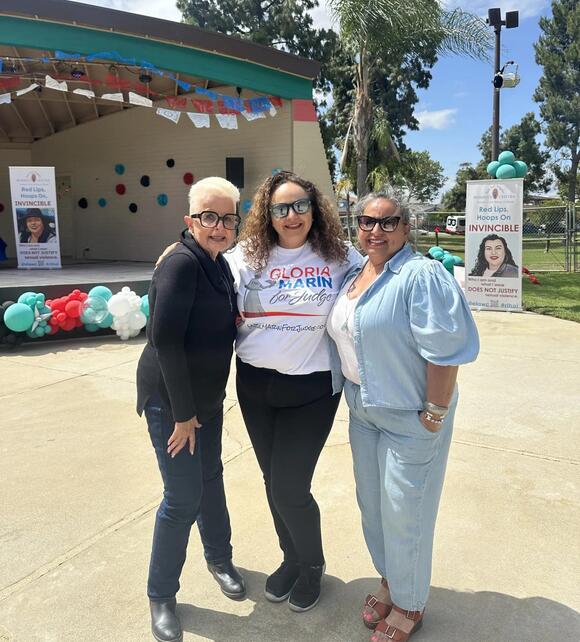
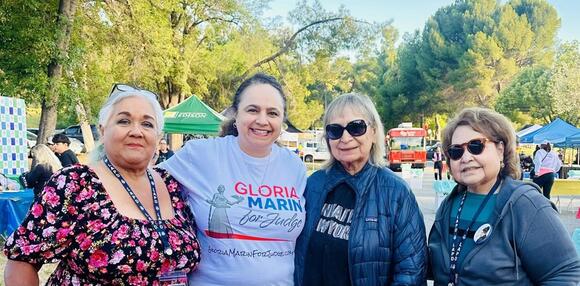
I do believe that being a woman presents its own challenges. I think we get judged as women. We went to an event with multiple candidates, and I had come from another event wearing a ‘Vote for Gloria’ T-shirt and casual clothes. A couple of women there told me I shouldn’t dress like that—I should wear a suit. That’s when it clicked that some people have this image of what a judge looks like and how a judge should dress. I don’t think those types of criticisms apply to male candidates. Being a female is part of who I am.
It’s tough when you have to get out and talk to the public. They have thoughts, images, and biases. What’s particularly challenging for me is being on social media. I’ve read some harsh comments, but I have to grow a thick skin and move on. I’ve had a life full of obstacles to overcome, and I don’t let that stop me. I just keep going.
What about public safety versus alternative sentencing?
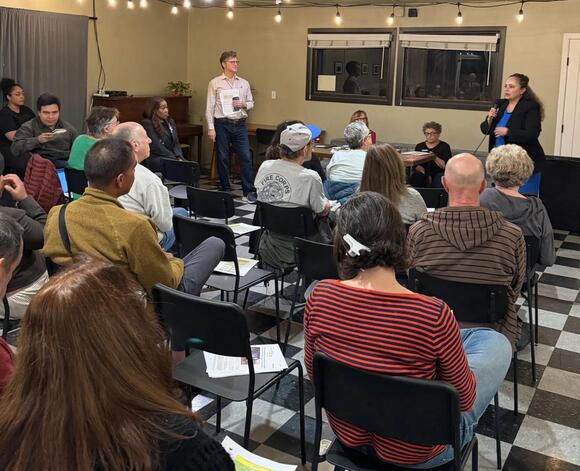
People ask me, as a prosecutor, whether I will automatically oppose alternative sentencing or the elimination of mandatory sentencing. My answer is that you could combine public safety and alternative rehabilitative programs. They don’t have to be at odds. They can go hand in hand. In certain cases, public safety is an issue—certain violent offenses, certain people with violent backgrounds. But in certain other cases or with certain individuals, you can certainly develop more creative community-based rehabilitation and do a lot more for the community than just putting someone in jail. That’s been the cookie-cutter solution in California, and it hasn’t worked.
What improvements would you make to the judiciary?
There are already many changes underway at the LA Superior Court. They’re trying to modernize, make things more efficient and user-friendly, and update remote access technology, all of which help the working class. I definitely support that because traveling in LA is very expensive. It’s hard for people holding two or three jobs to take a whole day off for a five-minute appearance. I think the court can do better. They’ve made strides and should continue to do so.
Also, making language interpretation more accessible is crucial because LA County has residents who speak languages from across the world. Having a system with translation providers makes people feel less intimidated by the process. That would benefit the court and our community long term.
What should voters know about you beyond your resume?
I love dogs. I had a dog for a very long time. She died less than a year ago. She was my baby. I’m also someone who loves to dance—salsa dancing, cumbia—and I do a lot of traveling. Those are things you wouldn’t find on my website, but they’re who I am.
Why is local news important to you?
Local news is important for educating the community about what’s going on locally. If people get caught up in world events, they miss what’s happening in their own neighborhoods and cities. That’s just as important. Local news is the only way to inform the community about what’s happening in their own backyard.
I think it’s important to hold our elected officials accountable. The only way to do that for local races and local offices is through local news that wouldn’t be covered in national or cable news. I support local news, and we need more of it.
The post ‘I don’t believe in one-size-fits-all justice.’ Gloria Marin, Candidate for LA Superior Court Judge first appeared on Local News Pasadena.


Comments
YOU MAY ALSO LIKE
Edmond Thorne
Florida's Once Grand Hollywood Hotel Sits Empty & Rotting: As Developers Circle Her Bones
The century-old Hollywood Beach Resort sits empty, fenced off, and fading in plain sight. Now major developers are moving closer to taking control of one of Broward County’s most valuable oceanfront properties. Will Hollywood’s Grand Lady be restored, reinvented, or erased forever?
Margaret Minnicks
CJ Coombs
Missing since 2009 from a home of chaos: 5-year-old Haleigh Ann-Marie Cummings in Satsuma, Florida
Haleigh Ann Marie Cummings has been missing from Satsuma, Florida (Putnam County), since February 10, 2009, according to the National Center for Missing and Exploited Children (NCMEC). Haleigh's photo shows age-progression to 21 years, though she would now be 22 if alive.
CJ Coombs
Pasadena Media Foundation is dedicated to saving local news. Our publications feature provocative reporting about the Greater Pasadena and Greater Southern California areas.
655
Posts
516
Followers