undefined
Posts
undefined
Followers
Google Rolls Out Gemini for Home in Early Access, Replacing Assistant and Challenging Alexa+
By Markus Kasanmascheff,
2025-10-30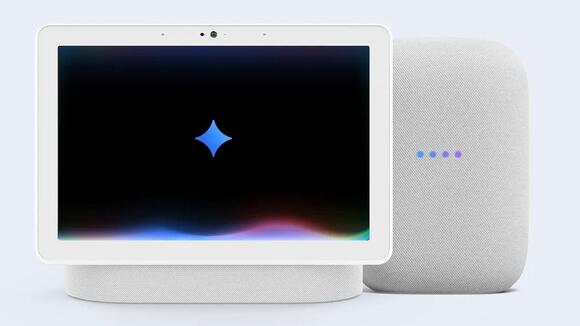
Google has begun rolling out Gemini for Home, its next-generation AI voice assistant, to users in the United States this week. Available through an early access program, the update replaces the long-standing Google Assistant on Nest smart speakers and displays.
It marks a significant strategic shift for the company, moving its smart home ecosystem from simple commands to more complex, conversational interactions powered by its Gemini AI.
This new positioning allows Google to better compete with Amazon’s Alexa and an evolving field of AI assistants, though advanced features will require a new premium subscription. Anyone who opts-in should know the change is permanent and they cannot revert to the classic Google Assistant.
From Assistant to Gemini: What’s New and How to Get It
In a move that officially sunsets an era for its smart home ecosystem, Google is transitioning its Nest devices from the familiar Google Assistant to the more powerful Gemini AI.
First signaled in a broader mobile strategy shift back in March, this rollout brings a more conversational and capable assistant into the living room.
For users enrolled in the early access program, the experience promises a significant leap from the scripted nature of its predecessor. Gemini can now handle more complex, multi-part requests and understand more natural language, such as asking it to“turn off all the lights, except for the office lights.”
Joining the preview is a straightforward but permanent decision. Interested users in the U.S. can request access through the Google Home app, but once the switch is made, there is no option to revert to the classic Assistant.
This commitment shows Google’s intention to move its entire user base forward. This upgrade applies to a decade’s worth of Nest speakers and displays, from the original Google Home to the latest Nest Hub Max.
Google itself has been transparent about the assistant’s current limitations during this preview phase. Acknowledging the technology’s inherent nature, the company notes that “Gemini is ‘non-deterministic,’ which is a technical way of saying it doesn’t just follow a script. It uses enhanced reasoning and inference.”
Unlike the predictable Assistant, this means Gemini might provide different answers to the same question and is still being refined to handle multiple, different types of actions in a single command.
Furthermore, the company cautions that users may encounter “inaccuracies (or ‘hallucinations’): Sometimes, especially for very recent, real-time info, the answermight be out of date or wrong.” This transparency sets user expectations for a technology that is powerful but still maturing.
A Tale of Two Tiers: Google’s New Subscription Model
While the core Gemini experience is a free upgrade, Google is introducing a new freemium model to monetize its most advanced capabilities. The strategy aims to create a sustainable model for the costly development of advanced AI.
Its full conversational power is unlocked through a Google Home Premium subscription, which is required for features like ‘Gemini Live’ and AI-powered camera history searches.
Gemini Live allows for more fluid, back-and-forth conversations where users can interrupt and ask follow-up questions without repeating the “Hey Google” hotword.
Access to these premium features is tiered. For $10 per month, the Google Home Premium “Standard” plan includes Gemini Live. An “Advanced” plan runs $20 per month to add the intelligent camera features, such as asking, “did someone take the dog out today?”
Replacing the previous Nest Aware offerings, these new subscription plans maintain a similar price structure for existing users, easing the transition for those already in the ecosystem.
Hardware also plays a critical role in the user experience. Only newer devices, including the Nest Mini (2nd gen), Nest Audio, and Nest Hub Max, have the necessary processing power to support the full Gemini Live feature.
The limitation stems from the intense processing required for real-time language understanding, which older chipsets cannot handle. Older devices will still receive the standard Gemini for Home upgrade but will not have access to the premium conversational mode.
A High-Stakes Race: How Gemini Stacks Up Against Alexa+ and Siri
Google’s launch of Gemini for Home does not happen in a vacuum; it lands squarely in the middle of a fiercely competitive AI assistant market. The decisions made by each tech giant will likely define the landscape of ambient computing for years to come.
With this product, Google can now directly challenge rivals who are pursuing different strategies for the next generation of voice AI.
Amazon, Google’s primary rival in the smart home space, is betting on a dual-monetization strategy for its revamped Alexa+ assistant. After launching its own subscription service earlier this year, with Amazon’s devices chief Panos Panay promising a “trusted assistant that can help you conduct your life and your home,” the company also confirmed plans to inject conversational advertising directly into Alexa conversations.
Such a strategy creates a second revenue stream that Google has not yet pursued for Gemini.
Meanwhile, Apple remains conspicuously behind. Publicly admitting in June that its ambitious overhaul of Siri would be delayed until at least the spring of 2026, the company is undertaking a complete architectural rebuild from the ground up.
This gap leaves a critical part of Apple’s user experience lagging significantly behind its rivals.
By shipping its next-generation assistant now, even in a preview state, Google gains a significant head start in gathering user feedback and refining its product in real-world conditions.
Looking ahead, the company plans to expand Gemini for Home beyond the U.S. in early 2026. It is betting that its powerful AI and flexible subscription model can redefine user expectations before its rivals have a chance to catch up.
The post Google Rolls Out Gemini for Home in Early Access, Replacing Assistant and Challenging Alexa+ appeared first on WinBuzzer.
 Add to Preferred Sources