undefined
Posts
undefined
Followers
Exit poll shows why Wichita supported school bonds, exposes trust gap | Opinion
By Dion Lefler,
11 days ago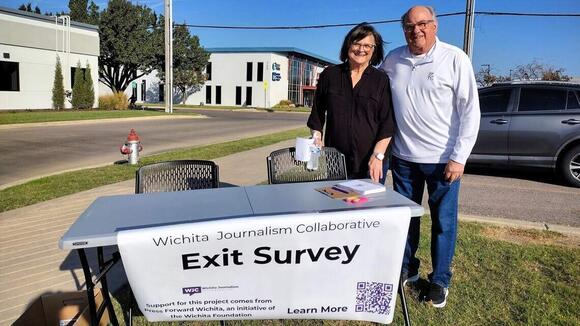
What a difference a year and a half makes.
Of all the things that happened in the Nov. 3 election, one of the most surprising, important and far-reaching results was the successful campaign for school bonds in Wichita’s USD 259.
It probably hasn’t gotten the attention it deserved.
Most of the public attention on election night and since has focused on the blue wave that swept across the state, unseating incumbent Sen. Roger Marshall in favor of United Methodist pastor Adam Hamilton. Pending the final count, Democrats also appear to have won the race for governor (Democrat Cindy Holscher vs. Republican Ty Masterson) and attorney general (Democrat Chris Mann vs. incumbent Republican Kris Kobach).
Even against that backdrop, and with numerous Democratic upsets in Legislature races up and down the state, the school bond vote was remarkable.
In February of last year, voters rejected a plan to borrow and spend $450 million for new construction of a Trades Future Ready Center and renovation of aging buildings across the district.
On Nov. 3, the voters approved two ballot questions adding up to $615 million — $165 million more than the district’s original ask.
And we now have some insights into why the district’s voters voted the way they did.
The Wichita Journalism Collaborative, a consortium of 11 local media outlets and educational organizations, including The Eagle, conducted an exit poll on the school bond specifically.
The data comes with an asterisk. The collaborative’s pollsters were required to set up outside a 250-foot bubble around polling places where electioneering is prohibited, so they got fewer responses than they would have if the polling was closer to the door, which has been allowed in the past.
Those rules were set by the office of Scott Schwab, outgoing secretary of state. They apparently don’t understand the concept of exit polling, which has nothing to do with influencing elections and only surveys people after they have already voted.
I’m hopeful this exclusion will change for the next election, when we’ll pick city councils and school boards next year. While I’ve criticized some of the bills the incoming secretary, Pat Proctor, pushed in the Legislature, I’ve also found him to be supportive of transparency, which is essentially what exit polling is about.
That said, our survey takers got enough of a sampling of voters to draw some broad trends on why a much larger school bond measure passed this time around.
Among voters who picked “yes” and “yes,” building renovations and improving balky heating and air conditioning systems were the No. 1 and No. 2 reasons for their votes. About nine out of 10 “yes, yes” voters cited those.
Rebuilding aging schools and traffic improvements were somewhat less persuasive, but still enjoyed majority support among the “yes, yes” voters.
Trust gap must be closed
The exit poll also gave some insights into how voters want the projects to proceed, exposing a trust gap between the district and the people it serves.
About eight out of 10 “no” voters cited lack of trust in district leadership as a reason for their vote, compared to about 60-65% who cited impact on property taxes and student learning outcomes.
However, looking ahead, all voters were almost evenly split on who they think should play the largest role in decisions on implementing the bond improvements, between “parents and families” and “school board and district leaders.”
That’s why it’s more than a bit troubling that the day after the bond issue was approved by voters, Superintendent Kelly Bielefeld said meetings of an 18-member oversight committee will “probably not” be open to the public.
The oversight committee will include multiple representatives of the school district, both elected and hired staff; along with participants from city government, the Chamber of Commerce and the Greater Wichita Partnership. They’ll be directly involved in giving “input on major scope, schedule, budget, risk and engagement issues,” according to the district’s website.
To begin with, closing those meetings would likely violate the Kansas Open Meetings Act, which specifies that all meetings of school boards and bodies they create to advise them must be open to the public, and can only be closed for limited specific reasons.
Beyond that, closed-door meetings send the wrong message to voters.
The performance on the district’s last bond measure, passed in 2008, was plagued with complaints of opaque design and construction deals, expenditures made on schools that were later closed (or are now slated to close), and major issues being sprung on the public too late for meaningful involvement in the decisions.
If there’s a clear message coming from the exit polling, it’s that the people of this city — whether they voted “yes, yes” “yes, no” or “no” — expect to be treated as partners, not subjects, when it comes to improving the schools.
That’s not a burden that can be met with occasional public updates at school board meetings, press conferences, website posts and social media, the plan which Bielefeld outlined in his post-election remarks.
The voters of this city committed a $615 million act of trust on Nov. 3.
Don’t make them regret it.
 Add to Preferred Sources
