undefined
Posts
undefined
Followers
Council Explores Housing Changes to Keep Pets Out of Shelters
By Current Staff,
9 days ago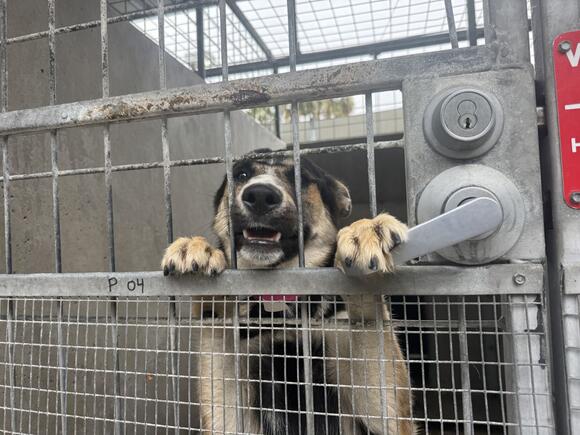
LOS ANGELES - Pet restrictions in rental housing are drawing new scrutiny at City Hall as Los Angeles looks for ways to keep animals out of its overcrowded shelters.
The City Council voted unanimously Friday to explore broader housing protections for pet owners, including a potential ordinance reducing or eliminating breed, weight and size restrictions in housing that receives no public funding.Councilwoman Eunisses Hernandez, who introduced the housing motion, said restrictions are forcing some residents to surrender their animals to remain housed."No one should be forced to surrender a member of their family just to stay housed," Hernandez said during Friday's meeting. "But if you go into our shelters, you'll find time and time again how many animals and pets have actually been given up because of this issue -- because they've been forced to surrender their pet or their family member because of their housing situation."The council approved three separate motions addressing the city's six animal shelters. Alongside the housing proposal, members advanced Councilwoman Monica Rodriguez's efforts to strengthen animal control staffing and increase investment in spay-and-neuter services.The measures seek to reduce the number of animals entering shelters while improving the city's ability to respond to animal-related emergencies. Friday's votes initiate reports and further policy work, including a possible housing ordinance.The city system includes the West Los Angeles shelter at 11361 W. Pico Blvd.. Its service area for found animals includes Venice and Mar Vista, along with other Los Angeles neighborhoods.The city also faced shelter overcrowding in May 2025, when more than 900 dogs were in Animal Services' custody, including nearly 250 dogs and puppies at the Chesterfield Square/South LA shelter, according to city figures at the time.Under Hernandez's motion, housing and animal services officials must report within 90 days on existing pet housing policies and best practices. They must recommend ways to expand access to housing that allows pets and reduce housing-related surrenders across all housing units.Council members also requested an analysis of how potential changes would affect housing stability and shelter intake, including financial impacts and projected city budget savings.The city attorney, consulting with relevant staff, was asked to draft a potential ordinance reducing or removing breed, weight and size restrictions in housing that is not publicly funded. Officials would also assess additional protections they consider feasible.The proposal would build on protections already established for publicly financed housing. In 2019, the city adopted an ordinance allowing tenants to keep pets in publicly financed rental housing. According to CNS, the ordinance aligned city rules with a 2018 state law permitting pets and expressly prohibiting breed and weight restrictions in publicly financed housing.Hernandez's motion describes pet-inclusive housing as a tool to reduce displacement and support vulnerable residents while preventing avoidable pressure on public services.Rodriguez's staffing motion addresses another concern: whether animal officers are available when emergencies occur.The council directed Animal Services to report on current animal control staffing and deployment. Rodriguez is seeking additional funding to retain or hire officers, including more coverage in Skid Row, which has only one dedicated animal officer, according to her motion.She also wants overnight field enforcement coverage."Staffing is an important component of Los Angeles Animals Services' Field Enforcement operations because animal-related emergencies and public- safety concerns can occur at any hour," Rodriguez's motion reads.The department's Field Enforcement Division responds to animal complaints and investigates neglect and abuse. Officers handle dangerous or stray animals, enforce city animal control laws and work to reunite lost pets with their owners.Their responsibilities also include animal bites, illegal breeding and nuisance complaints, as well as violations involving the keeping and care of animals."LAAS needs the necessary resources to respond when animals are in danger or at risk of endangering human life. That coverage needs to be enough to cover the 470 square miles of Los Angeles, not just during the daytime, but throughout the whole day," Rodriguez's motion reads.Her separate spay-and-neuter motion opens a discussion about additional funding as the city prepares its next budget.Rodriguez also said she and Councilwoman Ysabel Jurado, who represents downtown neighborhoods, are working to restore a mobile spay-and-neuter program serving Skid Row."We will always struggle to get a hold on our shelter conditions when we are not preventing widespread breeding of cats and dogs, it is the one single contributing factor to why we have so much overpopulation and continued challenges for maintenance at so many of our shelters," Rodriguez said. "Investing in prevention is always the most cost-effective solution that we have, and so reducing the number of animals entering our shelters will allow us the long-term costs of that impact on our city."Animal Services provides sterilization surgeries through contracted veterinarians. Participating clinics accept the department's discount vouchers and free certificates.CNS reported the city increased payments after veterinarians complained the initial amounts did not cover the full cost of the procedures.A 2025 city report distinguishes between reimbursement categories. It lists free-certificate reimbursement amounts of $120 for cats, $195 for dogs and $125 for rabbits. Separate payments under the Authority for Expenditure category are listed at $70 for cats and $125 for dogs or rabbits.The report also lists discount coupons providing $30 toward cat sterilization and $50 toward dog or rabbit sterilization.According to CNS, the city allocated $6.5 million to the program for fiscal year 2026-27, up $1.75 million from the $4.75 million allocated in 2025-26. An Animal Services Department report cited by CNS projected the increase would fund 8,000 additional sterilizations.Housing and animal services officials have 90 days to return with recommendations. Rodriguez is seeking additional prevention funding as the city prepares its next budget.Editor's Note: This story includes reporting from City News Service, a content partner of Westside Current.
 Add to Preferred Sources
