undefined
Posts
undefined
Followers
"Resource adequacy challenges" over data centers
By Michael Krauser,
3 hours ago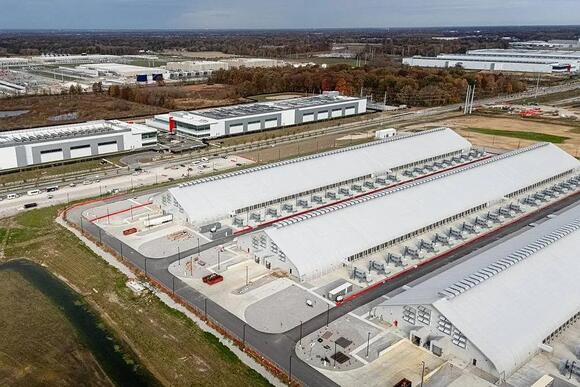
State regulators are recommending that the planned closures of nearly a dozen oil and natural gas-powered electric generating facilities be delayed for several years to keep up with demand.
The Illinois Commerce Commission says in a report released on Monday, the state “faces resource adequacy challenges that reflect broader regional and national trends, driven primarily by data center load growth.”
Or, put simply: There’s going to be more demand than supply.
The report finds that because of rising demand, mostly from data centers, ComEd will have capacity shortages starting in 2030.
The situation is worse downstate.
And the report notes buying power from other states, where data centers are also being built, is not necessarily a viable option.
They’re dealing with the same issues and prices have been on the rise.
The report also says there a need to speed up investments in other forms of power generation.
PRESS RELEASE
Illinois Clean Jobs Coalition -
ILLINOIS — Today, the Illinois EPA and Illinois Power Agency released a draft 2026 Reliability Mitigation Plan, which proposes extending the 2030 emission limits for polluting gas- and oil-fired power plants under the Climate and Equitable Jobs Act (CEJA) to 2033.
The Illinois Commerce Commission staff, alongside other state agencies, also released an Integrated Resource Plan (IRP) report, which provides modeling analysis and recommendations for meeting Illinois’ energy demand through a diverse set of resource options.
In response, the Illinois Clean Jobs Coalition released the following statement: “The bottom line is that Big Tech data centers are driving this problem–straining our power grid, spiking utility bills for Illinois families, and now threatening to delay CEJA’s pollution protections for Illinois communities. The most important thing the state needs to do is hold Big Tech accountable and ensure data centers supply their own new clean power by passing the POWER Act during the fall veto session.
“While it is imperative that we bring additional energy resources online, we should do so via cheaper and more efficient clean energy. This is why we fought to require a state-level IRP in the Clean and Reliable Grid Affordability Act–this process strengthens energy policy-making, supports the implementation of Illinois’ climate and clean energy goals, and right-sizes Illinois’ clean energy procurement targets to meet the state’s energy needs.
Through the IRP process, Illinois will explore alternative solutions to extending the life of dirty fossil fuels to help save Illinoisans money, protect our health, and strengthen our grid.”
PRESS RELEASE
ICC, IPA, and IEPA
CHICAGO, IL – Today, the State of Illinois released two energy reliability reports to proactively plan for the region’s collective energy resource adequacy risk and maintain reliable, resilient, and affordable electric service that minimize emissions without waiting on regional and federal initiatives.
As required by the Clean and Reliable Grid Affordability Act (CRGA), Illinois Commerce Commission (ICC) staff released its Integrated Resource Plan (IRP) report, an extensive analysis that models potential energy futures and asks the Commission to examine approaches, tradeoffs, and recommendations for achieving resource adequacy as a part of a 6-12 month docketed approval proceeding expected to open on Thursday, November 19, 2026.
“Energy affordability and sustained resource adequacy are top priorities at the ICC,” said ICC Executive Director Jonathan Feipel. “For the last three decades, Illinois has had minimal authority over how we plan for energy generation and usage. The state’s new integrated resource planning process allows us to keep a pulse on Illinois’ evolving energy needs, and the IRP report published today will provide valuable insights on how to keep Illinois moving toward a clean and affordable energy future.”
In accordance with the Climate and Equitable Jobs Act (CEJA), the Illinois Power Agency (IPA) and the Illinois Environmental Protection Agency (IEPA) simultaneously issued the draft Resource Adequacy Mitigation Plan with preliminary recommendations to extend applicable CEJA emissions-reduction deadlines for eligible gas- and oil-fired units through the end of the 2032-2033 planning year.
The report finds the proposed extensions could help maintain reliability and limit consumers’ exposure to capacity market costs, while still allowing Illinois to make continued progress toward its decarbonization goals.
Coal-fired units, which produce much more pollution than other units, are not included in the proposed extensions.“It is the IPA’s mission to provide a clean, reliable, and affordable energy future for the residents and businesses of Illinois.
In today’s complex energy ecosystem, the draft Resource Adequacy Mitigation Plan provides near-term recommendations to help balance those layered priorities,” said IPA Director Brian Granahan. “The draft plan places resilience, stability, and energy affordability front and center while continuing to drive forward the state’s clean energy goals.”
While similar, the two reports vary in scope to best adapt and respond to the region’s evolving energy challenges.
The Mitigation Plan required under CEJA focuses on near-term emissions restrictions, while CRGA allows the ICC to consider a broader swath of resource adequacy recommendations over a 20- year outlook.
Unlike other states that use IRPs and utility planning processes, Illinois has historically relied on competitive power markets with limited state authority over generation planning, making Illinois the first restructured state in the region to use an IRP to address growing resource adequacy concerns.
Potential capacity shortfalls identified should not be interpreted as a prediction of future outages. Instead, the IRP analysis uses the industry reliability planning standard of limiting the risk of power outages to one day in 10 years and identifies areas of resource adequacy risk during critical hours under specific assumed conditions.
ICC INTEGRATED RESOURCE PLAN (IRP) REPORT
The IRP report aims to give state regulators, policymakers, utilities, and other stakeholders a common understanding of Illinois’ long-term energy outlook and provide a foundation for proactive solutions. The report delves into a range of future energy outlooks to assess potential regional power system uncertainties and explores how different resource mixes, transmission expansion, plant retirements, and emerging energy technologies could impact affordability, grid reliability, clean energy and emission standards, equity, and other consumer impacts.
Key Takeaways:1. Illinois’ electric system does not operate in isolation. Our power system works in tandem with two regional grid operators that span multiple states. Our resource adequacy challenge reflects broader regional and national trends, driven primarily by data center load growth.2. Illinois can achieve a reliable clean power system using a diverse pool of resources. The state will evaluate available options and pursue approaches that best balance affordability, reliability, and emissions reductions for Illinois electricity customers.
High level considerations from the report include assessing: achievement of Renewable Portfolio Standard goals; demand-side and data center load flexibility initiatives; the pace of new data center development that does not bring its own new clean generation; expansion of distributed energy resources and energy efficiency; battery storage procurement in excess of statutory target; existing emissions requirements and fossil fuel plant retirement schedules; retention of current nuclear fleet and incentivizing uprates and new reactors; interregional transmission development; and the long-term value of advanced energy technologies not yet widely commercially available at scale.
ICC staff and participating state agencies are expected to submit direct testimony on specific IRP implementation recommendations, with a final decision expected by November 2027.R
PA/IEPA DRAFT RESOURCE ADEQUACY MITIGATION PLAN
IPA, IEPA, and ICC were tasked under CEJA with jointly preparing a Resource Adequacy Study to assess the state’s current and projected electricity resource adequacy and reliability. Published in December 2025, the study identified a risk of resource adequacy shortfalls for Illinois and the region over the coming decade.
The draft Resource Adequacy Mitigation Plan released today responds directly to energy constraints identified in the State’s Adequacy Study and assesses whether to allow any plants whose emission reduction deadlines may impose reliability concern to continue operating, including operating with reduced emissions or as emergency backup where appropriate.
Key Takeaways:
Statewide adequacy and reliability challenges persist. Updated projections show that resource adequacy needs continue across the PJM and MISO regions of Illinois.
Resource adequacy modeling demonstrates that retaining certain CEJA-covered units could support reliability even by running only during a limited number of high-risk hours without producing large amounts of energy and associated emissions throughout the year.
The majority of the reliability and customer affordability benefits associated with extending closure deadlines come from gas and oil units—not from coal units. Continued availability of CEJA-covered units preserves near-term flexibility as Illinois undertakes a substantial buildout of new energy resources while also allowing the state to continue progressing toward its decarbonization goals.
Near-term retirements of CEJA-covered units could lead to the development of new natural gas generation outside Illinois to meet the state’s reliability needs.
Retirement of CEJA-covered units without sufficient replacement capacity could increase consumers’ exposure to capacity market costs.
Extending eligible gas and oil units, but not coal units that produce more pollution, best balances affordability, reliability, emissions reductions, and environmental justice considerations.
Preliminary Recommendations:
Given a potential resource adequacy or reliability deficiency remains reasonably likely, the draft plan proposes the extension of the applicable CEJA deadlines for certain covered units (those units subject to Section 9.15(i) of the Illinois EPA Act’s zero carbon emission requirements enacted through CEJA) through at least the end of the 2032-2033 planning year.
Under CEJA, any extension should be limited to the extent necessary to address the identifiable need. The proposed extension is therefore intended to preserve near-term reliability while replacement resources are developed and future reliability needs are reassessed.
Authorization of the extension of the applicable CEJA deadlines lies with the Illinois Commerce Commission (ICC), through the Order that will follow litigation of the Mitigation Plan.
The Mitigation Plan is a draft released for stakeholder feedback and is not a final plan. The IPA and IEPA are accepting stakeholder comments on the draft Mitigation Plan, opening November 16, 2026, and closing January 15, 2027, at 5 p.m. Central Time. Comments must be submitted to IPA at IPA.ContactUs@illinois.gov.
IPA and IEPA will have 30 days to review the comments before filing an updated Mitigation Plan with the ICC for approval.
Questions about the IRP report should be directed to the ICC, while questions related to the Mitigation Plan should be sent to the IPA.
 Add to Preferred Sources

