undefined
Posts
undefined
Followers
Over two million Americans suffered harmful effects from Operation Ranch Hand during the Vietnam War
By Ian Harvey,
2025-02-07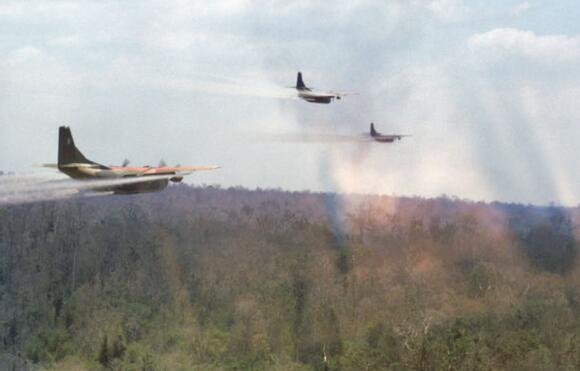
Between 1962 and 1971, with authorization from President John F. Kennedy, the U.S. military sprayed over 19 million gallons of herbicides and defoliants across more than five million acres in Vietnam, Laos, and Cambodia. This operation, called Ranch Hand, was meant to force the North Vietnamese and Viet Cong out of their hiding places. The impact of these chemicals is still felt today.
Defoliants as a 'legal tactic of warfare'
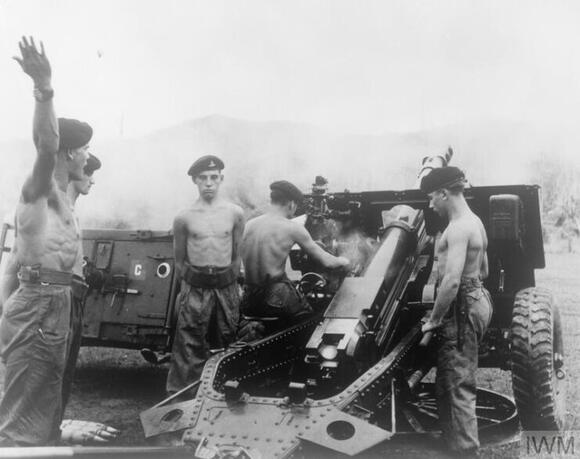
During the Malayan Emergency from 1948 to 1960, the British military explored the use of defoliants against the Malayan National Liberation Army (MNLA). Frustrated by the frequent roadside ambushes that endangered Commonwealth troops, they considered that destroying vegetation could reduce potential hiding spots for guerillas. Additionally, the chemicals would eliminate crops used by the MNLA as a food source.
Reports indicate that many Commonwealth soldiers who handled these chemicals suffered from serious exposure, and upwards of 10,000 MNLA guerrillas and civilians were affected by their impacts. Environmentally, prolonged herbicide use throughout the conflict has been associated with increased soil erosion.
This costly and life-changing campaign influenced the Kennedy administration's belief that the use of such chemicals in warfare was legal .
Agent Orange
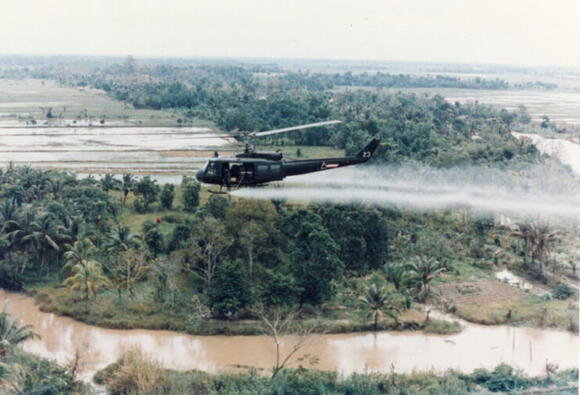
The most frequently used " Rainbow Herbicide " during Operation Ranch Hand was Agent Orange , which was a mixture of equal parts 2,4,5-T and 2,4-D . The result of mixing these two chemicals unintentionally created a highly toxic dioxin known as TCDD.
Prior to the Vietnam War , Agent Orange was primarily used in agriculture, and it was also being sprayed on vegetation that grew around railroads and powerlines. When the idea for Operation Ranch Hand came about, the US military obtained a whopping 20 million US gallons - a staggering amount that accounted for 60 percent of the herbicides used in Vietnam.
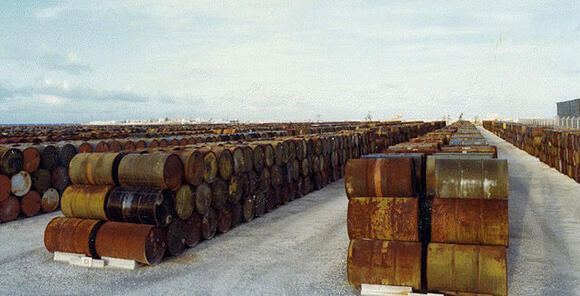
Agent Orange was named for the barrels the herbicide came in, as were the other chemicals used throughout Operation Ranch Hand, such as Agent Blue and Green (used against crops) and Agent White (deployed when Agent Orange wasn't available).
Following the decade-long operation, Agent Orange was banned by the United States, with all remaining stock sent to Johnston Atoll , where it was destroyed.
Launching Operation Ranch Hand
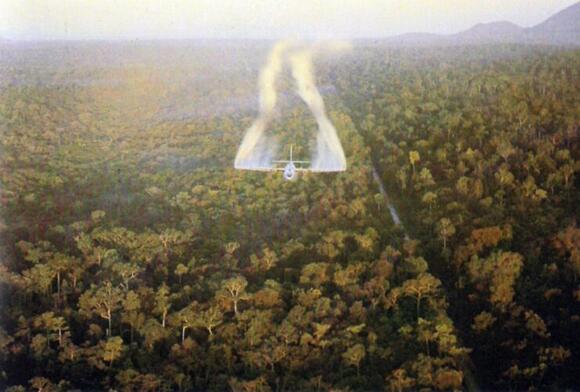
The idea for Operation Ranch Hand came following a request from South Vietnamese President Ngô Đình Diệm to help eliminate the jungle hideouts of the North Vietnamese and Viet Cong . That August, the United States helped the Republic of Vietnam Air Force conduct herbicide operations, with the success prompting President John F. Kennedy to authorize a larger operation under the US Air Force, with assistance from the US Chemical Corps.
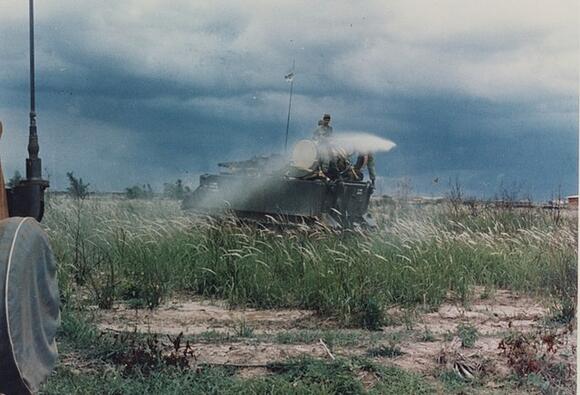
The chemicals deployed as part of Operation Ranch Hand were sprayed via pumps attached to aircraft (Fairchild C-123 Providers and Douglas C-47 Skytrains ), helicopters, boats and trucks - even servicemen carried pumps on their backs. While all operations initially had to be approved by Kennedy, he eventually gave that discretion to the Military Assistance Command, Vietnam and the US Ambassador to Vietnam.
The first official use of herbicides in Vietnam outside of tests began in mid-January 1962. Not only were enemy locations such as hiding places, roads, waterways and crops targeted, but also the perimeters of American camps and airfields to keep them tidy.
A misguided belief the chemicals were harmless to one's health
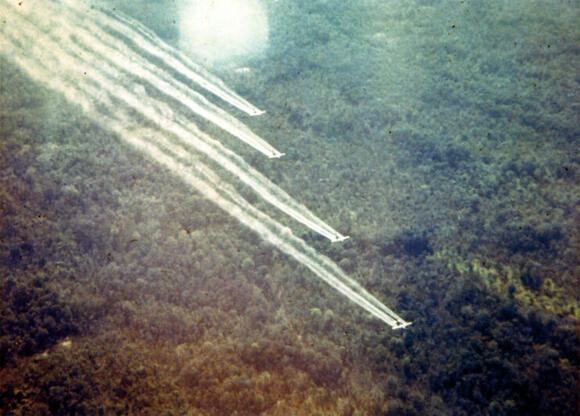
Between 2.6 and 3.8 million servicemen were deployed to Vietnam during the period when herbicides were being sprayed. At the start of Operation Ranch Hand, the military did not account for the possibility that its own troops might be affected, resulting in a lack of masks or protective equipment.
In a 1988 letter to Senator Thomas Daschle (D-SD), James Clary, a researcher involved in the operation, explained , "When we initiated the herbicide program in the 1960s, we were aware of the potential damage due to dioxin contamination in the herbicide. However, because the material was to be used on the enemy, none of us were overly concerned. We never considered a scenario in which our own personnel would become contaminated with the herbicide."
This assumption has since been shown to be wrong. Although the exact number of service members exposed to the spray, its residue, or contaminated soil and water remains unknown, it is estimated that over two million Americans suffered harmful effects as a result.
Operation Ranch Hand forever changed the region
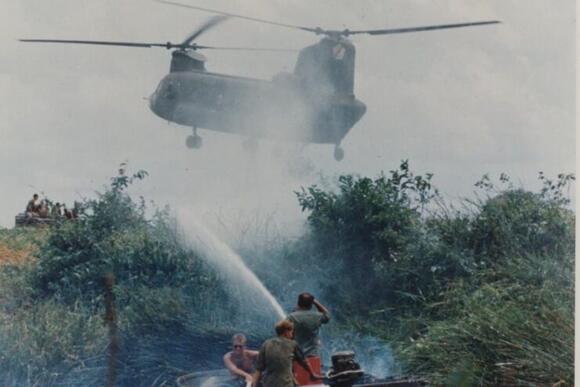
Throughout the decade herbicides were sprayed on Vietnam and the surrounding countries, 20,000 sorties were flown over 6,542 missions . According to reports, 24 percent of South Vietnam was sprayed, with 500,000 acres of food crops and five million acres of mangrove trees destroyed .
In Vietnam, it's been reported that at least 400,000 people died as a result of Operation Ranch Hand and the US military's use of herbicides during the war, with 4.8 million believed to have been exposed to Agent Orange, in particular. Much of these numbers have been provided by the Vietnamese government, with American officials deeming them unreliable.
What wasn't considered was the lasting impact of chemicals like Agent Orange on the environment - in particular, on waterways and the food chain. Those not directly exposed to the spraying, and even those who were, found themselves ingesting the various herbicides through the likes of meat and fish.
Operation Ranch Hand was also a breach of international law. Under the 1925 Geneva Protocol , the use of chemical and biological weapons in war is prohibited - and many approached the United Nations (UN) to put a stop to the atrocities being committed by the United States. However, the country's delegation defeated most of the resolution.
Operation Ranch Hand's impact on Laos and Cambodia
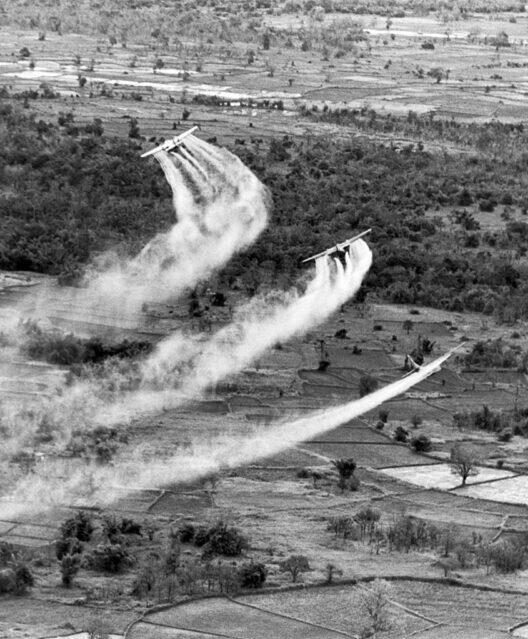
During the Vietnam War, Laos and Cambodia were officially neutral, meaning any kind of military action—especially the use of chemical weapons—was illegal. Knowing this, North Vietnamese forces used the border areas as safe zones and supply routes, which later became a central part of U.S. military operations in the 1970s.
There has been little research on the long-term effects of herbicides in Laos, but birth defects in small villages appear similar to those reported in Vietnam. Many of those affected today are the children and grandchildren of people exposed during Operation Ranch Hand.
About 600,000 gallons of herbicides were sprayed over Laos, including Agent Purple, which was three times stronger than Agent Orange. Even less is known about herbicide use in Cambodia, but one notable case in 1969 involved a rubber plantation in Kampong Cham province, covering 173,000 acres.
Although this is the most well-documented example, Cambodian officials had accused the United States of using chemical weapons in their country as early as 1964.
Birth defects in the descendants of American veterans
The offspring of many veterans who served in Vietnam were born with physical defects, such as spina bifida and other spinal disorders, extra fingers and toes, fused digits and diseases, including several types of cancer. Parkinson's Disease, nerve and muscle disorders, Type 2 Diabetes and heart disease were also reported, and many children suffered psychological disorders.
Vietnam veteran Mike Ryan was exposed to the herbicides and fathered a daughter who was born with spina bifida, deformed extremities, a hole in her heart and no lower digestive tract, among a host of other problems. There were no genetic problems reported on either side of the family, and the Ryans were considerably healthy, with no drug or smoking histories.
The family made their plight public after hearing of more children with similar problems. In 1980, then-President-elect Ronald Reagan met with the Ryans over their concerns and, later, his administration worked to block their class-action lawsuit, which resulted in US District Judge Jack Weinstein ruling that direct payments could only be made to disabled veterans or survivors of those who'd died. The ruling conspicuously left out their descendants.
Fellow veteran Royal Gee had a daughter prior to his service in Vietnam who is completely healthy and one born after his return. She suffered from cysts, joint problems and an immune system disorder. This led him to tell ProPublica , "They say it has nothing to do with my service in Vietnam and it stops right there. There’s got to be a reason."
How has the US government responded?
Hundreds of studies have been conducted since the Vietnam War and many point to a connection between the use of herbicides and birth defects. In 1979, a class-action lawsuit was filed on behalf of 2.4 million veterans who'd been exposed to Agent Orange during their service, which led several of the companies that supplied the government to pay $180 million in compensation. This was followed by many other lawsuits, some of which were geared toward the government.
The Institute of Medicine (IOM) over the years has recommended the US Department of Veterans Affairs "review all the possible cognitive and developmental effects in offspring of veterans," including "the possibility of effects in grandchildren." However, it's only in the last few dacades that the VA has actually taken step to help those imapcted by the herbicides that were sprayed during Operation Ranch Hand.
More from us: 5,000 War Dogs Served in Vietnam and Almost All of Them Were Left Behind
In 1991, US President George H.W. Bush signed the Agent Orange Act into law, mandating that several of the ailments associated with the use of herbicides in Vietnam be treated as having resulted from veterans' wartime service.
 Add to Preferred Sources


