undefined
Posts
undefined
Followers
COLUMN | Punta Gorda and its three ice plants
By Frank Desguin,
6 days ago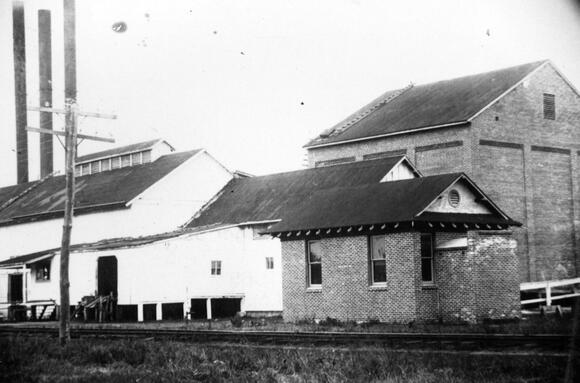
Good Day to all, and thank you to all veterans!
Did you know Punta Gorda had three ice plants over time in its early history?
Mechanical refrigeration was first proposed by Dr. John Gorrie of Apalachicola, Florida. Specializing in tropical diseases, he believed cool air helped his patients.
Gorrie was granted a patent in May 1851 for his ice making machine, but unable to get financing for its manufacture, died penniless in 1855.
However, by the time Isaac Trabue platted the town that became Punta Gorda, improvements had been made to Gorrie’s idea resulting in the ability to mass produce ice.
Trabue built the town’s first ice plant in 1891. Located on both sides of Berry Street between Virginia and Olympia Avenues, the Ice Factory Company plant was steam driven and could produce 15 tons per day.
A long chute to the bay front, about 1,500 feet away, allowed easy movement of ice to waiting boats, and Henry Plant’s railroad passed through the complex on its way to the Long Dock.
Readily available ice and the railroad opened up a northern fresh fish market, dramatically changing the local fishing industry.
Being the only game in town though, Trabue’s company dictated prices and operated only during the fishing season.
Consequently, it was just a matter of time before competition came to the growing settlement.
In June 1895, local businessmen organized The Punta Gorda Ice and Power Company. Its plant, built at the corner of King Street (U. S. 41 north) and Virginia Avenue, could produce ice more economically using compressors powered by electric motors rather than steam, and had a larger daily capacity of 25 tons.
It also provided ice year-round to appreciative townsfolk.
By 1897, railroad magnate Henry Plant’s decided to rely primarily on his new port at Tampa
That resulted in the removal of track running through Trabue’s complex to the Long Dock, the Ice Factory Company ceased production.
However, track on King Street leading to the depot, Hotel Punta Gorda, and Plant’s new dock remained open, so the railroad, along with a growing population, kept Punta Gorda Ice and Power in business.
In fact, the plant operated into the early 1960s, and the building still stands today. As a youngster, I remember my family stopping by to get a 25-pound block of ice for the cooler before heading to the beach or woods for a picnic. Of course, you needed an ice pick
Trabue tried the ice business once again in 1902, when he convinced a group of Philadelphia investors to join him in the Consolidated Ice Manufacturing, Refrigeration and Fish Company. Their plan was to furnish cheaper ice to fishermen and process “trash fish” into fertilizer.
With that in mind, “Consolidated” constructed a huge four-boiler ice factory on Trabue’s old site between Virginia and Olympia Avenues and a four-story fertilizer plant at the foot of Berry Street about where the Punta Gorda Boat Club is located today.
If you knew where to look, a portion of the ice plant’s foundation remained evident at the corner of Berry and Olympia until a home’s recent construction. It is now displayed next to the Linear Park between Berry and Shreve Streets.
I remember as a youngster playing on the beach among the fertilizer plant’s large rock foundation pylons, long since buried. For a kid, it was one of the neatest places in town.
However, by the time construction was completed, declining catches rendered operation of either plant impractical and neither went into production.
In a test run, though, three 150-ton blocks of ice, about 5,000 cubic feet each, were produced. Placed on a vacant lot, it’s said they took three months to melt. The enterprise must have been quite the financial disaster, since when constructed, Consolidated’s plant was claimed to be the largest plate ice factory east of the Mississippi.
Photographs of Punta Gorda’s ice plants can be viewed by visiting Charlotte County online library resources. Select “Community Services,” then “Libraries and History.” Click on “Physical Items,” then “Archive Search.” Enter the subject of your search on the “Search” line.
Visit Charlotte County’s library website.
Visit Punta Gorda History Center’s Online Collections at puntagorda.pastperfectonline.com to view photos.
If you believe our area’s history is important, please visit the Charlotte County Historical Society site, cchistoricalsociety.com, or call 941-769-1270 for more information.
 Add to Preferred Sources
