undefined
Posts
undefined
Followers
Amtrak Chicago maintenance facility assessment glosses over challenges: Analysis
By David Lassen,
5 days ago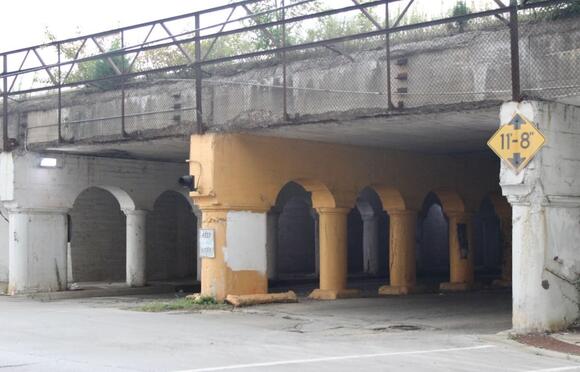
CHICAGO — The Federal Railroad Administration’s assessment of the site where Amtrak seeks to build a new Chicago maintenance facility details a long list of environmental mitigation efforts that will be required at the now-dormant Union Pacific rail yard on the South Side.
However, the document publicly posted Friday reflects Amtrak’s reliance on building where land and financing are available without exploring possible alternatives that might be less intrusive than an industrial facility adjacent to a residential neighborhood. [See “FRA releases environmental assessment …,” Trains.com, Nov 6, 2026.] And a neighborhood group considers the assessment incomplete and is calling for a full Environmental Impact Study.
Community meetings scheduled
Over the weekend, the project’s website invited participants to register for two public forums early next month: In person Dec. 2 at the Illinois Institute of Technology and online for two sessions the following day.
Two information sections on that website — “What we’re hearing versus the facts” and “Canal Street Railyard Timeline” — take a combative approach in discounting some incorrect assumptions that have surfaced since the project was publicly announced. Especially insensitive is an implied argument that the plans should have come as no surprise because the proposed move was disclosed to city officials and in news stories as early as 2023 when engineering studies began. This preceded news that a buyer for Amtrak’s 14th Street coach yard had emerged [see “Amtrak yard near Chicago Union Station …,’ March 18, 2026]. Only later it was revealed that real estate impresario Justin Ishbia and the company he controls, Canal Edge, would help build and fund the proposed Canal Street Yard.
A new Chicago maintenance facility was just one of many items that needed to be planned to qualify for federal funding. Public outreach by Amtrak at that point to nearby residents was, understandably, minimal. Even with substantial Infrastructure and Investment Act grant funding available, there was no guarantee when or if the project would be approved.
Also on Amtrak’s Chicago wish list at the time: a direct rail connection to Union Station for trains to and from Carbondale and New Orleans on a new structure descending through the 14th Street coach yard. This would eliminate the current 20-minute backup move across the 21st Street interlocking. That operational upgrade was never funded, and would not be possible if the site is redeveloped with residences, businesses, and perhaps a ballpark.
Another project — to convert dormant mail platforms at Chicago Union Station for passenger use — did get funded. That project is starting this week.
Why only one “Build” alternative?
In hindsight, the lack of early public outreach set the stage for why the FRA’s initial finding of no “significant environmental impact” limited consideration to the Canal Street Yard site and not the surrounding neighborhood. If Union Pacific had said the former Global One intermodal site was also available for sale, perhaps comparative factors on that issue might have been addressed.
The “Alternative Screenings Summary, table 2.2 in the FRA’s environmental assessment, lists “key considerations” leading to Global One’s dismissal. These include:
- Access across the BNSF/Metra Union Avenue interlocking.
- Poor roadway access.
- Structures requiring replacement.
- Lack of availability from UP.
The last element is what clearly eliminates Global One: UP only wants to sell Canal Street yard. End of story. Amtrak could pursue acquisition through eminent domain proceedings, but that would lead to a protracted legal fight with a key host railroad.
A long backup move could have been to the list of Global One problems, but that is also true of Canal Street, which would face other issues:
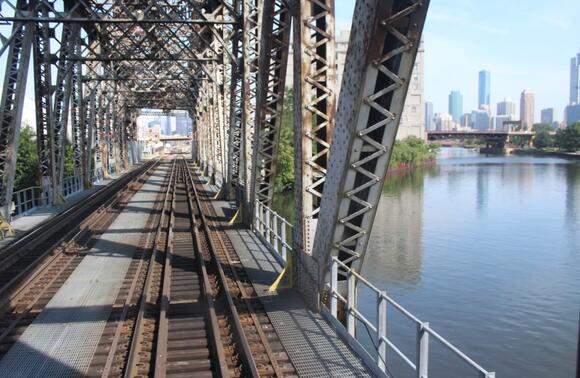
- Every move must cross the South Branch Bridge and CN’s 21st Street interlocking [see “Amtrak’s proposed Chicago maintenance facility …,” Sept. 17, 2026.
- The Canal Street site is on a miles-long embankment with few entry points
- Extensive rebuilding of 17 century-old viaducts must commence before any construction begins.
On the last point, the FRA report says, “Without rehabilitation, continued deterioration would increase risk to motorists, pedestrians, and bicyclists using the streets beneath the structures and would preclude reliable use of the rail yard.” The language does not make it clear whether the rehabilitation will cover all aspects of the deterioration or only those repairs needed to support the maintenance facility.
“Sound, vibration, and contaminated soil mitigation” are part of the Canal Street list but might not be nearly as extensive at Global One.
Staying put?
Section 1.3.3 of the report says, “The 14th Street Yard is geographically constrained, limiting Amtrak’s ability to expand facilities, add inspection capacity, or reconfigure track layouts. Movements to and from the rail yard require complex routings over the South Branch Bridge and the CN diamond at CP 21st Street, and on-site vehicle and pedestrian crossings create safety conflicts. These limitations contribute to operational bottlenecks and maintenance delays that directly affect service reliability.”
An even-handed analysis would also mention that every equipment move between Canal Street Yard and Union Station will require use of the NS main line over the South Branch Bridge and signal clearance crossing the CN at 21st Street where none require it today.
If the multi-pronged funding opportunity unleashed by the $572 million federal grant and financial contributions by developer Canal Edge had not been proposed, perhaps an expansion and modernization plan could be devised to utilize only the north end of UP’s yard for equipment storage while portions of the 14th Street facility were enhanced with a five-track enclosed maintenance and inspection structure. As currently configured, the locomotive shop at the south end of the property near 18th Street functions separately from the car shop.
Residents’ point of view
The analysis further elaborates on proposed mitigation efforts that building a new facility will require, but in doing so, essentially talks past underlying neighborhood concerns.
In an email to Trains, Armour Bridgeport Coalition spokeswoman Maria LaGiglio writes, “We understand and support Amtrak’s need to modernize its maintenance operations, and we support continued investment in passenger rail. Our objection is to this location. A maintenance, fueling and servicing facility should not be placed beside thousands of residents when nonresidential alternatives may exist, particularly when the relocation is connected to valuable redevelopment plans at the current 14th Street site. Modernization should not require densely populated communities to absorb consequences that could be avoided through a more responsible site-selection process.”
A press release on the group’s website outlines additional concerns about the scope of the report and its conclusions. “ Identifying contamination is not the same as demonstrating that construction and future operations will not increase exposure risks for surrounding residents,” the release says. “FRA must explain how excavation, groundwater management and ongoing maintenance operations would interact with existing contamination.”
There’s no question that Amtrak’s often-maligned Chicago maintenance functions could benefit from a new facility, or that such a facility would be extremely difficult to construct without the financial perks proposed in the current real estate land swap. Incorporating those needs with a solution acceptable to nearby residents is the next challenge.
— To report news or errors, contact trainsnewswire@firecrown.com.
 Add to Preferred Sources
