undefined
Posts
undefined
Followers
DCNR unveils plan to protect state parks and forests from climate change
By Staff report,
5 days ago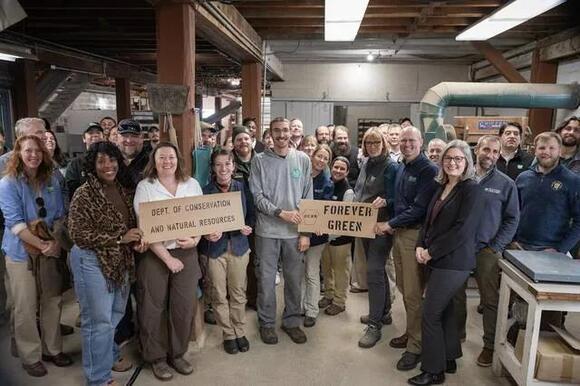
New steps are being taken to protect Pennsylvania’s state parks, forests, and outdoor recreation areas from the growing impacts of climate change, while reducing the greenhouse gas emissions generated by the Pennsylvania Department of Conservation and Natural Resources (DCNR).
DCNR Secretary Cindy Adams Dunn this week unveiled a new Climate Action Plan establishing measurable goals and actions to make the Commonwealth’s public lands and DCNR operations more sustainable and resilient through 2050.
Pennsylvania is already experiencing the effects of a changing climate, including increased flooding, more extreme heat days, harmful algal blooms, and shifting seasonal patterns. These changes can threaten public safety, harm natural resources, and affect the places Pennsylvanians and visitors enjoy for outdoor recreation. The plan builds on work already underway and sets goals for making DCNR’s operations and public lands more sustainable and resilient for future generations.
“Pennsylvania’s state parks and forests are among our greatest natural resources, and we have a responsibility to protect them for generations to come,” said DCNR Secretary Cindy Adams Dunn. “This plan builds on the work DCNR is already doing to prepare our public lands for the impacts of climate change, protect the natural resources Pennsylvanians depend on, and reduce our own emissions. We’re setting clear goals and taking practical steps to ensure these special places remain safe, healthy, and accessible for everyone.”
The plan includes:
• Updated climate projections for Pennsylvania.
• A department‑wide climate risk assessment.
• DCNR’s first greenhouse gas inventory.
• Agency-wide and bureau‑specific climate actions and performance indicators.
• Guidance on climate‑resilient land management, carbon sequestration, and emerging technologies.
What’s in this plan
The plan establishes specific goals and accountability measures, prioritizes support for vulnerable communities, and includes:
• Reducing greenhouse gas emissions directly resulting from DCNR operations by 80 percent by 2050.
• Generating or offsetting all electricity used by DCNR from carbon-free sources by 2035.
• Providing both general and specialized climate change training to all DCNR staff by 2030.
• Establishing 60 measurable climate action goals across the agency.
• Implementing 49 bureau-led actions to strengthen climate resilience in infrastructure, grant programs, operations, natural resources, recreational spaces, and other agency functions.
• Reporting progress each year to ensure transparency and accountability.
Helping communities prepare for climate impacts
DCNR designed the Climate Action Plan to serve as a resource for local governments, school districts, universities, and conservation organizations working to address climate change. It includes regional climate projections, a statewide climate risk assessment, and guidance on forest management, carbon sequestration, and climate-resilient recreation design.
Building on climate action already underway
DCNR has already made significant progress in climate mitigation and adaptation. The agency has installed 40 small‑scale solar arrays, added more than 50 public electric vehicle charging stations across state parks and forests, built 18 high-performance LEED-certified buildings, and converted about 10% of its vehicle fleet to electric or hybrid models.
Investing in communities and local resilience
DCNR invests millions of dollars each year through the Community Conservation Partnership Program to help local governments and nonprofits build climate‑resilient parks, trails, and recreation areas, including a recent $81 million investment in community projects statewide.
More than 70% of Pennsylvania’s forests are privately owned, meaning the long-term resilience of the state’s forests depends on the stewardship of private landowners.
Draw-down of Lake Frances at Nescopeck State Park to continue
The Pennsylvania Department of Conservation and Natural Resources (DCNR) is continuing engineering evaluations of the dam at Lake Frances in Nescopeck State Park following the discovery of conditions that have raised concerns about the long-term stability of the structure.
Nescopeck State Park encompasses approximately 3,550 acres in Luzerne County, featuring diverse forests, wetlands, and wildlife habitats. The park offers opportunities for hiking, fishing, environmental education, wildlife watching, and other outdoor recreation. Lake Frances has historically served as a focal point for visitors, providing opportunities for fishing, kayaking, and enjoying the surrounding natural setting.
DCNR initially drained the 9-acre lake in fall 2025 to replace its drop inlet spillway structure. During the project, additional investigation revealed that the foundation beneath the spillway structure and potential locations of the dam embankment are not stable. These conditions present significant engineering and safety challenges, raising questions about the ability of the existing dam to safely maintain a full lake.
Based on the findings to date, the dam cannot safely accommodate maximum lake levels under current conditions and Lake Frances will remain drawn down while these evaluations continue. DCNR will not refill the lake until the necessary engineering evaluations are completed and the operational safety of the dam can be confirmed.
Lake-based recreational activities, including fishing and kayaking, will remain unavailable during the extended draw-down. Trout stocking will also remain suspended until conditions allow the lake to safely support those activities. Those looking to enjoy water-based recreational activities in the region are encouraged to consider the Nescopeck Creek, Lehigh River, Francis E. Walter Dam, or Hickory Run Lake as alternatives.
The Department of Conservation and Natural Resources manages Pennsylvania’s 125 state parks and 2.2 million acres of state forestlands, which are free and open to the public every day.
Chronic wasting disease focus of Penn State Extension workshop
Hunters, landowners and managers can learn how chronic wasting disease spreads, how it affects hunting and venison preparation, and ways to prevent transmission and follow current regulations at an upcoming Penn State Extension workshop.
The “Chronic Wasting Disease” workshop will occur from 6 p.m.-7 p.m., Nov. 30, at Tionesta Volunteer Fire Department, 116 Walnut St., Social Hall, Tionesta.
Chronic wasting disease is a fatal prion disease that affects deer and other members of the deer family. Hunters and landowners play an important role in limiting its spread and protecting Pennsylvania’s deer populations, according to organizers.
Participants can learn how chronic wasting disease is transmitted, recognize its signs and symptoms, and understand practical steps to help prevent disease transmission.
Katie Brooks, renewable natural resources and forestry extension educator, also will discuss current chronic wasting disease management regulations and ways hunters and landowners can help reduce the spread of this disease.
Penn State Extension offers this workshop at no charge. Preregistration prior to Nov. 30 is encouraged.
More information is available on the Penn State Extension website at extension.psu.edu/chronic-wasting-disease.
 Add to Preferred Sources