undefined
Posts
undefined
Followers
Blue October coming to FM Kirby Center
By Brian Shovelton,
17 days ago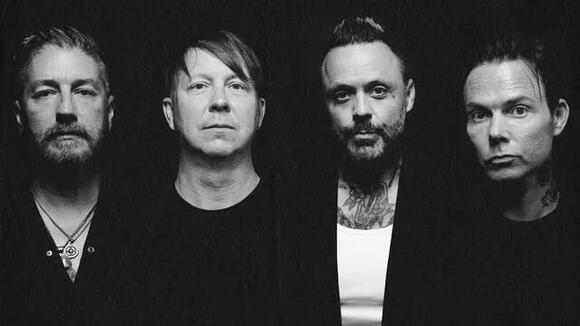
Blue October originally formed in 1995 in Houston, Texas. Led by singer /songwriter Justin Furstenfeld, the band has notched 21 top 40 singles on the alternative rock chart over the course of 12 studio albums and the band’s songs have been streamed over 1.5 billion times. However, it wasn’t until their 2006 album “Foiled” that Blue October rose to national prominence, with the success of the singles “Hate Me” and “Into the Ocean.” I recently spoke with long time bassist Matt Noveskey to discuss their past, the present tour and the new studio album coming soon.
The band will perform at 8 p.m. Nov. 14 at the F.M. Kirby Center for the Performing Arts in downtown Wilkes-Barre. Doors open at 6:30 p.m. Tickets are available at kirbycenter.org.
Q. I understand the band is based out of Houston, Texas?
Matt Noveskey: The band’s originally from Houston. Jeremy and Justin, the singer and drummer are brothers. Ryan, the violinist, went to school with Justin. They all grew up together. I grew up in Michigan. I joined the band in ’98 and moved to the Austin area. I’m not from Houston. They still claim Houston as their hometown. I’ve been here long enough where I’m an honorary Texan. (laughs)
Q. Do you think the band’s Texas origins had an influence on the music?
MN: I do. Nobody’s ever asked me that before. It’s a really good question. One thing I’ve learned is El Paso, Houston, and certain pockets of Texas have a huge fan base of what could be the origins of emo or goth music. Artists like Morrissey and the Cocteau Twins are absolutely huge down here.
Q. I would never have expected that.
MN: Yeah, I didn’t either until I moved down here. When I first heard the band, when they sent me the old songs, there was a little bit of Texas flavor in a song called “Italian Radio.” But I was also picking up on a kind of Depeche Mode /Cure vibe and I thought it was strange. I thought being from Texas they would all be saying things like “y’all.” I was shocked when I came down here and found this massive following for people like Morrissey. So, yes, I think it influenced it, but not in the way you’d think.
Q. With the massive success of the “Foiled” album and “Hate Me” single, how did things change for the band creatively and practically?
MN: I wouldn’t say the creative process changed. One thing I’ve always known since I joined the band is that there’s a huge amount of creativity here. Justin writes non-stop, almost to the point where you can’t keep up. He’s always been that way, too, and I consider myself very fortunate to be in a band with a guy like that. He’s been the same that way since day one. I don’t think that changed with “Foiled,” but touring definitely did. It went from us all cramming into a van and sleeping on floors sharing one hotel room to, not necessarily luxury, but to a more sustainable life. We have an actual crew now instead of one person trying to do 10 jobs. It afforded us the ability to tour in a more professional way.
And the crowds, that’s everything. People were just showing up in droves all of a sudden. But here’s the thing: with a lot of bands you get instant success and it can go to your head and make you feel entitled. We didn’t have that. We had three or four albums before “Foiled.” Nothing happened for a while. We were grinding, slowly building it up. Then when “Foiled” got big and crowds started showing up, I think we handled it in a way that I’m really grateful for. I don’t know if it would have been that way if we had that success with album number one, if that makes sense.
Q. I know Justin got sober in 2012. Did you see a major difference in his creative process when he got clean?
MN: He’s always been prolific. He’s always been super artistic and creative, and he’s always had something to say. There was definitely a period of time though, where it was hard to understand the message. It was like deciphering code for a while, you know? It was like, “I got the demo, but did you mean to send me this? It’s only a beat.” We definitely saw some red flags, and then we figured out what he was going through. To be honest with you, not just creatively and artistically, but in every single facet of that dude’s life…as far as our friendship goes, as far as being bandmates, professionally, being organized, being respectful…all those things, that was the moment. Him getting clean was such a pivotal moment, I can say with absolute confidence that we would not be doing what we’re doing right now if that hadn’t happened. It was something that had to happen, and I’m so grateful that it did.
But here’s the thing; there’s no judgment with us. We’re not telling everyone they have to be sober and no one can have a drink. I just feel like there comes a point in your life where you realize what you can handle and what you can’t. And that’s one of the things I respect so much about some of the guys in our camp. They take their sobriety very seriously, but they don’t preach it to other people.
Q. In 2020, the band released the documentary “Get Back Up.” Was that a cathartic experience for Justin? Also, how did creating the documentary affect the band as a whole?
MN: When we began, we didn’t really know what it was going to be. I think it began as one thing, and over time and different events unfolding in our lives it became something else. It went from, “Let’s film for a year” to “Let’s just keep doing this. Something’s happening.” We had a beginning and a middle to the story, but we didn’t know how it was going to end. We got lucky in that way. It became almost a responsibility for us to make it at that point. There are so many music documentaries or “Behind the Music” shows that do not have a happy ending. Ours was the opposite experience. We wanted to show people that it can be done. You can have a sustainable career that will last 20 or 30 years. By the end we understood exactly what it was. It became something people could watch and understand, instead of just interpreting the songs.
Q. Coming up to the present time, I know you guys recently released three music videos. With MTV now being a non-entity, what was the process like, making them and releasing them?
MN: It’s pretty cool because we just do the things the way that we want to do them now. Nothing against the old way of doing things, but we don’t have to adhere to a label’s vision of what it should be now. It was a convoluted process before because there was a system in place you had to adhere to. Now it’s like the wild west. Everybody can do whatever they want. Making these videos was very liberating for that reason. We were very hands-on about the story that was being told. It was a more liberating way to get it done.
Q. You guys are doing the 20th anniversary tour for “Foiled.” Does it feel like it happened 20 years ago, or does it seem like it was just yesterday?
MN: In some ways it does and in some ways it doesn’t, you know? I have some great memories from that time and making that record when everything was starting to blossom and come to fruition. Our lives have changed so much since that time. We live in a completely different world now, and in some ways it feels like a lifetime ago. But the record…we just played it in Europe and were wondering if it would still hold up. It still does, and those were some of my favorite shows to play.
Q. You’re going to be doing the whole album in its entirety on this tour, right?
MN: Yeah, the whole thing. Even the hidden track at the end. Then we’ll come out and do a little cross-section of material from over the years, but the focus is really that album.
Q. Your 13th album is, I believe, going to be released by the end of the year?
MN: It will probably be early next year. I couldn’t be more excited about it too, man. It’s some of my favorite stuff we’ve ever done. Over the past decade we’ve become so efficient that we’ve just been pumping out songs. At one point we had three albums come out in like a two-year period or something like that. It’s been nice to pull the reins back a little and put a lot of attention to detail into this album. I think it’s going to be special. We’ve been going over it with a fine-tooth comb, making sure every song holds up.
Q. I’ve come to realize over the course of time, what a huge fan base you guys really have. How do you keep those people while also introducing new music to, hopefully, a new audience?
MN: One of the funny things about us is that we don’t actually have a demographic. If I go see most bands, I know exactly who is going to be there. If I go see Rush, I know it’s going to be a bunch of dudes my age. If I go see Blink 182, I know exactly who is going to be there. But with us you can’t predict what the audience will look like or what the makeup of the crowd will be, because it’s everybody. It’s every generation. I really feel that it’s like that because we broke down the walls between the band and the fans. We like to get to know people we get to do this with. I like to call them our family in a way a lot of bands just don’t do. Justin will go out every night and sign everything for every person in line. Some venues don’t like it, but this is who we are and what we do. It’s important to spend time with them and get to know them. We do these events where we spend a weekend with people, hearing their stories, getting to know them, forming relationships with them. I think when you do that and stop being concerned with the “mystery” of being in a rock band, we create connection with people that lasts forever. And this has been the most special part of this.
 Add to Preferred Sources