undefined
Posts
undefined
Followers
Hot car deaths can be avoided with memory tricks, new technology
By Ginger Livingston,
2026-08-08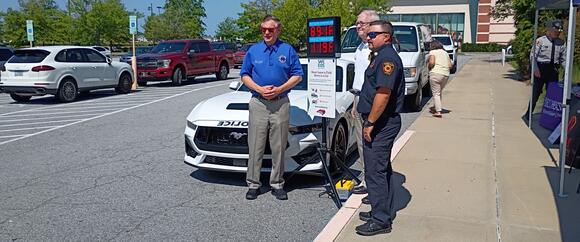
No children have died in Pitt County because they were left in a hot car, but local safety officials say there have been close calls.
To ensure such a tragedy never occurs locally, ECU Health’s Eastern Carolina Injury Prevention Program along with the Martin-Pitt Partnership for Children, Safe Kids Pitt County and N.C. Governor’s Highway Safety Program hosted a hot car safety event last week.
Held outside Kohl’s department store, the event was designed to raise awareness about the life-threatening dangers of leaving children, seniors and pets unattended in vehicles for any length of time.
“Children’s bodies heat three to five times faster than an adult,” said Ellen Walston, Injury Prevention Program director. “They also have such a small body surface area that they can’t cool themselves as easily as adults can.”
While Pitt County has never experienced the death of a child inside a hot car, the state has reported deaths since 1998, when data tracking began.
In the last 28 years, there have been 1,041 pediatric vehicle heatstroke deaths nationwide, according to noheatstroke.org, an organization that tracks PVH deaths nationally. On average, about 37 children die annually from heatstroke inside hot vehicles, according to the organization.
“The majority have been in Florida and 52% of children are left in cars unintentionally,” Walston said. “They’re forgotten. We do have situations where 17% were left intentionally. The remaining percent is really children gaining access to an unlocked car. So our message is also to make sure you keep your car locked at all times.”
Walston said 16 deaths have already been reported in the United States this year. None have been in North Carolina.
The July 30 event featured a thermometer measuring the temperature inside a police car. In about 45 minutes, the temperature rose from 119 degrees to 126 degrees.
Two pans of s’mores were placed on the dashboard of a van to demonstrate how heat can build up in a vehicle.
A new display was provided this year by Safe Kids North Carolina: a table with 50 shoes ranging from infant to child-sized, each with a tag providing the location, age, and month and year a child died.
“The thermometer is a good visual, but the shoes underscore the impact,” said Allan Buchanan, director of Safe Kids North Carolina. “It’s hard to think about each child who was left in a car or who gained access to a car and couldn’t get out ... It hits home with me because it’s so emotional to think about each shoe representing a child’s life. When you look at these, it’s a child that was gone way too soon.”
The event came more than a month after bomb detection K-9 Chilli, employed by the Pitt County Sheriff’s Office, died after being left in her handler’s car after a morning of training in Rocky Mount. According to the sheriff’s office, her handler, who has not been identified, said he forgot she was in the car.
“It’s very sad,” N.C. Insurance Commissioner Mike Causey said. “It’s one of those things that never should happen, but it happens all too frequently because people have so much on their minds they temporarily forget things. That’s why we tell people you have to have something in that vehicle as a reminder.”
The N.C. Office of State Fire Marshal, a division of the state Department of Insurance, has arson dogs, Causey said.
“Whether arson dogs, police canines, any sort of canine unit, any vehicle transporting animals like that, in my opinion, it would be good to have some sort of warning device so we could prevent this type of tragedy,” Causey said.
Modern vehicles can have devices that alert drivers that someone is in the back seat. Individuals driving cars without that feature should put an item like a purse or briefcase on the back seat that they’ll need when they get out of the vehicle, Causey said. That way they’ll see the child or pet.
Mark Ezzell, director of the North Carolina Governor’s Highway Safety Program, said the best device to leave in the back seat is a cell phone, along with a purse or other item you’ll need when you reach your destination.
“Parenting, especially if you’re a young parent, a new parent, it’s an exhausting thing,” Ezzell said. “Give yourself those constant reminders.”
People should not rely on technology to keep their children and pets safe, Walston said. Many people believe it’s safe to leave them in vehicles with air conditioning running, but some new models have cooling units that cut off after a certain period of time if the vehicle isn’t moving.
“The other myth is, people think if you crack the windows or roll the windows completely down it will lower the temperature in the car. It does not help,” Walston said. “We recommend never leaving a child or senior or pet in the car, not even for a minute.”
 Add to Preferred Sources
