undefined
Posts
undefined
Followers
Stiles: Every vote truly counts
By Chris Stiles,
1 days ago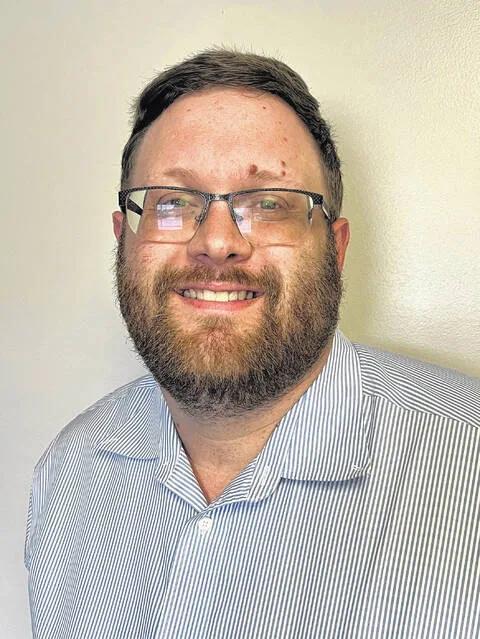
One common excuse used by those who are eligible to vote but choose not to is the feeling that their vote “doesn’t count.”
You don’t have to look far in Robeson County to find evidence to the contrary.
The Nov. 3 general election saw margins as small as three votes and the Nov. 17 Lumbee Tribe election included a race with a one-vote margin. It’s also not unprecedented for elections to end in an exact tie, as you’ll read below.
It can be astonishing when an election with thousands of votes cast comes down to a difference of just a few ballots. And yet, in these divided times, it seems to be happening more and more often.
In the District 6 race for the Robeson County Board of Commissioners between Republican incumbent David Edge and Democratic challenger Ray Cox, the margin is currently just three votes in Cox’s favor. Protests filed by both candidates were heard Monday by the Robeson County Board of Elections, who deferred a decision to the state board (see page 1A).
The merits of either protest, and of whether or not the county board should have made a decision, is another discussion that could fill its own column. But nonetheless, whatever outcome comes from the protest process, the fact will remain that the election is incredibly close — either a three-vote win for Cox or, if Edge’s protest is upheld, a one-vote win for the incumbent, this from the more than 4,800 cast.
If you’d prefer to not look at that hypothetical one-vote margin, I’ll give you a one-vote margin that has already happened in another recent local race — ironically also in a “District 6” — in a very close three-way battle.
Cody W. Locklear earned 81 votes for Lumbee Tribal Council on Nov. 17, beating Eustacia V. Lowry-Jones by a single vote, as she had 80. Incumbent Larry A. Chavis finished in third, but was only three votes behind the winner, with 78.
Last year’s Tribal Council race between Jo Doss and Kenneth Bowen in District 12 ended in an exact tie — 66 votes for Doss, 66 for Bowen. The Lumbee Tribe’s election rules allow for a coin toss to break an election tie; Doss won the coin toss, and another term on the board.
Even when races haven’t been decided by single-digit totals, there’s still been plenty of very close elections that reinforce the value of every ballot. N.C. Sen. Danny Britt, a Republican, won reelection by 227 votes against Democrat Catina Hamm after a recount across the three-county district. While that sounds like a comparatively larger margin than some of the other races mentioned in this column, the difference was still just 0.4%. And, frankly, Robeson County ballots made a big difference here: it took Britt compiling a ton of votes in his own county to overcome deficits he faced in both Hoke and Scotland counties.
U.S. House races won by Republican incumbents Mark Harris and David Rouzer, whose districts each include part of Robeson, were also very close, as was the Robeson County Board of Commissioners race in District 4 in which unaffiliated candidate Harry Warriax unseated Republican incumbent Faline Locklear Dial by just 28 votes, from the nearly 3,400 cast.
And there have, of course, been other extremely close elections around the state and country of large historical significance. This includes the 2000 presidential election, with a 537-vote statewide margin in Florida — out of nearly 6 million ballots — determining George W. Bush’s overall victory after multiple recounts in a five-week legal battle. Then-President Bill Clinton remarked the day after Election Day: “No American will ever again be able to seriously say: ‘My vote doesn’t count.’”
So, if you are one who feels that way, imagine what it could have done in some of these elections. It could have influenced the very outcome, determining who is in the seat of power and thus helping to shape the future of their constituencies, be it locally or nationally.
Another tied election happened in Aynor, South Carolina, about 45 miles south of Lumberton in Horry County, in 2016. A mayoral race in the small town saw exactly 75 votes for each candidate. Ultimately, a runoff election was held, and more people voted in that election than in the original one after the publicity the tie received.
I was a student at Anderson University at the time, and brought the situation up during a political-science class discussion about elections, when a classmate proceeded to say that Aynor is her hometown and her brother had intended to go vote, but forgot.
If you think that individual votes don’t matter, just consider the impact that it would have made had her brother simply remembered to go to the polls.
 Add to Preferred Sources