undefined
Posts
undefined
Followers
Opposition mounts to Rapid City data centers
By Jerry Steinley,
2 days ago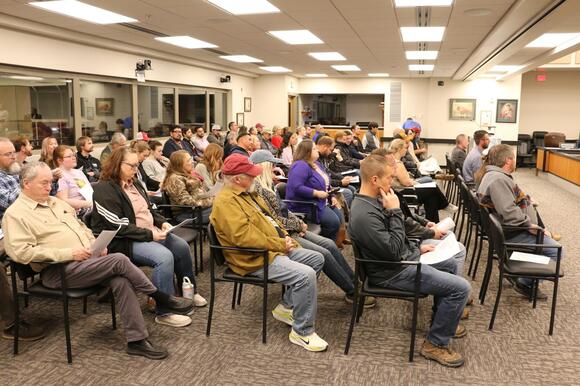
RAPID CITY, SD – On Monday, months of concerns about data centers pivoted to clear opposition as the public packed the council chambers at City Hall to voice opposition to data centers in city limits.
While data centers weren’t on the regular Rapid City Council meeting agenda Monday, the opposition was voiced during the general comment time at the end of the regular meeting.
Public hearings and an open house to review a proposed data center ordinance have generated considerable public input. The proposed ordinance is designed put guardrails on data center projects. Since 2024, Rapid City has had regulations addressing zoning for data centers in city limits but as community concerns increased in recent years and new data became available, the city revisited its data center zoning and began developing an ordinance. That ordinance – Ordinance 6746 - is currently winding its way through the city process and scheduled to be heard at the Nov. 25 Planning Commission meeting.
But on Monday, those attending called for a moratorium on data centers.
“State law says we have the right to ban data centers. That's within our right as a municipality,” Ron Sasso said. “And I know a lot of people have worked hard on trying to get this to happen, and I feel for you. But at the same time, we don't want them. And I think it's pretty overwhelming how many people do not want data centers. So please take action, don't waste more taxpayer money.”
Ten people spoke in opposition to data centers citing the drain on resources, the excessive noise, and health concerns. Rapid City’s Gabbi DeMarce, an organizer with Rapid City People’s Alliance, asked for a one-year moratorium followed by a permanent ban.
“Local leadership spanning the city and county has set a precedent and a culture of unregulated growth, development, and feeding to for-profit industries for way too long,” DeMarce said. “The City of Rapid City and its residents are more than capable of utilizing the next 12 months to not only build a robust understanding of how data center development and operations should be regulated, but also work together efficiently to build a better decision-making process that creates more transparency, education, engagement, and community benefit for everyone, not just for this project and this specific industry, but also for development for the long term.”
Last week, on Thursday, Nov. 12, Rapid City Mayor Jason Salamun, frustrated by delays in the data center ordinance process, laid out two measures he would introduce at the Nov. 25 Planning Commission while the City developed the data center ordinance.
The first measure Salamun introduced would impose a six-month moratorium or ‘pause’ on issuance of any permits for data center operations pending Planning Commission and City Council actions on Ordinance 6746.
The second measure to be introduced by Salamun is an alternate ordinance that would provide additional protections to existing City regulations related to data center operations should the Council not agree to a pause or moratorium.
And a day later, Jeff Shelton, a former legislative candidate, spoke at a West River Alliance for Democracy (WRAD) event calling for a one-year moratorium on data centers in Rapid City.
There are several types of data centers – small centers serving a single user or small serving several end users, and larger centers where multiple companies rent space. The proposed ordinance addresses each type regulating water use, power generation, location and noise.
Hyperscale data centers would be prohibited under the proposed ordinance. Hyperscale is defined as using 50 MW or more of energy and 10,000 gallons of water per day.
Smaller data centers would face fewer restrictions. Micro data centers – using a maximum of 10 MW of power and 4,000 gallons of water per day – would be permitted. Large-scale centers – using more than 10 MW of power and a maximum of 10,000 gallons per day would require a conditional use permit.
Other stipulations in the proposed ordinance would require micro data centers be at least 500 feet from a residential zoning district (closer requires a conditional use permit), and more than one micro data center on property would require a conditional use permit.
Large-scale data centers would be required to be at least 1,000 feet from a zoning district that allows residential, closer than that would require a variance, and more than one data center on a property would require a conditional use permit.
“I'm not opposed to technology, and I'm not opposed to responsible growth. I support a moratorium, but more importantly, I support a higher standard for what we call progress,” Murray Lee told the council Monday night. “I believe Rapid City can set a course for an extraordinary future—a place where decency matters more than profit, where neighbors matter more than powerful interests, where prosperity is measured not merely in dollars, but in the well-being of all of our people in the community. …I hope they can say that we had the wisdom to protect what mattered, because the greatest legacy we can leave Rapid City isn't what we built; it's what we refused to sacrifice.”
Mayor Salamun’s two proposals will be heard at the Nov. 25 Planning Commission.
 Add to Preferred Sources

