undefined
Posts
undefined
Followers
Another SC-based bank sold as consolidation wave rolls on
By John McDermott,
11 days ago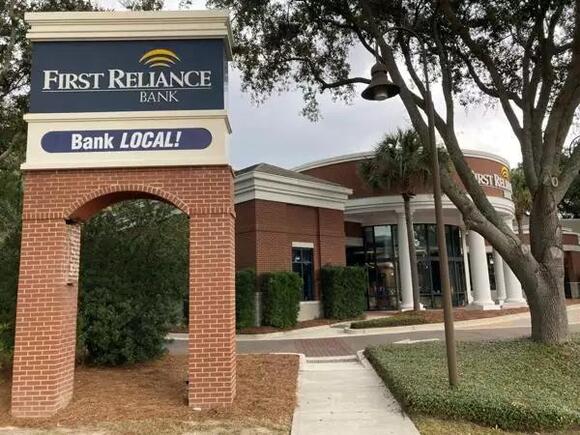
Like the days of winter, the list of banks born and bred in South Carolina is growing shorter.
The lineup lost another homegrown player Nov. 1 as a Pee Dee lender was sold to a larger, like-minded acquirer from rural Georgia.
The $163 million tie-up between Florence-based First Reliance Bank and Colony Bank was announced earlier this year. The combination creates a four-state franchise with $5 billion in assets, $4 billion in deposits and $3.2 billion in loans at more than 40 branches.
The acquisition was finalized Nov. 1, giving Fitzgerald, Ga.-based Colony its first foothold in South Carolina, where First Reliance operates nine offices in its hometown, Mount Pleasant, Myrtle Beach, the Midlands and the Upstate.
Customer accounts will be switched over to the new owner’s technology backbone by mid-2027. First Reliance said its name will remain on its branches “for now.”
The deal is the latest iteration of the banking industry’s perpetual consolidation carousel, with smaller lenders seeking out deeper-pocketed buyers looking to expand.
“By joining forces, we are bringing scale and enhanced operational efficiency to our existing branch footprint across South Carolina's premier markets,” First Reliance co-founder and longtime CEO Rick Saunders said when the buyout was announced. “For our customers in South Carolina, this means continuity.”
The industry was in a different place when Saunders and two partners launched their community bank 27 years ago. First Reliance was among a crop of eight new lenders that had opened across South Carolina, from Beaufort to Easley to Hartsville.
“One of the advantages of community banks is we find value in the smaller customers,” Saunders said in a 1999 Associated Press report about the surge of newcomers. ”We can make decision locally and much faster than the bigger banks.”
The startup spigot has since gone dry. South Carolina’s last made-from-scratch bank opened its doors in 2018. And the remaining legacy lenders have been in a steady decline, falling to about 41 from their modern-day peak of 115 in 1997, according to federal data. A few have failed, but most have been scooped up by out-of-state buyers, with at least one more sale in the pipeline.
Wheels in motion
First Reliance wasn’t in a selling mood when Saunders was approached about a year ago. An investment firm asked him in November 2025 if he’d “be open to a conversation” with the CEO of an unidentified Southeast bank about a “strategic alternatives,” according to a blow-by-blow summary of how the Colony deal came together.
Saunders replied that First Reliance “intended to remain independent” while also agreeing to the meeting, which ended with an unsolicited, informal buyout of $17 a share. He showed the proposal to his board in January, after senior management determined the bank “should explore that path more seriously.”
First Reliance would dismiss the offer as too low, but the wheels were now in motion. The board brought in an adviser to “develop a list of targets for both a sale and a purchase transaction” in what was known as “Project Summit.”
Colony, started in 1975 about 150 miles west of Savannah, was among four potential candidates that made the cut. The Georgia bank quickly checked all the boxes for First Reliance, which ended talks with the other suitors by early May.
About 10 days later, Colony executives and a special committee from First Reliance met in Charleston, where the Peach State suitor’s CEO was quizzed about its financial soundness, workplace culture, business prospects and “vision for a strategic combination.”
“While no final decision was made … the general sentiment was favorable, with further discussion to follow as due diligence concluded on both sides,” according to the summary.
Biggest buyout yet
Colony has engineered more than a dozen acquisitions over the past 50 years, and First Reliance is its biggest takeover yet. It offered to pay $19.75 a share in stock and cash, a 16 percent premium from the earlier informal bid. The definitive agreement was announced June 24.
“Over the last several months … it became clear that Colony was the ideal partner for First Reliance,” Saunders, told investors and analysts the next day. “The more time I spent with the Colony team, the more I realized just how aligned we are.”
Saunders and other First Reliance key executives are staying at the newly merged bank, which expects a smooth transition for customers.
Bond-rating firm KBRA said it viewed “the limited geographic overlap as a positive, allowing Colony to establish a … franchise in South Carolina through an experienced management team and an established community banking platform rather than building a presence organically.”
Colony CEO Heath Fountain told investors and analysts in late June that First Reliance’s nearly statewide branch network “covers a majority of the areas, I think, that we want to be in,” with opportunities to fill in the holes down the road.
He also channeled Saunders’ 1999 observation about the timeless David vs. Goliath nature of the industry, noting that South Carolina “has seen a considerable amount of community bank consolidation.”
“This … has left our markets with fewer high-touch, relationship-focused banking options and created a service gap between smaller community banks and large regionals,” Fountain said. “By bringing Colony and First Reliance together, we are filling that void and establishing an institution that is large enough to handle major lending needs, but local enough to remain focused on our customer relationships.”
 Add to Preferred Sources


