undefined
Posts
undefined
Followers
Catskills Communities Confront Flood Damage Amid Climate Change
By Connor Greco,
2026-08-07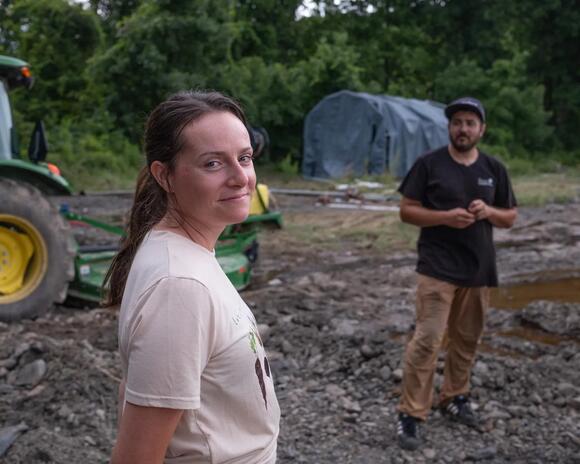
Nimble Roots Farm was having a successful first season. Farmers Christine and Fabio Ritmo were selling their produce at local farmers’ markets and had opened a storefront with another Catskill farm.
Then the farm flooded.
The Ritmos arrived at their Cauterskill Road farm in Catskill, about a 20-minute drive to Haines Falls, on the morning of July 29, to find their crops underwater.
The rain storm quickly turned into flooding that knocked a tree down, pushing an unnamed stream, usually flowing alongside their property, towards the farm. Swollen by 10 inches of rain, the stream flooded the fields.
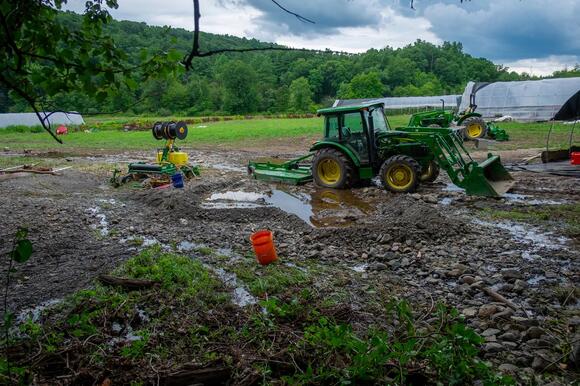
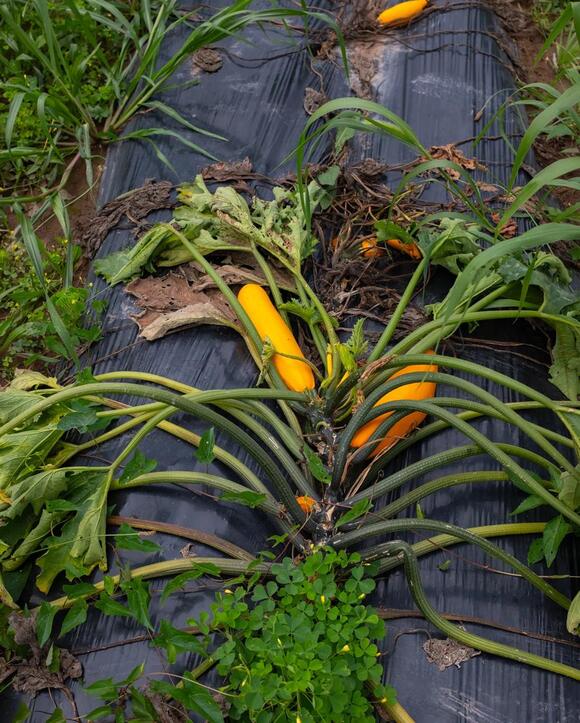
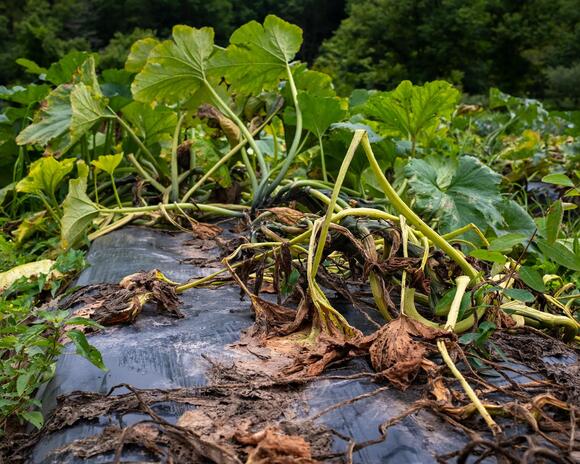
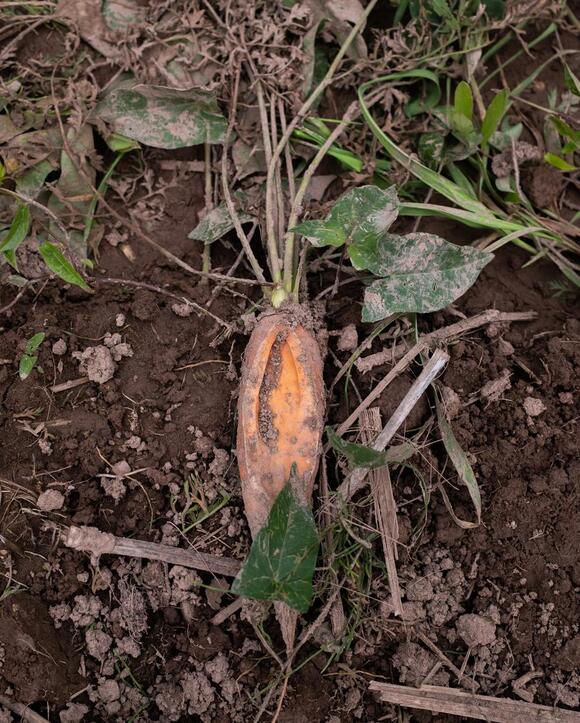
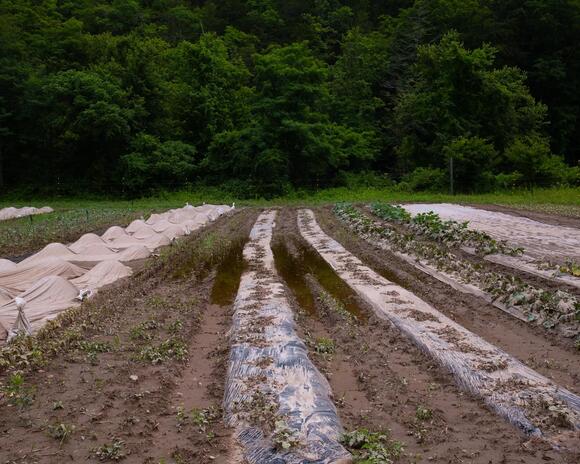
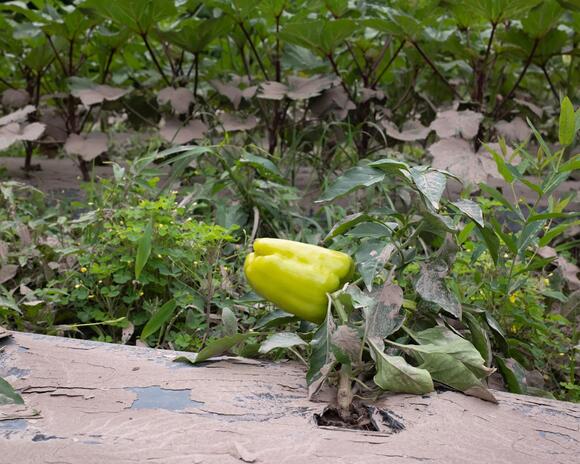
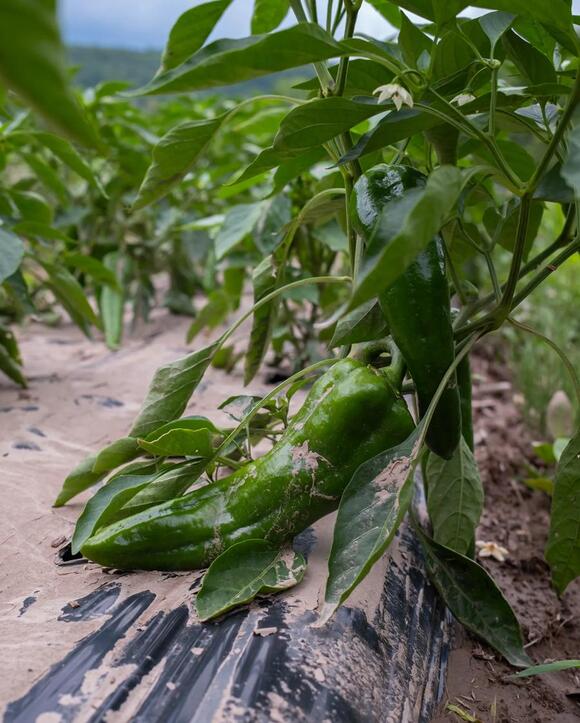
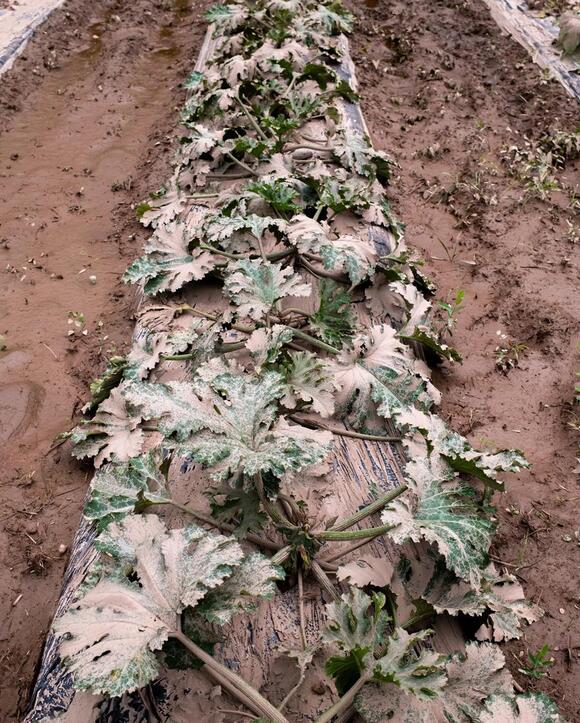
The water left behind hundreds of rocks. A coat of dirt covered nearly ripe zucchini and bell peppers. Deep cracks split the soil, which squished underfoot.
“We’ve lost tens of thousands of dollars worth of crops that were almost ready to be picked,” Fabio Ritmo, 35, said. “Our goal is to be growing food for the community. Instead, we’re picking up rocks.”
The farm, which the Ritmos run with partners Connor Sallaberry and Hunter Stone, grows everything from carrots and okra to tomatoes and greens, the last in particular demand as customers sought out local lettuce during an ongoing cyclospora outbreak. Much of it drowned.
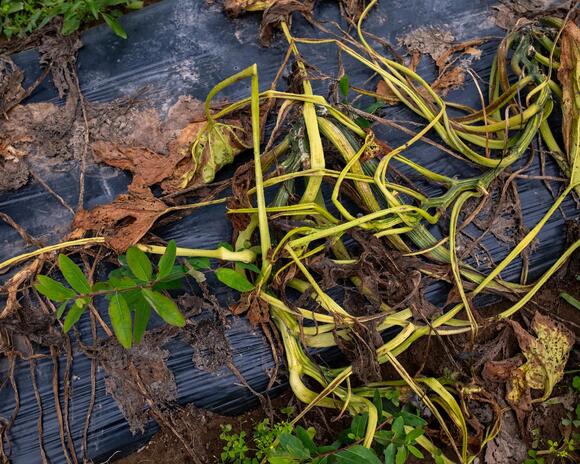
“All of our cucumbers are dead,” Fabio Ritmo said. “We had just planted some arugula, some mustards. We’ll probably lose all of those.”
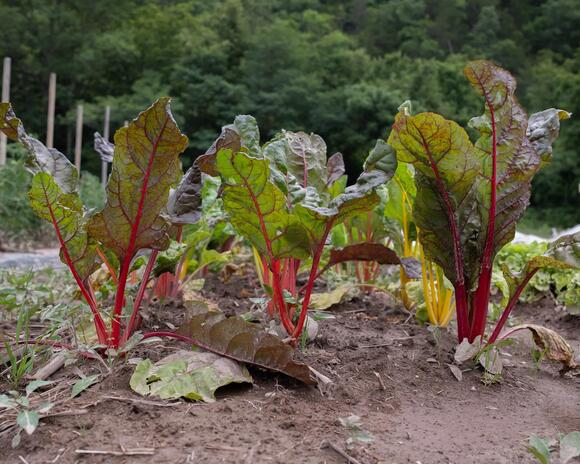
Rocks, silt and cracked soil, and ruined crops across the fields at Nimble Roots Farm in Catskill. “We’ve lost tens of thousands of dollars worth of crops that were almost ready to be picked,” Fabio Ritmo said. Photos by Roy Gumpel/The Overlook.
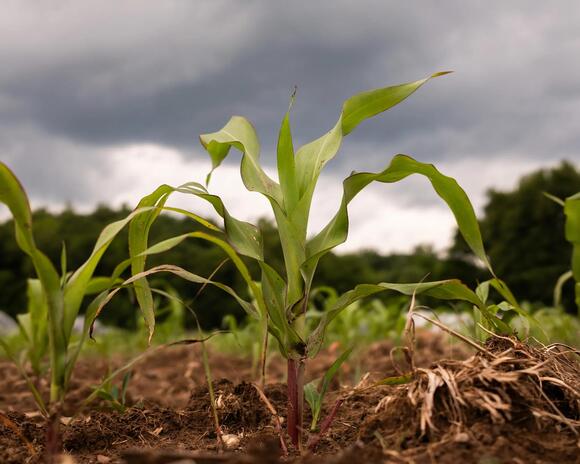

Some vegetables that survived are still not for sale due to the potential presence of pathogens in flood water, he said. “We don’t want to take that risk.”
The Ritmos, both from the Albany area, purchased the land in 2023 and farmed another property down the road before this season. Rain events have gotten worse over his years farming, Fabio Ritmo said.
“The benchmark keeps changing,” he said. “Last year, we had maybe an eight-inch storm. Now it’s a 10-inch storm. We haven’t even wrapped our minds around how this is going to change what we need to do or how it will impact us in the future.”
His concerns illuminate a broader trend. Extreme weather like flooding has increased across the northeastern United States amid the climate crisis, according to Shel Winkley, chief meteorologist at Climate Central, a New Jersey-based non-profit.
Winkley has tracked the storm’s impact across New York’s Hudson Valley since it hit.
“When you look meteorologically at the source of the moisture that was feeding into the weather system that created this rain event, that moisture is being pulled in from the coasts of the Carolinas down to Georgia,” he said. “The reason that’s important is water temperatures there are running about 2.5 degrees Fahrenheit above what is average for late July.”
Those higher temperatures are a product of climate change, he said.
“Ninety percent of the heat-trapping pollution that we put into the atmosphere, from burning things like coal, oil, and methane gas, sinks into our oceans,” he said. “Our oceans are holding onto this heat.”
Warmer water evaporates faster, and more water in the atmosphere means more water in the weather system, Winkley said.
“Think of it like a sponge that has a little extra water to wring out because of the added impacts of climate change,” he said.
The rain that fell on Catskill was a 1-in-1,000-year event, according to National Oceanic and Atmospheric Administration precipitation frequency estimates, meaning it had about a 0.1% chance of falling in any given year.
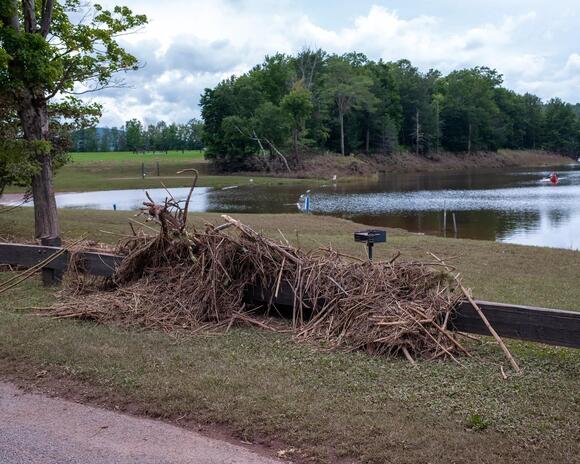
Rainfall intensity in the Albany area has jumped 22% since 1970, according to Climate Central data sourced from the National Oceanic and Atmospheric Administration. Albany is the closest weather station to the area.
In 2020, Greene County expected between $10 million and $20 million in flood loss, which could go up 19% by 2050, Winkley said. In Ulster County, flood loss is even higher, at a minimum of $20 million in 2020, he said.
These are worrying figures if storms become more frequent, Winkley said. “It may be a bit before the next storm comes, but we know the next one has a likelier chance of coming because of a warmer atmosphere,” he said.
Damage was apparent across the region by early morning July 29, as municipalities dealt with washed out roads and flooded properties. For some, the flooding stirred up memories of Hurricane Irene, which hit the region roughly 15 years ago.
Greene County declared a state of emergency and closed its non-emergency offices, including its mental health building and veteran’s center. The Greene County Sheriff’s Office dive team and the Coxsackie Fire Department rescued a woman, her granddaughter, a dog, and a cat from a house surrounded by rising water.
Eastern Greene County was hit hardest, with South Cairo and parts of the town of Catskill, including the area around Nimble Roots Farm, recording about 10 inches of rain, according to precipitation figures gathered by The Overlook through Precip, a precipitation-tracking app that uses radar and quality-controlled gauge data.
In The Overlook’s region, Hunter was hit particularly hard, with parts of the town receiving around eight inches of rain by 11 a.m. The village of Hunter suffered some significant road damage, said Town Supervisor Sean Mahoney, who declared a townwide state of emergency.
The road surface of Glen Avenue was damaged, he said. Culverts blew out under driveways on Botti Drive, cutting residents off from the rest of the road. In Tannersville, water damage hit Spruce Street near the site of the Cold Spring housing development, currently under construction.
“Some of the new construction in there wasn’t able to keep up,” Mahoney said. “That all has to be repaired.”
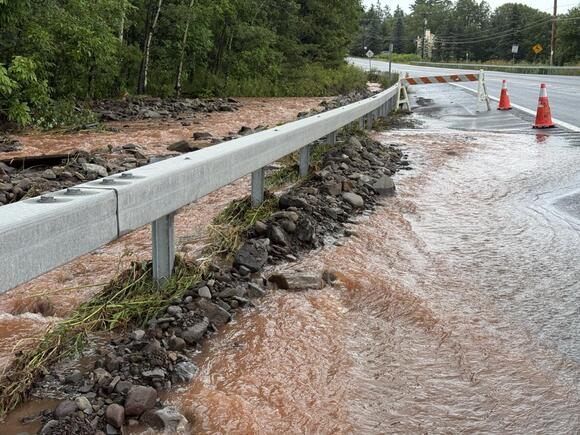
Officials placed both villages under boil water notices while they assessed damage to municipal water systems. Hunter’s was lifted first, on Aug. 3; Tannersville’s lasted until Aug. 5.
Most affected residents had only minor basement flooding, Mahoney said. An American Red Cross shelter at Hunter-Tannersville High School went mostly unused except by residents picking up bottled water.
Mahoney credited local highway crews with the road repairs. “The crews have been putting in an incredible amount of time, early, early morning to later in the evening to try and get all this done and reduce the impact on residents,” he said.
The town is considering applying for Federal Emergency Management Agency (FEMA) funding to offset repair costs for roads. “All those costs are being calculated and will be submitted through the highway departments,” Mahoney said.
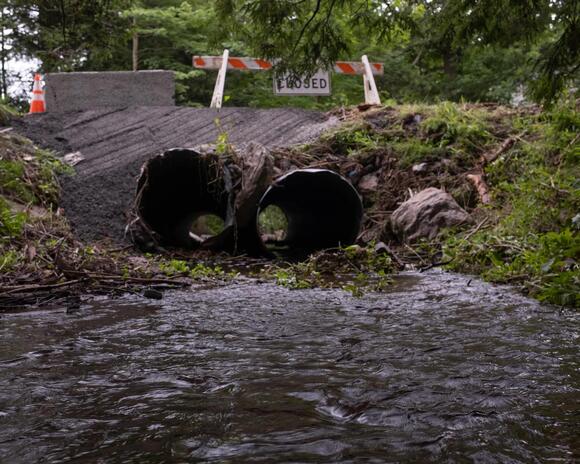
Roads in other mountain towns fared worse. In Jewett, part of state Route 23C between Mallory and Losee roads collapsed. In Lexington, part of County Route 13 near the Jewett town line caved in.
“There was a culvert there and there was a pipe,” said Lexington Supervisor Robert Riccardella, who also declared a state of emergency. “It all just washed through. It just cut a hole through there that’s eight feet across and 15 feet deep.”
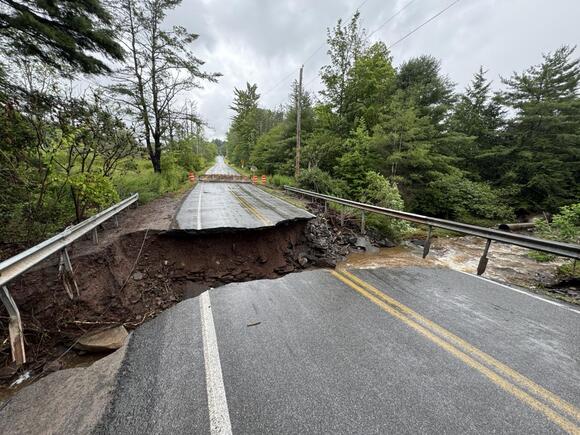
Riccardella drove up to the collapsed road that day.
“I got out of my car, because our guys had put up barricades there,” he said. “I parked there, walked down, and looked in, and it was like, ‘Wow.’ At that point, the stream was roaring. It was impressive.”
Hurricane Irene, which devastated Lexington in 2011, has a legacy that reverberated through last week’s floods.
“The state and the county have spent several years redoing things, widening some of the streams, reinforcing,” Riccardella said. “We’ve had five or six new bridges in town that were affected by Irene. The good news is all that new stuff held.”
The collapsed section of County Route 13 remained closed as of Aug. 3, with Greene County handling repairs. “We are awaiting some more word from them as to what they’re going to do and when,” Riccardella said. “The county is going to be taking care of that.”
In Ulster County, damage was more localized to areas in the far north of Saugerties and Shandaken.
“As the storm was going on, there was a lot of water overflowing in the roadways, pooling in the roadways,” said Everett Erichsen, Ulster County Director of Emergency Services. “I know Saugerties during the event was hit very hard, because they had a lot of roadways flooded.”
Part of state Route 214 in Shandaken, the only town in the county to declare a state of emergency, washed out, and the state Department of Transportation took on clearing floodwater and debris, Erichsen said. Roads closed elsewhere, particularly in Woodstock and Saugerties, though damage was less widespread.
The Centerville-Cedar Grove Fire District in northern Saugerties responded to 18 calls for service on Wednesday, including one evacuation of stranded residents from a home threatened by rapidly-rising floodwaters and two water rescues of stranded motorists, according to a Facebook post.
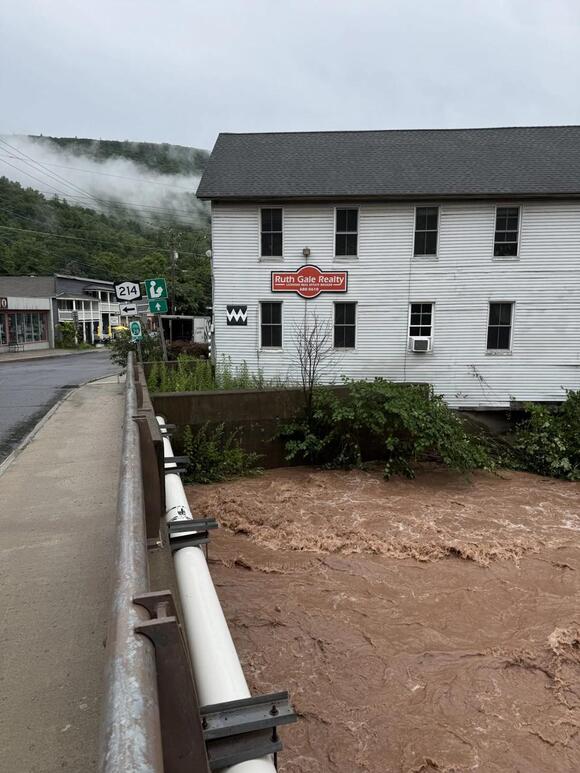
Flooding events amplified by climate change are made worse by the geography of towns in the Catskills, according to climate scientist Dr. Brian McAdoo, former Vassar College professor and associate professor at Duke University’s Nicholas School of the Environment.
“You take a community like Phoenicia,” McAdoo said. “Any of those communities, they’re in valleys, because that’s the only place you can build in places like the Catskills, and the Adirondacks, and the Appalachians.”
Valleys, notches, and creek banks put small Catskills communities at a disadvantage in a flood, McAdoo said. Land use compounds it. Much of the region is second-growth forest that regrew after deforestation in the late 1800s and early 1900s.
“The water comes down off these mountains that have been impacted by the land use changes,” he said. “Because of this increased intensity, if you have events that happen in succession where you might have the ground saturated, the water is going to come down these valleys. Because the development happens in valleys, that’s where people live and that’s where the resources are that people need to survive.”
“They’re extremely exposed and extremely vulnerable,” he said.
Climate-proofing infrastructure deserves more attention than post-disaster recovery, said Yichun Fan, an applied economist and professor at the Nicholas School at Duke University.
“Now, the flood response mode we have is more toward post-disaster recovery, post-disaster aid, post-disaster mitigation,” she said. “There should be more attention to how we can invest beforehand instead of just a reactive response afterwards.”
That means upgrading stormwater systems, roads, and water treatment plants to withstand intensifying hazards.
Small towns can fall into what Fan calls a levee feedback loop: tax bases too small to fund climate-proofing lead to weakened infrastructure and falling property values as extreme weather worsens.
In an ideal world, smaller communities would be able to work together on climate-proofing, she said. Rural areas in particular could look to a nature-based solution.
“Flood plain restoration, wetland easements, setting a set area out of development so it can be a flood-contained area, it’s just way cheaper to do that,” she said.
These are long-term goals. For now, people needing help are filing for immediate relief through the state’s Damage Self-Reporting Tool, which documents property impacts from the heavy rain and flash flooding. Others are turning to friends and neighbors.
Support for the Ritmos started at home in Catskill. In May, Nimble Roots Farm joined Orlando Diaz and Leah Munsey of The Lo Farm, also in Catskill, to open Six Hands Farm Store, a shop selling their produce and other local goods, at 5178 state Route 32.
Sales have jumped at the store since customers found out about the damage, Christine Ritmo, 34, said. The Ritmos are replanting for fall and will sell what survived that’s safe to eat. Christine Ritmo expects leafy greens back for sale in 30 to 45 days.
“In less than 24 hours we watched days—frankly, years—of preparing for this season just be washed away,” she said. “But we’ve put a lot of time and effort into forging connections in this community.”
For the Ritmos, the experience has been an eye-opener in the value of local agriculture.
“It just proved that growing food matters and people are choosing to spend their dollars with us on our farm,” Christine Ritmo said. “We don’t take that lightly.”
Connor Greco is a staff reporter for The Overlook covering Windham, Hunter, and surrounding Greene County communities. Send correspondence to connor@theoverlooknews.com.
The post Catskills Communities Confront Flood Damage Amid Climate Change appeared first on The Overlook.
 Add to Preferred Sources

