undefined
Posts
undefined
Followers
Natural Resources Police stresses boating safety
By BRANDON SCHWARTZBERG,
13 days ago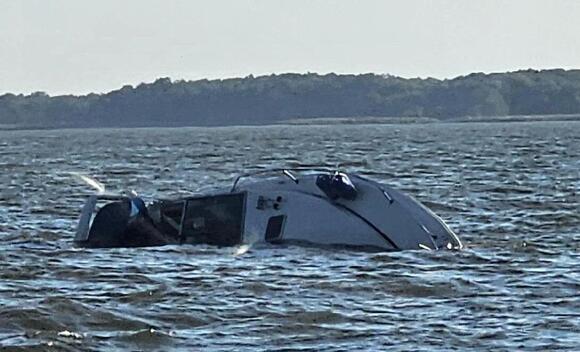
On Oct. 9, a 63-year-old Rosedale man died after being thrown from a vessel in Bear Creek. Amid that incident and numerous others, the Maryland Natural Resources Police is stressing the importance of boating safety.
NRP Boating Safety Coordinator Donna Revelle said that residents can never be too safe. That goes for both longtime and new boaters.
For preventive measures, Revelle said to ensure that safety equipment is readily available and up-to-date, including checking on the fire extinguisher and life jacket.
Revelle said NRP urges people to wear their life jackets.
“I know that that’s a sore subject with some people, especially a lot of the old timers that have been boating for you know generations. Unfortunately, they seem to be the ones that recently have been going out by themselves and have been having these incidences where they fall overboard,” Revelle said. “They don’t have a life jacket on, and unfortunately, they end up being a recovery versus a rescue. If they were wearing their life jacket, a good chance that they’d still be here.”
Revelle said it is important for people to be educated in cold water survival skills.
Over the last year, two frequent watermen who were in their 60s lost their lives after falling overboard and either drowning or dying from hypothermia between Christmas and New Year’s, Revelle said.
People should prepare for cold water boating by bringing an extra set of clothes, filing a float plan and dressing for the water temperature, not the air temperature.
A float plan tells a responsible person where you are going, who you are going with, when you will be back and gives details about the vessel they are taking, including the registration number on the vessel and a description of the vessel. This makes a possible search, if the vessel is not back when they say they will be back, easier for Maryland Natural Resources Police and the U.S. Coast Guard to come looking.
If you are boating by yourself, Revelle stressed the importance of wearing your boat’s kill switch.
“One of the big dangers of falling overboard without the kill switch on is either the steering will go completely to the left or completely to the right, and then it starts to circle,” Revelle said. “If you’re in the middle of that, it’s something we call the circle of death. Chances are the prop is going to get you.”
Revelle compared individual boating to hiking. She said it is always better to have an extra person with you in case something happens and you become incapacitated and can’t make a call for help.
Over the past boating season, Revelle said one of the more typical issues has been with fueling. There have been a couple of boat explosions, which is typically because the blower has not been turned on after refueling.
The blower is supposed to be turned on for about five minutes. Also, everybody is supposed to be off the boat while fueling.
Another issue can be carbon monoxide poisoning. If your boat is stationary but running and there are people sitting at the stern of the boat, that is where carbon monoxide tends to gather.
Revelle said that bow riding is a “no-no.” Riding on the bow of a moving boat is illegal in Maryland.
“We call it negligent operation because people have been known to sit on the bow of a boat while it’s running, and if they fall off, they go under the boat and then they get chopped by the prop,” Revelle said.
Revelle said that the majority of water rescues are due to inexperienced boaters. Some of the issues, especially on holidays, relate to drinking while boating.
So many people correlate boating with recreating, but they forget that when you drink and operate a vessel, it is just as dangerous as operating a car, Revelle said.
“Maybe even more so because in a vessel you don’t have anything protecting you,” Revelle said. “People also don’t understand that one drink on land is equal to three drinks on the water.”
 Add to Preferred Sources