undefined
Posts
undefined
Followers
Denver businesses battered by construction could get permanent relief
By Nico Brambila,
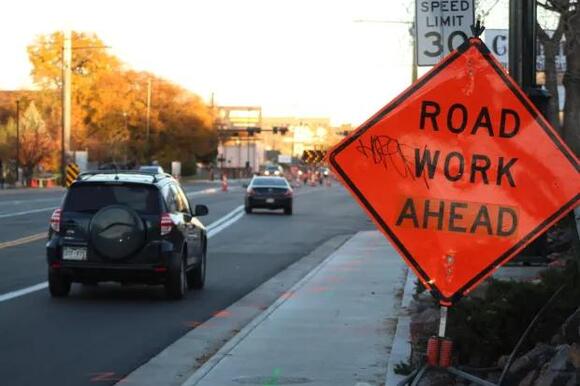
6 days agoThe orange construction signs that diverted and snarled traffic along a 2-mile stretch of Colfax Avenue for nearly two years also drove away customers.
Now, the Denver City Council is weighing whether to make permanent a program that seeks to help businesses weather the financial fallout.
Councilmembers Chris Hinds and Amanda Sawyer — whose districts know firsthand what a disruption like this can do to business owners dependent on foot traffic — have drafted an ordinance, shared in committee last week.
While some were hit harder than others, business owners along the corridor said they saw foot traffic declined by 30% — a devastating blow to a corridor dominated by entertainment venues already reeling from the COVID-19 shutdown.
“It was almost like a one-two punch in the gut,” Hinds said.
The financial fallout is reflected in the city’s own data.
An analysis by Denver’s Department of Finance found that sales tax collections declined following the start of construction on the East Colfax Bus Rapid Transit project compared with the same months a year earlier.
The analysis examined three business improvement districts along the corridor — Colfax, Bluebird and Mayfair.
Launched in 2019 as a pilot program to help businesses affected by construction along Interstate 70, the Business Impact Opportunity Fund, or BIO Fund, has since helped more than 3,000 small businesses, according to Adeeb Khan, executive director of Denver Economic Development & Opportunity.
The program has been supported by city funding and federal dollars from the American Rescue Plan Act, a $1.9 trillion economic stimulus package enacted in 2021 in response to the COVID-19 pandemic.
The program currently offers one-time grants of $7,500 to businesses with annual gross revenue of $100,000 or less and $15,000 to businesses with revenue exceeding that amount.
“We look at every single business that has a demonstrated revenue decline,” Khan said.
Businesses have primarily used the grants to cover rent, mortgage payments, payroll and other operating expenses, as well as to adapt to changing market conditions, Khan said.
The program helped 100 businesses in 2025 and another 88 so far this year.
But the BIO Fund has no funding for 2027, Khan said.
Hinds and Sawyer are hoping to change that.
‘People can’t come in’
Under the proposed ordinance, funding for the program would be tied to the cost and duration of city construction projects.
For projects costing between $10 million and $25 million and lasting at least a year, the city could set aside at least 1% for business assistance. For projects exceeding $25 million and lasting at least 18 months, the city would be required to set aside between 1% and 5%.
The money would come from the city’s General Fund, rather than the capital construction budget.
With the 2027 budget already set, it’s unclear where the city would find the money to assist businesses affected by upcoming construction projects.
A proposed companion ordinance would establish a special revenue fund, allowing unspent money and interest earnings to carry over from one year to the next — an important distinction for construction projects that span multiple years.
The ordinance would cap the city’s administrative expenses at 7% of the fund’s annual appropriation and those of outside contractors at 20% of the contract amount.
The proposal would also give the city the option of providing tax assistance to businesses, though officials have yet to determine how such a program would work.
Supporters of the program said it has shortcomings.
Helen Tekle — senior business manager for the East Colfax Community Collective, grassroots organization — told councilmembers on Tuesday that businesses have been denied grants because construction in their area was supposed to have been completed.
It hadn’t.
“Why can’t I apply? Because my road is still closed,” Tekle said, describing the frustration of business owners. “People can’t come in. Vendors can’t come in.”
Tekle also questioned minimum revenue requirements that have disqualified some of the corridor’s smallest businesses, including those struggling to generate even $20,000 in annual revenue.
Council President Diana Romero Campbell raised similar concerns, recounting the experience of a Colfax hair salon owner whose workdays had stretched from 10 hours to 12 or 13 hours because customers struggled to find parking and access the business.
‘More traffic, more people’
By the time some businesses can demonstrate the financial losses necessary to qualify for assistance, Romero Campbell said, they are already in dire straits.
Tom Leiber, who manages the Bourbon Grill at Colfax and Pearl, said he raised menu prices to make up for the 30% revenue decline he attributed to construction.
“We tried to compensate, but we didn’t do it 100%,” Leiber said.
But doing that pushed the business just above the qualifying threshold. After failing to spring back from Covid, Leiber is doubtful the BRT improvements — which reduced the number of lanes in front of his business from two each direction to one — will increase foot traffic.
“I don’t think there’s anything they could do,” Leiber said. “It’d be nice if there were two lanes each way. More traffic, more people.”
With profit margins sometimes as slim as 5%, the 20% qualifying trigger can be devastating, said Denon Moore, business support director for the Colfax Ave Business Improvement District.
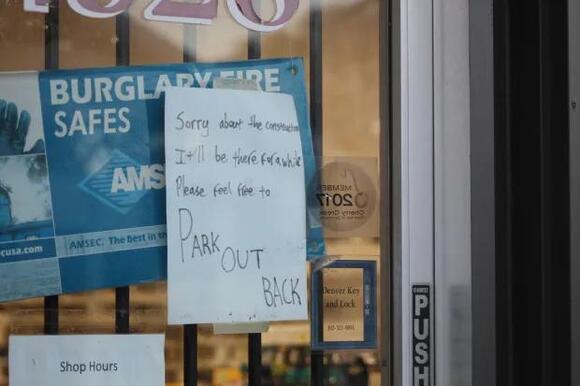
“When a business is sitting with a 20% decline, they’re in trouble,” Moore said.
Khan acknowledged the limitations of the program, saying the proposed ordinance would give his department greater flexibility in determining eligibility.
“It will not make businesses whole,” Khan said. “You will still have businesses that will fail as a result of construction. I wish that was not the case, but that is the truth of this situation.”
 Add to Preferred Sources
