undefined
Posts
undefined
Followers
Blount County book battle continues
By Shanon Adame,
2025-02-08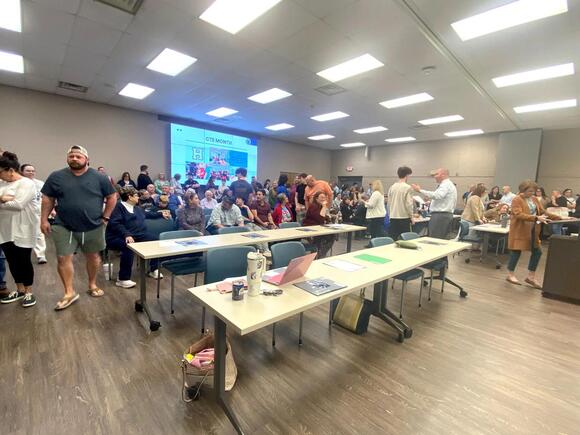
Sparks flew at the Blount County Schools Board of Education meeting Thursday evening.
The tension was surrounding a resolution, sponsored by board member John Lowe, to create an ad hoc committee of school and community stakeholders and board members to “carefully consider” the procedure put in place to review library materials.
Lowe held up an excerpt from the book “A Stolen Life,” a memoir by Jaycee Lee Dugard detailing her 1991 kidnapping and subsequent years of abuse.
Lowe told the board that the grandmother of a student brought the book to his attention and that administrators found it in a high school. He did not specify which high school.
The BCS online library system suggests that the book may have been housed at Heritage High School. The Daily Times reached out to the school's principal for confirmation but did not hear back by press time.
“We don’t want to get into things like this that should never be in a school library,” Lowe said.
Board member Erica Moore countered with a different proposal. She said a big problem when looking at library materials is bias.
“Who gets to determine what’s acceptable? What may be acceptable to one person may not be acceptable to another person, and this creates a real struggle,” she said.
Moore also said book appropriateness would depend on grade and age levels. She told the board that Instructional Supervisor Jon Young, as well as some school principals, had been working on a solution.
AI System
School principal Derek Crabtree and Young worked to put together a program using ChatGPT that would allow school librarians to screen thousands of books at a time.
Crabtree said that after feeding the AI system the state laws on library materials, as well as board policy and library guidelines, the program can flag books that may be in violation or need further review.
When looking at a specific book, Crabtree said that the program gives a detailed summary of the book in question with information on age and maturity analysis, literary value and compliance.
The review gives a final recommendation on whether the book is approved, requires more review, or is unacceptable.
After testing it for a couple of days, Crabtree said the program gave consistent and objective reviews of books and could perform the task in minutes.
Another benefit of using the AI program, said Young, is that it could assess books without emotion or opinion. The program is objective and follows the parameters it is given.
Young stressed that the program would not replace human review but rather help alleviate the workload of librarians when assessing the district's over 210,000 books.
“Selecting books is not a casual or personal decision — it is a professional, multi-step process guided by district-approved policies, state laws and nationally recognized best practices,” Librarian Jennifer Walker told the board.
When a book is flagged for further review, BCS staff will step in to assess the book, Young said.
Board Chair Chris Pass asked what the cost of rolling the system out district-wide would be.
Crabtree said he pays for a premium account with ChatGPT but if someone has the link to the specific ChatGPT prompt created, they can use it for free.
Lowe said he felt encouraged and hopeful that an AI system would help the school librarians weed out problematic books.
“On that note, I would like to make a motion that we amend this motion (Lowe's) by referring it back to Jon Young and his team with the purpose to establish and execute a district-wide rollout of this system,” said Moore.
Before voting, Pass referred back to the excerpt of “A Stolen Life.”
“I will not be spending the next three years on this board with mothers and grandmothers coming to read dirty excerpts to me from books in our libraries,” Pass said.
He said that the book being in the BCS library violated the Age-Appropriate Materials Act and that forming a library policy committee would protect all the stakeholders.
Tensions rise
Moore called a point of order to bring everyone back to her motion and vote.
The AI program, she said, would be able to flag books like “A Stolen Life.”
“We can call it whatever you want to call it, but it’s going to develop into, I believe, some type of committee because we’re going to have to have checks and balances in place, but this is going to get it started immediately,” she said.
Pass and Lowe voted no. Fred Goins, Joe Lindsey and Moore voted yes. At first, BCS Executive Assistant Dani McPherson said the motion passed and the crowd applauded.
However, there was uncertainty about whether a simple majority ruled or a board membership majority.
Pass said the board operated under a member majority, so any passing vote would need four yes votes, regardless of a simple majority.
“You can look it up wherever you like,” he said.
When McPherson questioned what Pass was asking her to do, he replied, “I’m not asking. I’m informing you that that did not pass.”
The BCS board governing documents state, “When a formal vote is taken on any question brought before the Board, the decision shall be made on the basis of a majority of the membership of the Board.”
When Moore made a move to go on to the third agenda item, Pass stopped her and said, “No, hold on, no, no, your motion failed.”
Pass directed them back to the original motion put forth by Lowe, to create an ad hoc library policy committee.
Lindsey and Goins both discussed the possibility of implementing the system-wide AI program, while also forming the committee to review policy.
“What exactly is wrong with the policy, though,” asked Moore.
She told Pass this was his first time hearing from a librarian about what they do in detail. She told him the librarians had expressed a need for help, which the AI program could do.
“So I’m not sure why you got so offended with the motion. I just don’t understand,” Moore said.
Pass replied that he found it unusual that the desire to form a committee would be upsetting.
After a back-and-forth about Moore’s motion and whether or not it passed, she asked him why he was defensive.
“Does the public get to see this,” she asked, "This is what we’ve been working with for the last eight months.”
The public applauded and a few cheered.
“There’s seven people on here. You’re not the only one on the board,” she said to Pass.
“I’m just telling you what the law says,” he replied.
Lowe interjected, “The biggest question is Erica, why are you opposed to forming a committee?”
Moore said she wasn’t against forming a committee but wanted the schools to get started immediately on culling books with the AI system.
Lowe questioned why she would amend his motion if she were not against forming the committee.
Goins suggested that Interim Director of Schools Jake Jones could choose to implement the AI program across the district while the board worked on the policies and that the AI system could continue to adapt based on any changing policy.
Pass responded, “Jake’s going to be with us for 28 more days.”
“Let’s work him hard,” Goins said.
Jones told the board he would approve the rollout of the AI program.
When the board moved back to vote on Lowe’s original motion, Moore asked who would be responsible for choosing the committee members.
Pass said that he and Lowe, who serves as the policy chair, would choose.
After a vote, Lowe’s motion passed.
“We’re all in this together, guys,” he said.
Procedure
While not the first time books have been brought up at BCS board meetings, district communications specialist Amanda Vance said the district has yet to have any formal complaints about books.
The procedure listed in state policy details the chain of command in order to challenge a book.
Inform the complainant of the selection procedures and make no commitments.Request the complainant submit a Request for Reconsideration of Library Materials form.Inform the principal.Keep challenged materials available for use during the reconsideration process.
If the principal thinks the book needs further review, they may take the challenged book to the Director of Schools and request a review by a committee of certified library media personnel, representatives from classroom teachers, and one or more parents.
The committee will have 30 days to make a decision.
The principal will then make a recommendation to the Director of Schools, who will assess the findings and then present the book and recommendation to the school board, who will ultimately decide on the book’s fate based on the recommendations of the principal, committee and director of schools.
The board will have 60 days to make a decision, and if they deem the book inappropriate, it will be removed from the library’s collection. Once the decision is made, there is no chance of appeal.
Uncertainty
It was unclear who specifically would make up the ad hoc committee. Both Pass and Lowe mentioned principals, librarians, teachers, parents and “community stakeholders.”
Tennessee state law states that the only persons who can formally challenge books in schools are teachers, principals and parents of students.
Ad hoc committees differ from standing committees in that they are meant to be temporary. The BCS board policy states that the board “shall operate without standing committees, except for the Executive Committee.”
It goes on to state that special committees of board members may be appointed by the chair but must be discharged once the work is finished or earlier if by a majority vote. These committees would be subject to open meetings laws.
Currently, there are no BCS board governing documents on forming and utilizing ad hoc committees.
When asked for clarification after the board meeting, Lowe said he had to leave and was unavailable to answer questions.
 Add to Preferred Sources


