undefined
Posts
undefined
Followers
Commission OKs clapping at future meetings
By Staff Writer,
1 days ago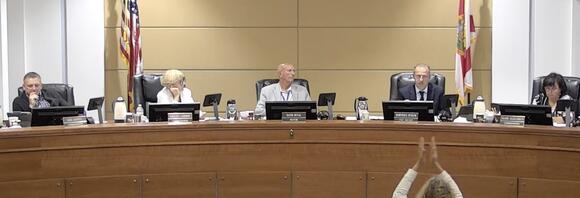
Resident Andrea Doria Kale stands up and claps silently as the commission talks about potentially allowing applause at city meetings.
NORTH PORT — Put your hands together for something you like during a commission meeting at City Hall.
Because now you’re allowed to clap.
Commissioners on Tuesday voted in favor of changing a city rule that prevented people from applauding or showing emotions audibly at city meetings.
The rule, officials previously said, was in place because loud noises make it hard for some to hear, and some with unpopular opinions may feel too intimidated to have their say.
But the new commission, with two new faces, decided to scrap the rule during their first meeting together.
Vice Mayor Demetrius Petrow added the item to the agenda and eventually made a motion to make the change. During the meeting he had a small copy of the U.S. Constitution and spoke about freedom of speech and expression.
Petrow directed staff to prepare a policy amendment to allow “reasonable, non-disruptive audience expression of approval or disagreement including applause, clapping and natural variations in tone and volume of voice.”
Some in the crowd raised their arms to the sky and snapped their fingers to show approval. Those are common, quieter ways of showing support within the boundaries of the rules. But soon, that loophole will no longer be needed.
New Commissioner Oleg Lisitsyn seconded the motion, and it passed 4-1 with Commissioner Barbara Langdon dissenting.
Langdon expressed concerns before and after the motion was passed.
She said people who are joining online may not be able to hear what’s being said. And many in North Port watch the meetings from the comfort of their own homes.
On Aug. 31, at the meeting about data centers, while there were hundreds in attendance at City Hall, another 6,650 people watched online, Langdon said. On Nov. 13, when the previous city manager resigned, just about 3,000 people watched, she said.
Even meetings that are something of a non-event get a few hundred views, Langdon said.
“We would potentially interfere with the ability of thousands of people to hear what’s going on,” Langdon said. “And that would be tragic.”
People watching online, she said, “have rights, too.'“
Public commenter Justin Willis Chavez also expressed some concerns.
He said clapping simply does make it hard to hear. During his comment, he clapped while speaking to show just that. The policy that the city had made sense, he said.
“I appreciate that we want to treat this like a football game, but that’s what we do at home,” he said.
New Commissioner Elaine Allen-Emrich wondered if clapping actually takes time away from people’s three-minute public comments.
Lisitsyn said people will be quiet when someone is speaking, or someone will stop speaking if the chambers get too loud, so people will be able to hear.
At previous meetings, sitting in the crowd, Lisitsyn said he felt the “tension.” Rules felt like they were “choking” the people, he said.
“When we’re representing these people, they need to be able to express themselves,” Lisitsyn said.
A number of public commenters spoke about their rights to freedom of speech and expression.
Andrea Doria Kale said the mayor can bang the gavel if things get “out of order.”
She also spoke about a man getting kicked out of a previous meeting because he was not following the rules of decorum, and cursing a number of times, was “really unnecessary.” She said the situation was escalated by former Mayor Pete Emrich.
“There’s a balance,” she said. “We can have people clap, but maybe not during (people’s) three minutes. You want to clap after? Fine. Or you want to clap after a commissioner? It’s got to be cut short. I’m supportive in reforming this a little.”
 Add to Preferred Sources
