undefined
Posts
undefined
Followers
Birding in the Everglades with Audubon
By JILL ZIMA BORSKI Special to The Citizen,
2025-01-28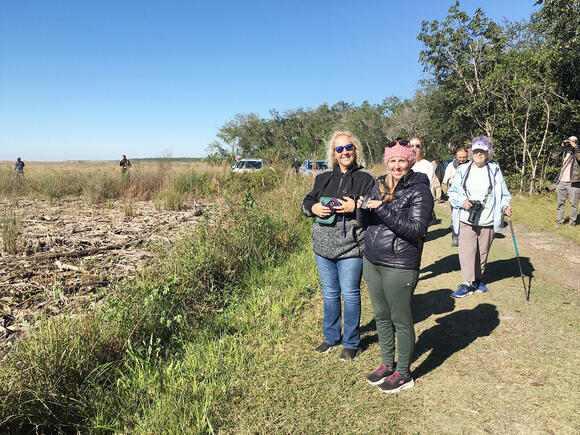
Faster than a speeding bullet. It may seem that way when birds flit from one point to another when curious humans likely just want to appreciate them. Seemingly without reason, birds may get spooked by a noise or sense danger humans may not see.
Nevertheless, birding is a passion of many a nature lover, and opportunities to enjoy it range from one’s own yard to local, state and national parks.
The Florida Keys are a bird migration path. Birds migrate through the Keys in the spring and fall, traveling between winter habitats in the tropics and summer habitats to the north.
The Tropical Audubon Society makes it easy to give birding a try by offering guided trips for which a participant may be encouraged to bring water, binoculars, sunglasses, sunscreen and a hat. No special equipment is necessary, as some participants may share viewing opportunities through their scopes that enable closeup views of birds and other wildlife, but having one’s own binoculars certainly enhances the experience.
Tropical Audubon Society volunteers lead the walks and share their expertise. Usually, participating in birding walks is free, open to the public and reservations may not be necessary.
Bird expert Brian Rapoza led a full-day birding expedition earlier this month in Everglades National Park, and a few Upper Keys residents were on hand to enjoy. Transportation was by private vehicles, and due to the distance covered, a full tank of gas is recommended to reduce stress.
Rapoza is an environmental educator who has led bird-watching trips in Florida and around the world. He authored “Birding Florida,” a guide to more than 200 bird-watching locations in the state. He has served as the field trip coordinator for the Tropical Audubon Society since 2001. Rapoza also has compiled the Christmas Bird Count for Miami and Coot Bay/Everglades National Park for 25 years.
The Upper Keys residents who journeyed to Everglades National Park for the birding field trip spotted numerous species during a sunny day at multiple spots. The group of about 25 people compiled a daylong list using the phone application eBird, which could be accessed afterward via phone or computer. A similar trip is planned for March 1 from 7:30 a.m. to 4 p.m.
Groups may meet at 7:30 a.m. in the parking lot of the Ernest F. Coe Visitor Center at the park’s Homestead entrance and then journey to Royal Palm Visitor Center. Stops likely include the Anhinga and Gumbo Limbo trails, Research Road, Long Pine Key, the Pahayokee Overlook, Mahogany Hammock, Paurotis and Mrazek ponds, West Lake and the Flamingo area.
On Jan. 4, at the Coe Center, 12 bird species were spotted including a downy woodpecker and pileated woodpecker. At the Royal Palm Center, 24 species were observed including the purple gallinule, double-crested cormorant, American bittern and tricolored heron. Birders can upload photos of their sightings to the eBird website to further enhance the bird identification process.
At the Gate 13/Hidden Lake tour stop, four species of ducks were spotted including a ruddy duck with its light blue beak among the 22 bird species seen.
At Long Pine Key Campground, where the group ate bagged lunches they had brought, an Eastern towhee and two brown-headed nuthatches were seen among the 14 species observed there. At the final stop at 4 p.m. at Mahogany Hammock, a brown thrasher was spotted among the 21 total species seen.
There is an entrance fee to the park if one is not a national park pass holder. A few of the park locations are wheelchair accessible.
Tropical Audubon Society offers diverse outings and programs including bird, butterfly and plant trips; morning forays, all-day adventures, overnight trips, local outings and travel expeditions.
A May 3 trip to Dagny Johnson Key Largo Hammock Botanical State Park on County Road 905 will highlight birds, butterflies and native plants. Tropical Audubon Society President Joe Barros is to lead this seven-hour adventure in the largest remaining tract of coastal tropical hardwood hammock. Lunch will follow at a Key Largo restaurant. Signing up in advance is encouraged.
For information, visit tropicalaudubon.org.
 Add to Preferred Sources