undefined
Posts
undefined
Followers
Ohio lawmakers propose Flock camera restrictions, bans
By DANNY ELDREDGE,
2026-09-15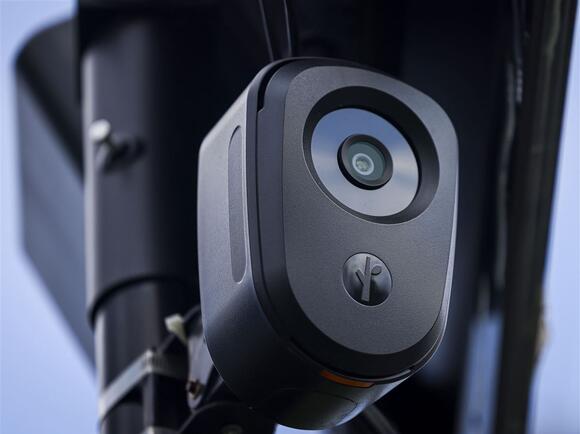
COLUMBUS — At least two bills restricting or banning the use of Flock cameras will soon be introduced in the Ohio House.
Automated license plate readers such as Flock cameras have become a bipartisan target as Ohioans across the state have expressed opposition to the mass surveillance technology.
State Rep. Gary Click (R., Vickery) is proposing a 12-month moratorium on the cameras with exceptions, while state Reps. Tristan Rader (D., Lakewood) and Levi Dean (R., Xenia) are proposing a total ban on the technology.
Mr. Click said he and others are gravely concerned about establishing an infrastructure for a surveillance system capable of stripping the right to privacy from citizens.
“I think we need to put a pause on them,” Mr. Click said Monday. “The problem is ... technology is advancing faster than checks and balances can keep up.”
He said he understands the cameras are helpful for law enforcement, but that is not a good enough reason to allow their use.
“There are a lot of other things that would be advantageous to law enforcement, too,” Mr. Click said. “Why don’t we just all wear ankle monitors or just get chipped so everybody can know where we’re at all the time?”
Mr. Click is calling his bill the “1984 No More Act” because the cameras remind him of Big Brother in George Orwell’s dystopian novel 1984.
“It’s already being misused by law enforcement officers who are tracking former romantic partners,” he said.
“I’m very pro law enforcement,” he continued. “Our good men in blue have been solving crimes without this technology for a long time, and putting a strategic pause on there for 12 months until we can figure out what is appropriate isn’t going to hurt us.”
Mr. Click’s bill includes several exceptions to the moratorium, as it allows law enforcement to use Flock cameras to find missing or endangered children and adults. The bill would also allow the cameras to be used to find suspects accused of harming law enforcement officers. Finally, it would allow use of the cameras by U.S. Immigration and Customs Enforcement agents to enforce immigration laws.
There is also language included in the bill to ensure that other types of cameras are not included in the moratorium, such as the license plate readers used on the Ohio Turnpike for tolling purposes.
Mr. Click said he is open to changing the length of the moratorium or the exceptions during the committee process when lawmakers return in November.
Flock camera ban
The legislation proposed by Mr. Rader and Mr. Dean — the “Ohio Freedom from Mass Surveillance Act” — would ban law enforcement from using automated license plate readers and create civil and criminal penalties for doing so.
Mr. Rader said law enforcement should investigate crimes, but they shouldn’t track everyone’s movements just because they can.
“These cameras quietly built a statewide surveillance network without meaningful public debate, clear limits, or adequate protections for our civil liberties,” he said. “Ohio took a wrong turn. This legislation gives us a chance to correct course.”
Mr. Rader said he initially supported Mr. Click’s 12-month moratorium, but he could not support the current bill for a number of reasons, including the exception for ICE.
“Part of the reason Mr. Dean, myself, and others are supporting an outright ban is because of the threat of the federal government having access to this and using it to whatever ends they want to use it too with very little in the way of checks and balances,” Mr. Rader said. “I think people on both sides of the aisle are worried about that.”
Starting out by offering exceptions is also the wrong strategy, he said.
“We should not begin this debate by negotiating how much warrantless surveillance Ohioans must tolerate,” Mr. Rader said. “A ban is on the table. We cannot compromise before we even start deliberating.”
Mr. Rader was one of five members of the Ohio House to vote against legislation authorizing warrantless law enforcement drone surveillance. House Bill 251 is set to become law on Oct. 6.
“This technology has become so pervasive and so opaque in how it’s operated,” he said. “Access seems to be dealt out in a way that a lot of people didn’t expect. There’s a lot of folks in Silicon Valley ... in private companies that now have access to this powerful network of surveillance. That is alarming.”
Gubernatorial candidates weigh in
Democratic gubernatorial candidate Dr. Amy Acton recently said she would support a ban on Flock cameras.
“Keeping Ohioans safe will always be my top priority, and public safety should never come at the expense of our rights,” Dr. Acton said.
“It’s become clear that Flock cameras pose serious risks to our privacy and are too easily abused,” she continued. “As governor, I’ll work across the aisle to ban their use statewide and protect Ohioans from the misuse of AI surveillance.”
Republican gubernatorial candidate Vivek Ramaswamy has been critical of Flock cameras, but it’s unclear if he supports a ban.
“We need to effectively, quickly, and rapidly prosecute violent crime, but we have to respect the Constitution as we do it,” Mr. Ramaswamy said.
“That means that Flock cameras will not ever be used ... in this state to spy on an individual when they’re in a private space,” he continued. “A private space includes not just your home — but also your car. That has to be respected as a hard boundary.”
Mr. Ramaswamy said he is working with law enforcement to ensure there is a proper balance.
 Add to Preferred Sources

