undefined
Posts
undefined
Followers
HISTORY: Veterans Day Reflections: Reed College in World War I
By none,
12 days ago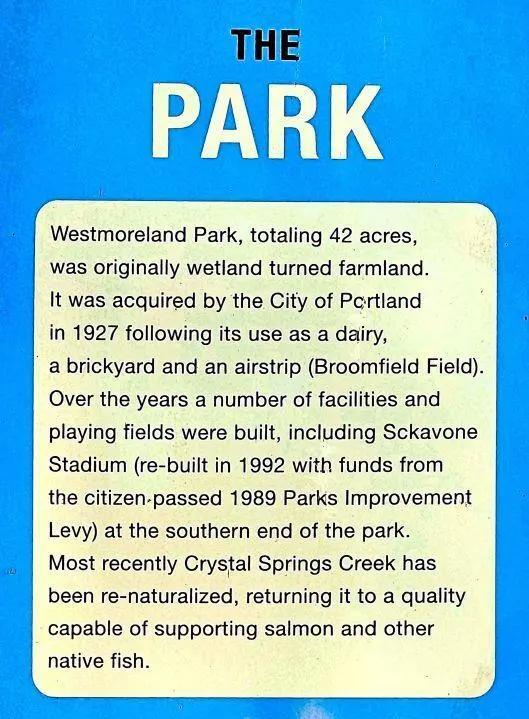
Veterans Day was originally called Armistice Day, so named after the cessation of World War I fighting on November 11, 1918 – a conclusion that was followed by a formal treaty in June, 1919. In 1938, still called Armistice Day, the US Congress made it a legal holiday, set aside to honor those who died in World War I.
Finally, in 1954, after the Second World and Koreans Wars, it was renamed Veterans Day – a day to reflect upon the service of, and remember, all veterans of all wars.
As you may know, the United States remained neutral when England declared war on Germany in 1914, and as a result our country did not enter the war as a combatant until April of 1917, which proved to mark the final 19 months of the conflict. It did not take long for idealistic college students to volunteer in both combat and support roles, and soon conscription (the military draft) was imposed on the rest of the men between the ages of 21-31, later increased to ages 18-45.
Most of the instructors at Reed College fell within those age ranges, so they attended thrice-weekly drills alongside their students. The campus became the site of the SATC (Student Army Training Corps) program, which allowed male students to remain on campus while adding military training.
Female students were encouraged to apply for nurses’ training, organized by the Red Cross. Toward the end of the war, the US Surgeon General estimated that 300,000 servicemen needed assistance in “regaining their functions”, both physical and psychological, and so women were urged to become “Reconstruction Aides”. The instruction given these Aides covered anatomy, physiology, first aid, psychology, massage, remedial exercises, and hospital administration.
In October of 1918, just one month before the Armistice ended the war, 68 Reed College women completed their Aide studies and were posted to military hospitals. Simultaneously, 125 Reed men were inducted into the Army. The student population at Reed in 1919 (figures were not available for the previous year) stood at 286 (today it’s 1,300). However, if the 1918 enrollment was similar to what it was the following year, only one third of the students remained at Reed at the end of the war.
As peace returned, a newspaper article stated that 811 Oregonians died during the conflict, but only 318 of those were combat-related. Other causes included influenza, pneumonia, tuberculosis, mumps, appendicitis, scarlet fever, diphtheria, meningitis, drowning, toxic psychosis, and shock from amputation.
Overlaying combat deaths were the great many from the worst pandemic of the flu in recorded history, which started in March of 1918 with a single soldier in a military base in Kansas. Misnamed the “Spanish flu” it spread rapidly to overcrowded military bases in the United States, and then overseas, as well as infecting the civilian population around the world; its death toll was appalling. [An excellent and terrifying account may be found in the book “The Great Influenza”, by John M. Barry, published in 2005.]
Twelve Reed College students perished in, or as a result of, the “The Great War”. To commemorate their sacrifice, on May 29, 1921, College President Norman Coleman dedicated a plaque to them. The memorial was placed “just inside the hall leading to the chapel staircase” in Eliot Hall. While there is a plaque listing soldiers lost during the Second World War just inside the main door of Eliot Hall, a search for the earlier one has so far proved fruitless, and nearby staff said they had never seen it. Perhaps it was moved elsewhere on campus, and if located, an update will be provided to BEE readers.
Although that plaque is missing, the names of the students on it were listed in the Oregonian at the time. They are as follows, with the addition of date and cause of death, and age or graduation class, if given:
- Anna Haight Ames no information found
- Jeannette Barrows 7/25/1918 Reconstruction Aide, pneumonia
- Esther Zimmerman 1/19/1919 Reconstruction Aide, pneumonia
- Hugh D. Broomfield 10/21/1918 pilot, died in combat, age 22
- Roswell Dosch 11/19/1918 influenza/pneumonia, age 29
- William L. Harman Jr. 9/23/1918 combat wounds, age 24
- Ray G. Kauffman 12/4/1918 combat, college freshman
- Richard M. Kennedy 1/26/1918 pneumonia, class of 1920
- William C. Lahti 12/19/1918 combat wounds, age 19
- George H. Ohl 1/29/1918 machine gunner, wounds?
- Ralph B. Rees 11/3/1918 pneumonia
- Douglas H. Warner 10/8/1918 medical doctor, influenza/pneumonia
One name on that list which may be familiar to some readers is that of Hugh D. Broomfield. The only child of Thomas and Daisy Broomfield, Hugh started his freshman year at Reed in 1917, when he was living in Gladstone, where his father was pastor of the new Baptist Church. A year later the family had moved to Sellwood, where the Rev. Broomfield was minister at the Bethany Baptist Church.
Not much is known about young Hugh’s interests at Reed, other than his participation on the school’s football team. Eager to fly the fragile canvas and wood-framed airplanes of the era, he enlisted in the Army, and was sent to flight school in Berkeley, California. After five months of training, he landed in France in 1917. On the morning of October 21, 1918, just a month before the Armistice, he volunteered to fly behind enemy lines to assess German troop preparations. Forced to fly at a low altitude due to cloud cover, his plane was shot down, and Hugh and his [un-named] co-pilot were killed.
Fellow local pilots who survived the war decided that the local rudimentary flying field, today part of Westmoreland Park, should be named after their friend. They lobbied the City Council until it was named Broomfield Field in October of 1919. Unfortunately, the honor did not last long. The property was leased from the Ladd Estate Company, and fees from the flyers using the field did not cover the cost of improving the runway and building hangers. In 1921 the field was used only six times. The lease on the airfield expired in September 1921, and the city did not renew it.
Hugh Broomfield was laid to rest in a military cemetery near Cunel, France. His personal effects were returned to his parents, including a pocketful of change amounting to $5.47, which his father then donated to an Armenian relief fund in 1919.
 Add to Preferred Sources