undefined
Posts
undefined
Followers
Miami-Dade District Seeks Microschools to Lease Empty Classroom Space
By Linda Jacobson,
13 hours ago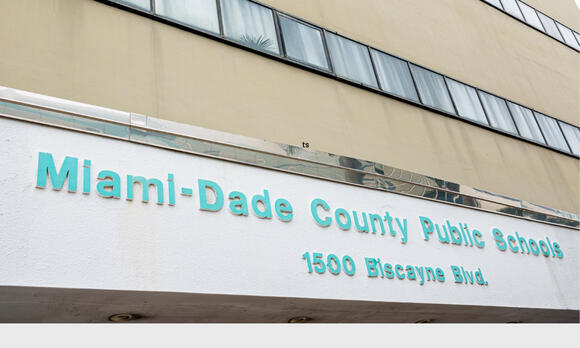
The Miami-Dade school district, one of the nation’s largest, is inviting independent microschools to lease empty classroom space — providing a new revenue stream as public school enrollment drops sharply.
The initiative, according to the district officials, is both a response to enrollment declines as well as a way to accommodate families who have a wide range of educational choices. The district already allows students on Florida’s voucher programs to take à la carte courses in public schools, including core academics and electives.
Get stories like this delivered straight to your inbox. Sign up for The 74 Newsletter
Officials are “really just committed to advancing these innovative partnerships ,” Verena Cabrera, the district’s enterprise development officer, said during a virtual meeting this week with interested microschool operators. “We understand that parents do have choice.”
For private providers, who often operate out of their homes or lease space in storefronts and office parks, the district can offer more “supportive learning environments” while also being “good stewards of taxpayer property,” Cabrera said.
Proposals are due Dec. 1, and the district plans to finalize agreements with microschools by March or April.
‘Just Aren’t Enough Kids’: Choice Schools Feel Effects of Low Birth Rates, Too
‘A big change’
In a district that has lost nearly 16,000 students since last year and has announced school closures, the initiative is one example of how a major urban school system is responding to both enrollment decline and an open education marketplace. Some districts, including Florida’s Orange County, have launched their own microschools to compete with the private sector, but this is different.
Miami-Dade, for example, is already leasing the former Biscayne Gardens Elementary School to a Jewish elementary school affiliated with the Talmudic College of Florida. One expert who studies post-pandemic enrollment trends, said it’s likely that more districts facing such “budgetary pressures” will consider similar arrangements.
“It wouldn’t surprise me to see districts seek out and tolerate new sources of revenue that might have been considered unconscionable just a few years ago,” said Thomas Dee, a Stanford University economist.
His most recent national study shows that in one in four schools, enrollment through the 2024-25 school year was at least 15% lower than it was before the pandemic. While some districts have made the unpopular move to close schools and lay off staff, it’s more common, he said, for districts to “hollow out” programming, defer maintenance and cut extracurricular opportunities.
“But that doesn’t mean it’s the best response for kids,” he said.
Eva Goldstein-Meola, who runs a microschool and a resource center in nearby Broward County, expects leaders in that district to closely monitor Miami’s approach. The district reports over 60,000 empty seats and is also in the process of closing schools.
“And it wouldn’t surprise me if Palm Beach was the third,” she said. “There’s been a big change in South Florida, especially in the past two years.”
But leasing an entire campus, like the Jewish school, is a lot different than occupying a classroom or a wing in a public school that is still operating. Sharing facilities, like charter and district schools often do, can lead to challenges, and sometimes disputes, over drop off and pick up times and the use of common areas, such as playgrounds, gyms or cafeterias. Miami-Dade plans to offer microschools access to those spaces as part of the lease negotiations.
“Managing the details of a co-location are important,” said Don Soifer, CEO of the National Microschooling Center, who began discussing the idea with former Superintendent Jose L. Dotres about a year ago. Through those talks, he met other district leaders, including Cabrera.
Filling a ‘budget gap’
Even though the district has a strong teachers union, United Teachers of Dade was not involved in planning the initiative, according to president Antonio White. He said he was just beginning to get information about it.
Some district parents are skeptical of the district’s plan. A statement from Moms for Libros, an advocacy group, warns that the initiative would “bring outside operators into public school buildings without clear safety coordination or accountability for instruction, and could create two tiers of students under one roof.”
The organization wants the district to hold community meetings at any schools where microschools might lease space, require joint safety plans in cases of emergencies and require microschools to give their students the same state assessments that district students take.
“I understand why the district wants to lease empty space,” Lissette Fernandez, executive director of the group, told The 74. “It could bring some of the voucher money that’s left our district back into our public schools. But we can’t fill a budget gap at the expense of children’s safety.”
Indiana Microschool Network Aims to Bring Choice to Rural Families
On the pre-bid conference call, which drew about 35 participants, Cabrera told microschool leaders that the district would require a list of the students in their programs for safety reasons and that they would have to participate in any emergency procedures.
The district has no plans to produce a list of available schools and instead wants microschool leaders to let them know their preferred facilities or neighborhoods. According to the district’s strategic plan, schools are currently using 66% of their capacity. The goal is to increase that rate to 80%.
‘A market for underused buildings’
Cabrera was also clear that private microschools wouldn’t be expected to follow the same academic standards or testing requirements as district schools.
“The design of your curriculum and your program is not going to be dictated by us,” she told a participant with Edmentum, a virtual course provider, who asked whether an online program would have to work with an in-person microschool to qualify for a lease.
Soifer, who advocates on behalf of microschool founders across the country, asked about some of the fine print in the district’s 64-page document outlining the new initiative. Its right to terminate an agreement with just 30 days notice is “causing some heartburn” because microschool leaders have commitments to families, he said.
As Enrollment Falls, Old Schools Find New Life as Apartments
Cabrera responded that if a school was damaged in a hurricane, for example, the program might have to relocate. But she also stressed that leaders plan to be as flexible as possible to accommodate providers.
The application says the microschools have to have been in operation for five years, which would “substantially limit the eligible field,” Soifer said, considering that most growth in the sector has been since the pandemic. The district will consider a leader’s additional education experience, like teaching or administration, to meet that requirement, Cabrera said.
Ty Gabriel, who runs Archangel Innovations in the Coral Gables area, was among those on the call. A former military officer and “science nerd,” he offers STEM classes, including coding, 3D printing and soldering. Students, he said, are “not building robots out of a kit.”
He currently leases a storefront, but said renting space from the district could save money on overhead or be an expansion opportunity.
“I came there with an open mind,” he said. “I think it’s smart of the district. They want to see if there’s a market for underused buildings. Clearly, the answer is yes.”
 Add to Preferred Sources
