undefined
Posts
undefined
Followers
Longtime Florida housing developer tests a shift toward data centers
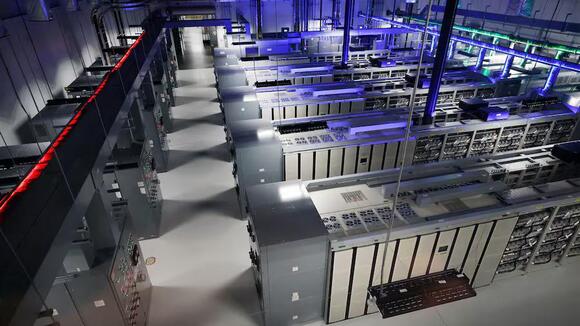
After decades of transforming swamp land into subdivisions, a longtime Florida developer tested a new venture: data centers.
The Deltona Corporation was behind a rezoning proposal in Citrus County, seeking to more than double the size of an existing industrial park in hopes of attracting data centers and heavy manufacturing. The 1,356-acre site is currently underdeveloped and pocked with abandoned phosphate mines.
Deltona pulled its proposal last week after a fierce backlash from officials and community members. Citrus County’s Planning and Development Commission had recommended against the zoning change after a nine-hour meeting on June 18, and the developer abandoned plans rather than face a final decision from the County Commission on July 14.
Industrial development is unusual territory for Deltona, which helped to engineer some of Florida’s trademark suburban sprawl when it began building residential communities more than 50 years ago. The data centers gripping the nation, however, are increasingly lucrative territory.
A December report from the Federal Reserve showed that investment in data center structures roughly quadrupled between 2021 and 2025. Meanwhile, plans for future data centers totaled over $1 trillion in the fall of 2025.
“In my opinion, we’re on the cusp of the biggest wealth transfer in a generation,” said Mark McNees, a teaching faculty at Florida State University’s Jim Moran College of Entrepreneurship. “Florida and other states are headed into the largest electricity buildout in their history.”
Deltona’s lawyers said they initiated the rezoning process for the park’s expansion last summer, when Amazon inquired about building a data center there. Both parties had signed confidentiality agreements at the time.
“The idea of an expanded industrial park was on Deltona’s list of potential uses for the site, so we started down that road,” said Clark Stillwell, one of Deltona’s attorneys, at the June 18 planning board meeting. “We felt like we could craft the standards that would make the site work.”
The developer continued to push its proposal forward even after Amazon lost interest. At that point, the project’s uncertain economic return became a major point of contention with county officials and residents, who had already invested funds into the site.
Deltona had received a $2.8 million grant from Gov. Ron DeSantis in 2024 to install a sewer underneath the existing industrial park. Citrus County covered the remaining $700,000. The award came with the expectation that Deltona’s future development would create 3,800 jobs in manufacturing, warehousing or other industrial work, according to documentation found on the Florida Job Growth Grant Fund’s website.
So when Deltona attorneys said at the planning board meeting that their hypothetical data center might bring just 100 permanent jobs to the area, officials balked.
“I wanted to protect the county’s $2.8 million state grant investment,” Commissioner Richard Barmes said after voting against the proposal. “We needed time to analyze whether approving a data center at a site funded for light industrial job creation could or would conflict with the stated procedures of the grant.”
Now that Deltona has pulled the zoning proposal, it’s unclear what will become of the 551-acre existing industrial park in Holder. The developer still owns at least 2,273 other properties in Citrus County, most of them residential.
“Ultimately, it is in the interest of the industry to promote a good name and try to lend themselves as someone that can work with the communities,” said Joao Ferreira, the acting director of the center for economic and policy studies at the University of Virginia.
‘A fascinating case study’
Deltona has a complicated history in Florida. Its origins intertwine with major Florida developers the Mackle Company and the General Development Corporation, both more familiar names to many locals.
The developer established its first residential community in 1962, when the state had minimal permitting requirements and a population of fewer than 6 million residents. Brothers Robert, Elliott and Frank Mackle Jr. transformed 15,000 acres of land near DeLand into the Deltona Lakes community.
Soon after, “Florida’s home builder” began construction on its next big project: Spring Hill. At a ceremonial ribbon-cutting on the new site, company executives boldly predicted that 100 people would live in Spring Hill in a year, according to Tampa Bay Times archives. The company would continue developing Spring Hill until the 1980s. Today, it’s home to more than 100,000 residents.
“They built a lot of these post-World War II, cookie-cutter homes in large, 100-acre tracts of land,” local historian Joey Vars said. “People weren’t quite saying no at the time because it was the post-war boom, and they didn’t have a lot of the environmental regulations we do now.”
Though Deltona’s developments were initially successful, trouble arose when the company encountered permitting issues on Marco Island. The U.S. Army Corps of Engineers denied dredge and fill permits for 18 million cubic yards of development, and subsequent lawsuits with jilted homeowners and conservationists left the company strapped for cash.
The corporation continued fighting its permit denial all the way to the United States Supreme Court, which refused to overturn the decision. Deltona turned 15,000 acres of wetland property over to the state as a nature preserve, leaving thousands of people with contracts for homes on property that could no longer be developed. The company appeased customers with cash refunds and property exchanges, according to news coverage at the time.
In 1992, European investors assumed control of the company by purchasing its bank debt. Company headquarters were moved to Ocala in 1998, and the company once again turned a profit in 2001.
Today, Deltona’s website lists communities in Citrus Springs, Ocala, St. Augustine, North Port and Sunny Hills. The company sells models of both single-family and community-living homes, with the value of homes in Citrus Springs ranging from $260,000 to $290,000 on its website.
With its new proposal, Deltona may have been seeking to diversify. Real estate holdings have become increasingly valuable leverage in the data center world.
“Many players in this market are just people that take advantage of their knowledge on real estate,” Ferreira said. “They follow the trend, and with the fact that it’s difficult for data center companies to find reliable locations where they can deploy the data centers quickly, that has become a business model.”
Details of Deltona’s data center plan remained largely hypothetical, in part because most Florida governments don’t yet have guidelines for that type of development.
Some broad guardrails were set by a statewide bill regulating data centers, which DeSantis signed in May. When the legislation takes effect July 1, it will prohibit utility companies from passing electricity costs from large data centers onto residents and small businesses. It will also provide a pathway for local water management districts to deny permits if they deem a data center’s water usage harmful to natural resources.
But the bill does not set requirements for zoning or residential buffers. Florida also offers a tax break on construction materials, technology and electric bills for data centers over 100 megawatts, providing an incentive for the industry alongside its regulation.
Citrus County, which is trying to develop its own regulations for data centers, established a one-year moratorium on the facilities in May. In a Facebook post announcing Deltona’s withdrawn proposal, the county government reiterated its efforts to develop guidelines that “address proposed data centers in the future while maintaining legal compliance.”
“These centers require a whole lot more thought and planning than we’re used to giving big projects,” said Clay Henderson, an environmental lawyer, educator and author. “I don’t think our zoning is set up to deal with it.”
And Deltona is not the only developer to propose a data center in recent months. Several facilities are in the works across Florida, including two in Miami-Dade County and one in Palm Beach County. In May, Boston developer American Tower submitted a proposal for a small facility in Pinellas Park.
Ferreira warned that regulations in regions with temperamental weather require extra consideration.
“Florida has a very fragile infrastructure, that, because of the exposure to certain extreme events, can be really critical,” he said. it.”
“It’s a fascinating case study, but it’s also a big concern,” Henderson said. “The system’s not built to deal with these issues.”
 Add to Preferred Sources

