undefined
Posts
undefined
Followers
A cop pulled a gun on a fellow officer over microwaved fish.
By Lisa Greene,
1 days ago
A South Carolina police detective accused of pointing his department-issued handgun at a fellow officer during an argument over microwaved fish has received a reduced criminal charge and a conditional discharge agreement.
Michael Debiase, 46, formerly of the Myrtle Beach Police Department, was arrested in June after allegedly drawing his firearm during a confrontation inside the police station.
Although the incident initially resulted in a felony charge, Debiase later accepted a deal reducing the offense to misdemeanor disorderly conduct, with 90 days of probation and a $350 fee.
Gun rights commentator Liberty Doll examined the case in a recent YouTube video, questioning why a law enforcement officer accused of threatening a colleague with a firearm was allowed to resolve the matter without an immediate criminal conviction.
The agreement also requires Debiase to surrender his South Carolina law enforcement certification permanently.
Detective Accused Of Pointing Gun During Office Argument
According to Liberty Doll, the confrontation occurred on May 30, 2026, inside the Myrtle Beach Police Department headquarters at 1101 North Oak Street.
The incident reportedly began when a patrol officer heated fish in a shared microwave, causing an unpleasant odor inside the building.
Debiase, who was working as a detective, allegedly confronted the officer over the smell.

What should have remained an ordinary workplace disagreement instead escalated into an incident involving a firearm.
Liberty Doll read from the arrest warrant, which alleged that Debiase removed his department-issued handgun and pointed it at the other officer during the argument.
The colleague was identified in the warrant as a patrolman first class, but the officer’s name was redacted.
The warrant described the alleged offense as pointing and presenting a firearm at another person.
The report did not establish whether the handgun was loaded or whether Debiase made any verbal threats during the confrontation.
Liberty Doll opened her commentary by noting that most people who encounter unpleasant food odors in an office simply complain and continue with their day.
She argued that reaching for a firearm over something so minor demonstrated an extraordinary failure of judgment, especially from someone entrusted with police authority.
South Carolina Investigators Arrest The Officer
Following the incident, the South Carolina Law Enforcement Division, commonly known as SLED, investigated the allegations.
Debiase was arrested on June 2 and charged with pointing and presenting a firearm at a person.
He was booked into the J. Reuben Long Detention Center in Horry County.
According to the information discussed in Liberty Doll’s report, the original charge was a felony under South Carolina law.
The offense can carry a prison sentence of up to five years or a fine determined by the court.
The seriousness of the initial charge was central to Liberty Doll’s criticism of the eventual outcome.
She questioned how someone accused of pointing a gun at another person during a workplace disagreement could later receive a substantially reduced offense.
The fact that the accused individual was a police officer made the case particularly troubling to her.
Law enforcement personnel receive firearm training and are expected to exercise restraint when responding to difficult or confrontational situations.
An argument over food odors offers no apparent justification for introducing a deadly weapon into the disagreement.
The incident also raised broader questions about the safety of officers working alongside colleagues who may respond unpredictably to ordinary workplace frustrations.
Police Department Fires Detective After Investigation
The Myrtle Beach Police Department placed Debiase on administrative leave immediately following the incident.
An internal investigation was conducted by the department’s Office of Professional Standards, while SLED carried out its own investigation.
According to a departmental statement read by Liberty Doll, investigators identified several policy violations.

The department subsequently announced that it had ended Debiase’s employment.
Officials confirmed that the allegations involved the detective removing his issued firearm from its holster inside the police briefing room and pointing it toward another officer.
The department emphasized that its employees are expected to demonstrate professionalism, integrity, sound judgment, and respect for others.
It also stated that the incident did not reflect the values of its officers and that holding employees accountable was essential to maintaining public trust.
Liberty Doll questioned what additional policy violations investigators had identified beyond the alleged act of pointing a firearm at a colleague.
She also responded sarcastically to the department’s assurances about professional standards, suggesting that the incident exposed a serious problem with accountability.
The termination demonstrated that the department considered the alleged conduct unacceptable, even as the criminal case continued separately.
However, losing a law enforcement position and facing criminal punishment are different consequences, and Liberty Doll argued that the latter deserved greater scrutiny.
Felony Charge Reduced To Misdemeanor Disorderly Conduct
The case took another turn in late October when Debiase entered a plea agreement.
According to Liberty Doll, the original felony allegation was reduced to misdemeanor disorderly conduct.
The court then approved a conditional discharge arrangement rather than immediately entering a judgment of guilt.
Under the agreement, Debiase was placed on 90 days of probation supervised by the South Carolina Department of Probation, Parole and Pardon Services.
He was also assessed a $350 conditional discharge fee.
Liberty Doll emphasized that the arrangement provides an opportunity to avoid a final conviction if Debiase successfully completes the court’s requirements.
If he complies with those conditions, the proceedings can be discharged without an adjudication of guilt.
If he violates the agreement, the court may enter a judgment of guilt and proceed accordingly.
The commentator described the outcome as a favorable deal compared with the potential consequences of the original felony charge.
She argued that an ordinary civilian accused of similar conduct could face a much more serious legal outcome.
That comparison reflects her opinion rather than a finding that another defendant would necessarily have received a different sentence.
Nevertheless, the difference between a possible five-year felony penalty and a short period of probation raises legitimate questions about how the case was resolved.
Officer Must Permanently Surrender Police Certification
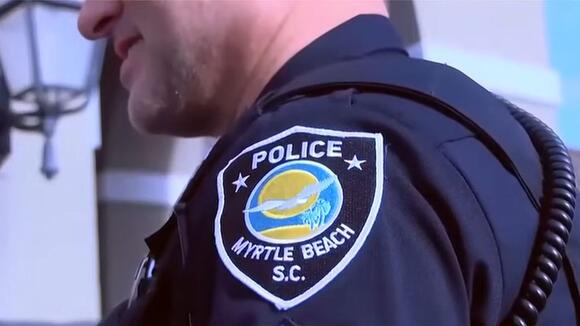
Although the agreement reduced the immediate criminal consequences, it included another important requirement.
Debiase must surrender his South Carolina Criminal Justice Academy law enforcement certification and never seek reinstatement.
That condition effectively prevents him from returning to certified law enforcement employment in South Carolina.
Liberty Doll acknowledged that the permanent certification restriction was an important part of the outcome.
She argued that someone accused of drawing a firearm during a minor workplace dispute should not continue serving in a position involving police powers.
However, she remained critical of the opportunity to avoid a criminal conviction.
The agreement does not mean the allegation was found to be false, nor does it represent a traditional acquittal.
Instead, the court established conditions that Debiase must satisfy before the matter can be discharged without a finding of guilt.
That distinction is important because the final outcome depends on compliance with the probation requirements.
Liberty Doll nevertheless argued that the resolution appeared unusually lenient given the nature of the alleged behavior.
Liberty Doll Questions Double Standards In Police Accountability

The broader issue raised by Liberty Doll was whether police officers are consistently held to the higher standards expected of their profession.
She argued that officers are routinely entrusted with significant authority, including the power to carry firearms and make decisions affecting other people’s safety.
With that authority, she believes, should come greater responsibility rather than more favorable treatment when serious misconduct occurs.
The commentator questioned whether a civilian accused of pointing a handgun at someone over a disagreement about lunch would receive a similar conditional discharge agreement.
She also expressed concern that successful completion of probation could leave Debiase without a criminal conviction despite the incident that led to his dismissal.
There are differences between individual criminal cases, and sentencing decisions can depend on evidence, negotiations, and circumstances not fully explained in public reports.
Still, the case demonstrates why transparency surrounding agreements involving former law enforcement officers matters.
Public confidence can be damaged when disciplinary action appears substantial but the accompanying criminal penalties seem comparatively limited.
Liberty Doll concluded that permanently ending Debiase’s law enforcement certification was appropriate, but she remained dissatisfied with the reduced charge and conditional discharge.
For Debiase, the agreement offers a path to resolving the criminal case without an adjudication of guilt, provided he completes probation and complies with the court’s order.
His career with the Myrtle Beach Police Department, however, has already ended, and the terms of the agreement prohibit him from seeking reinstatement of his South Carolina police certification.
 Add to Preferred Sources
