undefined
Posts
undefined
Followers
Judge Tosses DUI Charges Over AI-Created Report
By Gary Wood,
2 days ago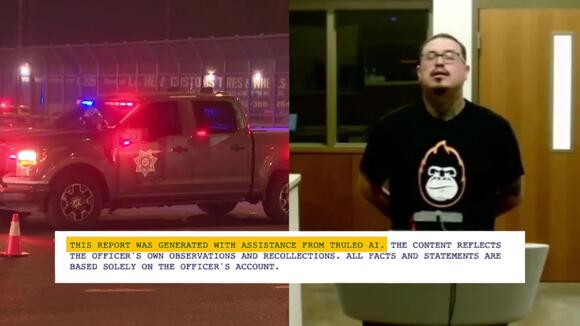
An Arizona judge ordered the release of a suspected drunk driver after discovering that the police report supporting his arrest had been prepared with the help of artificial intelligence, raising questions about how much courts can trust documents produced using the technology.
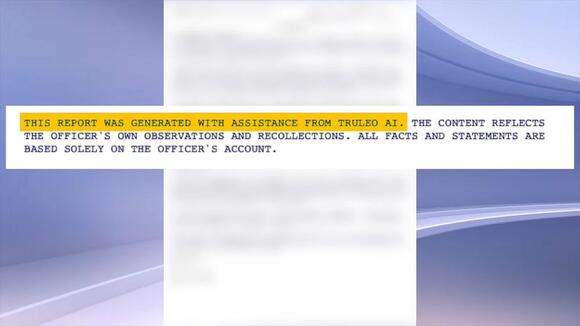
The unusual decision came after a state trooper submitted an arrest report containing an explicit disclosure that AI software had assisted in generating the narrative, without explaining exactly what information the technology had produced or changed.
Attorney Steve Lehto, host of the legal commentary podcast Lehto’s Law, examined the case and explained why the judge’s concerns could become increasingly important as police departments turn to AI to reduce the time officers spend writing reports.
Judge Questions Reliability of AI-Assisted Arrest Report
The case began on October 29, 2026, when Anthony Edward Rene Quidera was arrested in Maricopa County, Arizona, following a traffic stop on Interstate 10.
According to the arrest narrative discussed by Lehto, an Arizona Department of Public Safety trooper observed Quidera’s Dodge Charger traveling more than 100 mph in a 65 mph zone near 79th Avenue.
The trooper also reported that the vehicle failed to maintain its lane and traveled along the left median shoulder before being stopped.
Following the traffic stop, the officer described several observations that suggested the driver might have been impaired.
These included the smell of alcohol on Quidera’s breath and eyes that appeared red, bloodshot, and watery.
The trooper also administered a horizontal gaze nystagmus test, which examines involuntary eye movements associated with possible impairment, and reported that the driver displayed six out of six indicators.
Quidera allegedly declined to take a preliminary breath test, while a subsequent inventory of his vehicle reportedly revealed several open containers on the passenger-side floorboard.
He was arrested on allegations involving driving under the influence, exceeding the speed limit by more than 20 mph, and possessing an open container inside a vehicle.
However, the case took an unexpected turn when the arrest paperwork reached the court.
The probable cause statement included a disclosure explaining that the report had been generated with assistance from Truleo AI, while asserting that its contents reflected the officer’s own observations and recollections.
According to Lehto, that disclosure was enough to raise serious questions about whether the document could reliably support the arrest.
Court Says It Cannot Determine Probable Cause
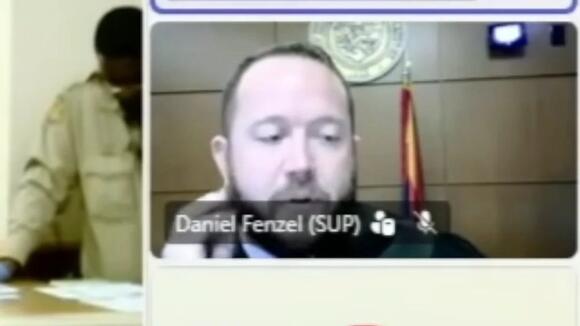
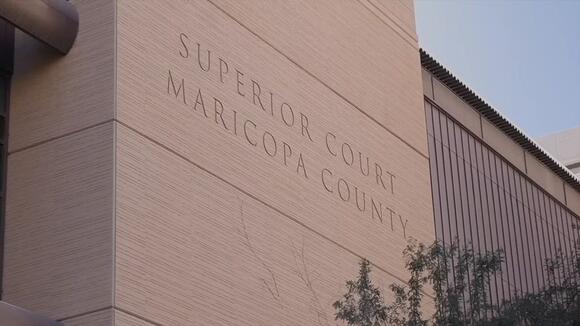
Maricopa County Superior Court Commissioner Daniel Fenzel reviewed the report and concluded that he lacked sufficient information to determine how much of the narrative had been written or influenced by artificial intelligence.
The problem was not simply that an officer had used technology to prepare paperwork, but that the original account supplied to the AI system had not been included.
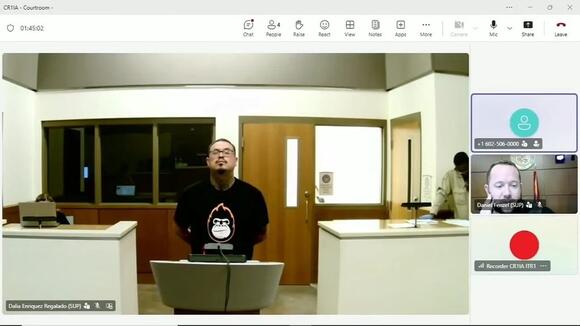
Without that information, the commissioner could not establish whether the statements in the report accurately represented the officer’s observations or had been altered during the writing process.
Fenzel explained in his release order that the court could not meaningfully evaluate whether the factual allegations had been authored, in whole or in part, by generative AI.
“The Court is unable to determine probable cause at this time,” the commissioner concluded.
As a result, Quidera was released.
Lehto explained that the ruling did not establish that the driver was innocent or that the allegations were necessarily false.
Instead, the judge determined that the document presented to the court did not provide a sufficiently reliable basis for finding probable cause at that stage of the proceedings.
The distinction matters because a police report is more than a routine administrative document. Courts rely on the information it contains when making decisions that can directly affect someone’s liberty, and uncertainty about who actually produced the factual account creates a problem that cannot simply be overlooked.
Attorney Explains Why Officers Are Turning to AI
Lehto acknowledged that police officers spend a considerable portion of their working hours completing paperwork, even though the public often imagines their jobs primarily involve patrols, investigations, and arrests.
After responding to incidents or taking suspects into custody, officers must frequently prepare detailed reports describing what happened, what they observed, and why certain actions were taken.
Some documents can extend across numerous pages, particularly in complicated criminal investigations.

According to Lehto, the amount of writing required can become exhausting, making AI-assisted reporting an appealing option for busy departments.
He said he understood why an officer might want to provide information to a computer program and have the technology organize it into a completed report.
However, he also understood why a judge would be skeptical of a document prepared through a process that had not been fully explained.
“What did the AI do with your facts?” Lehto asked, identifying the central issue.
He questioned whether the software merely organized the officer’s original statements or whether it modified, omitted, or introduced details while generating the narrative.
Lehto also pointed to the well-known tendency of generative AI systems to produce inaccurate information, sometimes described as hallucinations.
Even when a report appears professional and convincing, that does not necessarily establish that every statement accurately reflects what occurred.
This is where the promise of faster paperwork meets a serious legal concern. Technology may reduce the administrative burden on officers, but the time saved becomes far less valuable if a court cannot confidently establish the source and accuracy of the resulting evidence.
AI-Generated Reports Could Introduce New Errors
During his discussion, Lehto referred to a separate pilot program involving artificial intelligence software designed to examine police body camera recordings and produce initial reports.
Under that approach, officers could provide recorded footage to a system that would analyze the material and generate a written account.
However, he explained that the technology sometimes struggled to determine which person was speaking at particular moments.
That limitation could create inaccuracies if statements made by witnesses, suspects, or officers were incorrectly attributed to someone else.
Lehto contrasted such tools with ordinary speech-to-text software, which converts spoken words into written language without necessarily attempting to interpret or rewrite the underlying information.
The difference, he suggested, is that generative AI may do more than reproduce what an officer originally said.
It might reorganize information, change wording, or produce a more polished narrative, leaving questions about whether the final version remains faithful to the source material.
For a court evaluating probable cause, even relatively small changes could matter if they affect how the alleged facts are understood.
Lehto therefore argued that judges need to know exactly how the technology contributed to a report before relying on it to make important legal decisions.
He praised Fenzel for refusing to accept the document without further clarification.
Suspect Was Later Charged Again
Despite the initial release, Lehto emphasized that the court’s decision did not permanently end the criminal case.
After the judge declined to find probable cause based on the AI-assisted report, authorities subsequently pursued charges against Quidera again.
Maricopa County Justice Court records indicated that he was scheduled for arraignment in November, although the additional reporting supplied with the case stated that he failed to appear for his November 12 hearing.
Lehto stressed that the important point was that the defendant had not escaped prosecution simply because the first probable cause statement was rejected.
Rather, the AI disclosure created an obstacle during the initial proceedings, requiring the case to continue through a different procedural path.
The attorney also noted that the Arizona case was not the only recent example of artificial intelligence creating complications in the justice system.
He referenced an appeals court decision involving a road rage shooting, in which a 10-year sentence was overturned after an AI-generated victim impact statement was found to have influenced sentencing.
Although the circumstances differed, both cases raised questions about the appropriate role of AI in legal proceedings where human judgment and reliable evidence are essential.
Arizona Courts Consider New Rules for Artificial Intelligence
Lehto also discussed how Arizona’s judiciary is responding to the growing use of AI in court-related work.
The Arizona Supreme Court has declined to impose a complete ban on judges using artificial intelligence, instead seeking recommendations for clear standards governing its responsible use.
According to the report, the court asked the Arizona Steering Committee on Artificial Intelligence and the Courts to consider whether new rules or administrative orders are necessary.
The committee was directed to provide recommendations aimed at ensuring that emerging technologies are used responsibly while preserving public confidence that human judges remain responsible for judicial decisions.
A status report is expected by March 1, 2027.
For Lehto, the central concern extends beyond the occasional report that openly acknowledges AI involvement.
He suggested that other AI-assisted documents may already be entering courtrooms without receiving the same level of examination, potentially influencing decisions before anyone questions how they were produced.
The attorney argued that the Maricopa County judge was right to demand greater clarity rather than simply accepting the report because it appeared complete.
While the criminal allegations against Quidera remain a separate matter, the initial ruling illustrates the difficulties courts may encounter when law enforcement adopts new technology faster than clear standards for evaluating its output can be established.
 Add to Preferred Sources

