undefined
Posts
undefined
Followers
DCNR Unveils 30-Year Climate Action Plan in Spring Mills
By Julie Noal,
1 days ago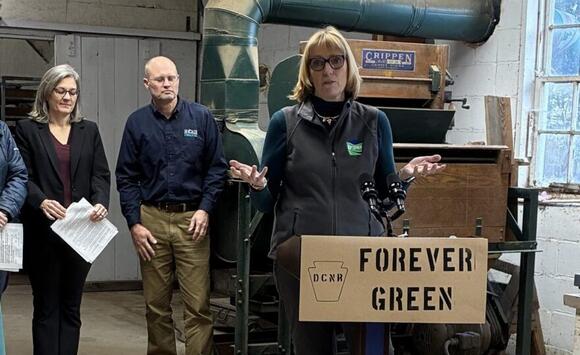
This story originally appeared in The Centre County Gazette.
SPRING MILLS — Pennsylvania Department of Conservation and Natural Resources Secretary Cindy Adams Dunn on Tuesday, Nov. 10 unveiled a new Climate Action Plan for the commonwealth's parks and forests at the Mira Lloyd Dock Resource Conservation Center in Spring Mills.
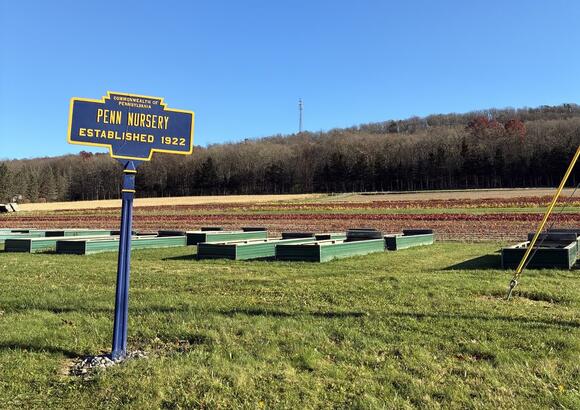
The Mira Lloyd Dock Resource Conservation Center began as a small forest nursery in 1908 and has evolved into a statewide hub for reforestation and conservation support. DCNR staff collect native seeds to preserve genetic diversity, grow trees and shrubs for restoration projects, and collaborate with researchers to improve forest health — work that directly supports the climate adaptation and mitigation goals outlined in DCNR’s Climate Action Plan. The center also houses DCNR’s woodshop and sign shop, producing durable wood products and infrastructure used throughout state parks and forests.
Dunn was accompanied by several environmental conservation enthusiasts who touted the plan that Dunn said was a collaborative effort from numerous experts and employees within DCNR and related organizations.
The new plan, which was released online Tuesday, establishes measurable goals and actions through 2050 to make the state’s public lands and DCNR operations more sustainable and resilient.
“We take this (action plan) very seriously,” Dunn said. “It’s a strong and resilient plan. We can’t ignore (climate change) and expect it to just go away. Our responsibility is to look out for future generations.”
Pennsylvania is already experiencing the effects of a changing climate, including increased flooding, more extreme heat days, harmful algal blooms, and shifting seasonal patterns. These changes can threaten public safety, harm natural resources, and affect the places Pennsylvanians and visitors enjoy for outdoor recreation. The plan builds on work already underway and sets goals for making DCNR’s operations and public lands more sustainable and resilient for future generations.
Dunn said this is the second Climate Action Plan that has been instituted by DCNR, with the first one being introduced several years ago. She described the plan as “more robust” than the first one.
“This is the second (action plan),” Dunn said. “This one really doubles down from the first one. It’s practical and designed to be useful.
“The forest and natural landscape do a lot for us,” Dunn continued. “This plan engages with the public and communities more and makes them part of the solution.”
The 182-page plan outlines steps DCNR will take to prepare its lands and facilities for climate impacts, protect visitors, and help communities address climate-related risks. Drawing on findings from the Pennsylvania Department of Environmental Protection’s Climate Change Impact Assessment, the plan identifies how changing weather patterns and more extreme conditions could affect DCNR’s lands, operations, and mission. The plan includes:
- Updated climate projections for Pennsylvania.
- A department-wide climate risk assessment.
- DCNR’s first greenhouse gas inventory.
- Agency-wide and bureau-specific climate actions and performance indicators.
- Guidance on climate-resilient land management, carbon sequestration, and emerging technologies.
What’s in This Plan
The plan establishes specific goals and accountability measures, prioritizes support for vulnerable communities, and includes:
- Reducing greenhouse gas emissions directly resulting from DCNR operations by 80 percent by 2050.
- Generating or offsetting all electricity used by DCNR from carbon-free sources by 2035. Providing both general and specialized climate change training to all DCNR staff by 2030. Establishing 60 measurable climate action goals across the agency.
- Implementing 49 bureau-led actions to strengthen climate resilience in infrastructure, grant programs, operations, natural resources, recreational spaces, and other agency functions.
- Reporting progress each year to ensure transparency and accountability.
Helping Communities
DCNR designed the Climate Action Plan to serve as a resource for local governments, school districts, universities, and conservation organizations working to address climate change.
It includes regional climate projections, a statewide climate risk assessment, and guidance on forest management, carbon sequestration, and climate-resilient recreation design.
These tools can help communities identify and prepare for risks such as flooding, landslides, and extreme heat.
Building on Climate Action Already Underway
DCNR has already made significant progress in climate mitigation and adaptation. The agency has installed 40 small-scale solar arrays, added more than 50 public electric vehicle charging stations across state parks and forests, built 18 high-performance LEED-certified buildings, and converted about 10 percent of its vehicle fleet to electric or hybrid models.
DCNR’s Bureau of Facility Design and Construction consistently incorporates climate resilient and sustainable design into its projects, including the rebuilt aqueduct at Delaware Canal State Park, which was engineered to withstand future storm events. Adaptation efforts include upgrading trails and recreation infrastructure to withstand more severe storms, enhancing emergency response training, and expanding forest management practices that reduce wildfire risk, control invasive species, and strengthen ecological resilience.
DCNR serves as the lead agency for all wildfires in Pennsylvania and provides grants to volunteer fire departments to help equip and train crews across the state.
Investing in Communities
DCNR invests millions of dollars each year through the Community Conservation Partnership Program to help local governments and nonprofits build climate-resilient parks, trails, and recreation areas, including a recent $81 million investment in community projects statewide.
The post DCNR Unveils 30-Year Climate Action Plan in Spring Mills appeared first on StateCollege.com.
 Add to Preferred Sources
