undefined
Posts
undefined
Followers
Lutheran pastor and Rep.-elect Sarah Trone Garriott on her ‘new calling’ on Capitol Hill
By Jack Jenkins,
11 days agoGet RNS’ thoughtful, essential religion reporting every morning. Sign up for free!
(RNS) — Asked how she is processing her recent victory, the Rev. Sarah Trone Garriott, a Democrat who defeated a Republican opponent last Tuesday (Nov. 3) to become the representative-elect for Iowa’s 3rd congressional district, couldn’t help but use a religious metaphor.
“Every time I was called to a congregation, it was that sense of tremendous responsibility,” said Trone Garriott, whose win flipped the seat for her party. “It’s really humbling to have this new calling to begin.”
Faith has long been a mainstay for Trone Garriott, a onetime parish pastor and hospital chaplain ordained in the Evangelical Lutheran Church in America, a mainline protestant denomination. But as an outgoing Iowa state senator who first ran for office in 2020, she’s also keenly aware of what her new role on Capitol Hill will entail: legislative fights, floor debates and — as a lawmaker from a hotly contested district likely to be targeted by Republicans again in 2028 — a national spotlight.
Trone Garriott spoke with Religion News Service last Thursday about what the election has meant for her spiritually, as well as the representative-elect’s plans after she is sworn in as a member of the next Congress.
This interview has been edited for length and clarity.
I know you’re not new to politics, but you’ve just been elected to Congress in a very closely watched seat that garnered national attention. How are you processing that win, personally and spiritually?
Election night was just the beginning of this process, and I think it’s really going to feel real and concrete when I’m in Washington for orientation, and when I come to the swearing-in moment.
But it’s really humbling to be there, to serve this new community in this new way. There’ll be a lot to learn. There’s going to be a lot of challenges ahead. But I’m really excited for the opportunity and all the joy that comes with it, too.
Where were you when the race was called?
As we were watching the returns come in, I was kind of off with my team and my family. We saw the numbers, which looked really promising. The first county to report was the largest metro area in my district, and the numbers were so good.
So we were pretty confident we knew how things were going and we were just waiting for some confirmation for someone to officially call the race. We weren’t getting it, so I went out on the balcony to watch Governor-elect Rob Sand give his acceptance speech. As I was standing out there watching him, (Republican incumbent Rep.) Zach Nunn called me to concede.
That’s when I knew that it was done. He was very gracious.
When I interviewed you back in 2020, when you were first running for state Senate, you talked about the difficulty of loving your enemies and loving across difference, especially in politics. What challenges are you expecting as you head into Congress, and what are you excited about?
There’s just a lot of work to get done. I know that I have been given a mandate to go and take on the corruption that’s in Washington. There’s a lot of people who have lost faith in government, lost faith in elected leaders, and they want to see that addressed.
They want change, and they want real accountability for them. So that’s a big responsibility, but it’s incredibly important to me to get to work on that — to rebuild that trust with people, and to rebuild the hope that government can work for us.
That’s gonna be a tall order: There’s a lot of people who are struggling to make ends meet. They’re having a hard time affording their lives.
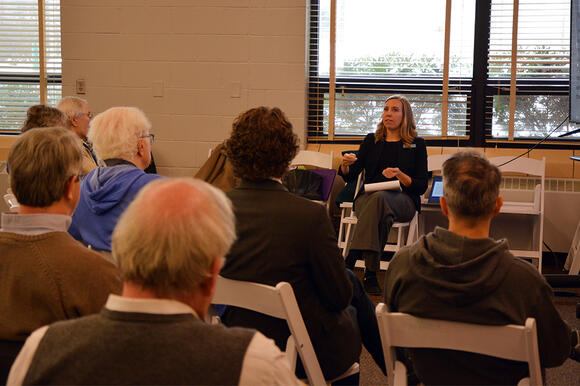
As part of taking on the corruption that’s at the root of these problems, we’ve got to bring relief to people, and quickly.
I already had a meeting with the United Auto Workers, because now there’s some talk about John Deere plants in our community shutting down or reducing staff. We have people who are going to have real, imminent, pressing problems that we’ve got to find a way to stand up for them and help.
I’m excited to get to work — I’m just aware it will take a lot to make things better, and that won’t happen overnight.
Speaking of a mandate: You’re coming into this new Congress alongside, as we’re having this conversation, at least five new Democratic clergy members and one seminarian. That’s in addition to two existing Democratic clergy who already work on Capitol Hill — Rep. Emmanuel Cleaver, an ordained United Methodist minister who won reelection, and Sen. Raphael Warnock, a prominent Baptist minister.
What do you take from this: that not only did a wave of clergy and faith-forward Democrats like yourself run for Congress this year, but many won?
I think people are looking for leaders with integrity. There were a number of faith leaders who were running, but there were also other public servants who were running: firefighters, teachers and people who are coming from backgrounds of serving their community.
That’s what our constituents need now more than anything: people who are really in it for the right reasons, who want to do the work.
I am humbled by the opportunity to be able to do this for them, and I take that responsibility so seriously.
It is a little overwhelming to think about the task at hand. But I’m really hopeful, because we have such a great new group of people coming in to government that we’re going to be able to do some really wonderful things together.
There are rumors of something like a clergy caucus being formed. Is that something you would be interested in joining?
I know there are a lot of caucuses. The first caucus I got invited to, on Election Night, was the “Sarah caucus.”
I didn’t know that was a thing.
(laughing) There are four of us. We have a caucus now.
I’m excited to build relationships with so many new colleagues. I know (Presbyterian minister and newly elected representative for Iowa’s 2nd congressional district) Lindsay James here in Iowa, but the other candidates I hadn’t gotten to meet before, so I’m excited to get to know them.
You say you have a “mandate” and mentioned corruption as something you want to address in Congress. What other legislative priorities do you have?
The big things. We have to end the chaotic tariffs. We’ve got to bring this war to an end — that’s had a really negative impact on the people of Iowa here.
I want to work on policies that are going to make life better for my neighbors. We’ve got to restore healthcare funding and strengthen the (Affordable Care Act). We have to support our rural clinics and hospitals and make sure that more of our neighbors have coverage so they can get healthcare when they need it.
And I really want to see more investments in childcare and public education. Those are things that matter a great deal to my neighbors.
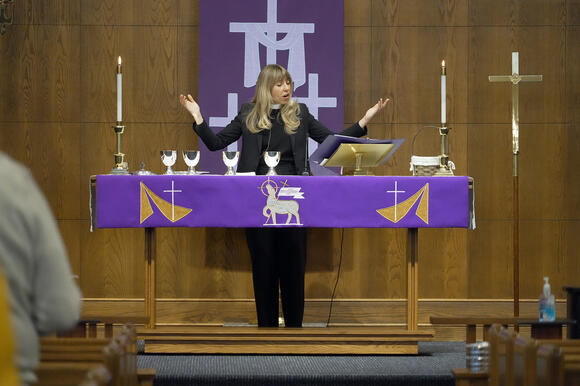
I know you’ve continued to preach in churches throughout your time in the Iowa state Senate and during this campaign. Do you intend to keep doing that now that you’re a member of Congress?
Yes, whenever I have the ability. It’s an important part of my life, and it’s an important part of who I am. I love preaching, so I hope I will continue to have opportunities to do that in the coming years.
Do you have any preaching opportunities on the docket coming up, or did you clear your schedule ahead of Election Day?
I just really did not know what was coming after election night — you just feel like there are some big things that just had to wait until we knew what was happening next.
I’ve had some invitations for some gatherings and things like that, but I haven’t had any preaching invitations just yet. But I’m open.
I will be going to visit faith communities all over my district. Yesterday, I was going through all of the texts that I’d gotten on election night because I just couldn’t keep up. I was going through them, and the Coptic Orthodox priest in Des Moines had sent me a message of congratulations. So I said, “Hey, I’m looking forward to coming to visit your congregation.”
I know you did a lot of interfaith work in the past. Have other religious leaders, including fellow Lutherans, contacted you about your victory?
There’s a number of pastors and faith leaders who had reached out. I know a lot of faith leaders throughout the community. One of the area rabbis reached out today with congratulations. We had some of the different Protestant pastors and bishops reaching out with well wishes as we were going into Election Day — and today.
One of my friends from the Sikh community reached out. They have a festival coming up at the end of November to celebrate one of their gurus, and I said, “Let me know when that’s happening so I can stop by and say hello and celebrate with the community.”
It was really lovely to have so many different folks reaching out and thinking of me.
When we spoke six years ago, you mentioned you were inspired to run for state Senate partly because of people who encouraged you to do so and offered you advice. Do you have advice for other faith leaders considering launching a campaign for office?
There’s a lot of different ways to be a leader in the community. Elected office is just one of those ways. But we need people who care deeply, who will work hard to show up.
I did not think of myself as a person who would run for office until I met other people running for office. So it’s really important to me to encourage people and support them: Today, what I’ve mostly done is call people who ran, whether they were successful in their race or not. I wanted to call and thank them for doing that.
I know faith leaders have a lot of skills that our communities need right now in government. But again, there’s a lot of public servants out there who have those skills as well.
So I’m hoping I can just be part of encouraging leaders — good leaders — to step up to serve our communities, because I know if we want government to work for us we need really good people in those roles.
There were some attacks on your faith from opponents during the campaign. It would appear those attacks did not work.
They did not.
Do you have any reflections on what that experience was like?
Even in the midst of the hard parts of the campaign — I mean the attack ads were pretty awful, and there were just a lot of mean-spirited things that were said about me misrepresenting my record and my service to the community — there were always people who were stepping up to speak out on my behalf, talk about who I am and how I’ve served the community.
So that was really affirming, and I’m so grateful. There are just so many people who know me: I was walking in a 4th of July parade, and this woman shouted out from the sidelines, ‘Sarah, you baptized my baby.’
I’m just so grateful for the support of this community and for the voters to put this trust in me. And for all those who may have not chosen me: I’m here to serve them, too.
RNS has updated this story to reflect the fact that Sarah Trone Garriott’s last name is Trone Garriott. RNS regrets this error.
 Add to Preferred Sources
