undefined
Posts
undefined
Followers
7 Moravian Foods From Winston-Salem and Bethlehem Kitchens
I use AI to help draft these articles. Every recipe and every fact in them is checked before publishing.
The Moravian Christmas Eve lovefeast is a worship service. Congregations in Bethlehem, Pennsylvania and Winston-Salem, North Carolina have held them for more than two centuries, with a beeswax candle for every person in the pew, a mug of sweetened coffee carried down the rows by the dieners, and a soft bun passed hand to hand. Everyone waits until the whole room is served, then eats together.
The rest of the year has its own Moravian food. In Old Salem, the women of Home Moravian Church have run the Candle Tea in the Single Brothers' House every December since 1929, serving sweet coffee and a slab of sugar cake in the old kitchen. Churches across Winston-Salem hold chicken pie sales, the paper-thin spice cookies come out of every Moravian kitchen at Christmas, and the Pennsylvania German apple butter the first settlers brought south still fills jars each fall. These seven foods cover the service, the tea, the bake sale and the pantry.
1. Lovefeast buns
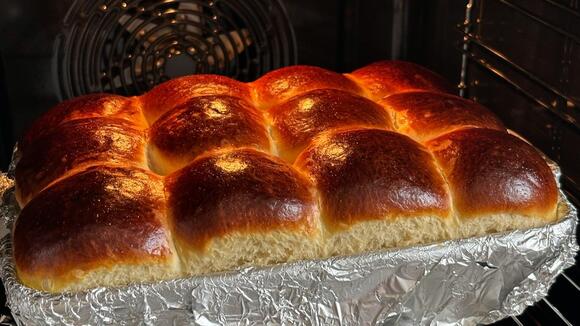
The lovefeast bun is richer than it looks. Mashed potato keeps the crumb soft for hours, eggs and butter enrich it, and grated orange and lemon rind with some mace and nutmeg give it the faint perfume people remember from the pew. Old Salem describes the bun as slightly sweet with a touch of nutmeg. The bun comes plain, with no butter or jam, because it is eaten during the service with the coffee and nothing else.
Large congregations in Winston-Salem have long ordered their buns from a bakery, while smaller churches and families bake their own for home lovefeasts. The dough is soft and slightly sticky, and it rises slowly because of the sugar, butter and eggs, so the shaping is easiest after a full first rise when the dough has relaxed.
Ingredients (Makes 24 buns)
- 1 medium russet potato (about 8 ounces), peeled and cut in chunks
- 1 cup whole milk
- 1/2 cup (1 stick) unsalted butter
- 2 1/4 teaspoons active dry yeast
- 1/4 cup warm water (110°F)
- 3/4 cup granulated sugar
- 2 large eggs, beaten
- 1 tablespoon grated orange zest
- 1 teaspoon grated lemon zest
- 2 tablespoons fresh orange juice
- 1/2 teaspoon ground mace
- 1/2 teaspoon ground nutmeg
- 1 teaspoon salt
- 5 1/2 to 6 cups all-purpose flour, plus more for kneading
Instructions
- Boil the potato in unsalted water until very tender, about 15 minutes. Drain and mash until smooth. Measure 1 cup of mashed potato and let it cool until just warm.
- Heat the milk and butter in a small saucepan until the butter melts. Let it cool to 110°F.
- Stir the yeast into the warm water and let it stand 5 to 10 minutes until foamy.
- In a large bowl, stir together the mashed potato, sugar, eggs, orange zest, lemon zest, orange juice, mace, nutmeg and salt. Stir in the milk mixture and the yeast.
- Add the flour 1 cup at a time, stirring after each, until a soft dough forms that pulls away from the bowl. Turn it out on a floured surface and knead until smooth and only slightly sticky, about 8 minutes.
- Place the dough in a greased bowl, cover with a towel, and let it rise until doubled, 1 1/2 to 2 hours.
- Punch the dough down and divide it into 24 equal pieces. Shape each into a smooth ball and flatten it slightly with your palm. Arrange on two greased baking sheets about 2 inches apart.
- Cover and let rise until puffy, about 45 minutes. Heat the oven to 375°F during the last 20 minutes.
- Bake until golden on top, 15 to 18 minutes. Cool on a wire rack before serving.
2. Lovefeast coffee

The coffee arrives already sweetened and already creamed, warm enough to hold through a candlelit service but not so hot it burns. It reads pale brown in the white mug, a creamed coffee rather than a black morning cup, with the sugar dissolved so completely you notice it as part of the coffee. Home Moravian's women describe the church version simply as coffee, half-and-half and sugar.
Sugar stirred into lukewarm coffee tends to settle, so it goes in while the coffee is still at full brewing temperature, before the half-and-half. The coffee is brewed stronger than an everyday pot so the coffee flavor still comes through the sugar and half-and-half. I'd keep it strong even for a small pot.
Ingredients (Serves 8)
- 2 cups medium-grind coffee
- 8 cups water
- 1/2 cup granulated sugar
- 1 cup half-and-half
Instructions
- Brew the coffee with the 8 cups of water, about 3 tablespoons of ground coffee per 6 ounces of water, which is half again as strong as a standard drip ratio.
- While the coffee is still at full brewing temperature, add the sugar and stir for about 1 minute until it dissolves completely.
- Pour in the half-and-half and stir to combine.
- Keep warm over very low heat or in a slow cooker set on warm. Serve in mugs.
3. Moravian thin spice cookies

These are the cookies Winston-Salem sells as the world's thinnest. The dough is molasses and spice, with cinnamon, cloves, ginger and a pinch of black pepper you taste without quite naming it, and it gets rolled to about 1/32 inch, the thickness of two or three playing cards. That thinness is what gives the snap.
Families bake them in December and stack them between sheets of waxed paper in tins, where the spice flavor deepens over a few days. Work with cold dough, a floured surface and a light hand, and pull the trays the moment the edges set, because at this thickness the line between done and scorched is about a minute.
Ingredients (Makes about 25 dozen 2-inch cookies)
- 3 1/4 cups all-purpose flour, plus more for rolling
- 1 cup unsulfured molasses
- 1/2 cup (1 stick) unsalted butter, softened
- 1/2 cup packed light brown sugar
- 1 teaspoon baking soda
- 1 teaspoon ground cinnamon
- 1 teaspoon ground cloves
- 1/2 teaspoon ground ginger
- 1/4 teaspoon ground black pepper
- 1/4 teaspoon salt
Instructions
- Beat the butter and brown sugar together in a large bowl until smooth. Add the molasses and mix until fully combined.
- Whisk the flour, baking soda, cinnamon, cloves, ginger, pepper and salt in a separate bowl. Add to the butter mixture and stir until a stiff dough forms.
- Divide the dough into four disks, wrap each in plastic, and refrigerate at least 2 hours or overnight.
- Heat the oven to 350°F. Line two baking sheets with parchment paper.
- Work with one disk at a time, keeping the rest cold. On a floured surface, roll the dough to about 1/32 inch thick. Cut with a 2-inch cutter, re-rolling the scraps once.
- Transfer to the baking sheets about 1/2 inch apart. Bake 4 to 6 minutes, watching closely after 4, until the edges are set and the tops look dry.
- Cool on the sheet for 2 minutes, then move to a wire rack. Store in an airtight tin.
4. Moravian chicken pie
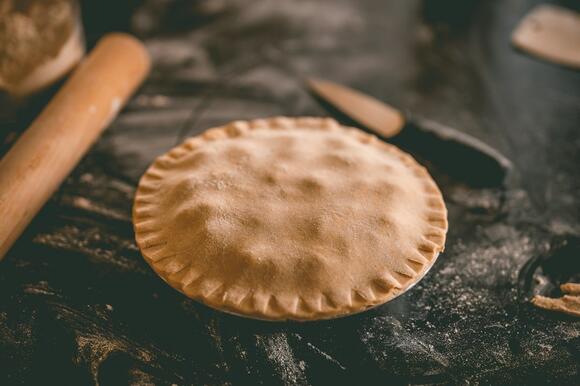
Moravian chicken pie is a double-crust pie filled with pulled chicken and thickened broth, and nothing else. There are no peas, carrots or onions in it, which is what separates it from a pot pie. Church volunteers make them in big batches for fall and winter sales, lining pans with pastry, filling them and sealing them with a top crust on an assembly line.
The plainness is also its strength. With no vegetables to turn soft, a refrigerated slice the next day holds together cleanly, because the broth sets into a loose gel overnight. The gravy goes in just thick enough to coat a spoon, and the bottom crust absorbs some of it in the oven.
Ingredients (Serves 10 to 12)
- 1 whole chicken, 3 to 3 1/2 pounds
- About 8 cups water, enough to just cover
- 1 teaspoon salt (for poaching)
- 6 tablespoons unsalted butter
- 1/2 cup all-purpose flour (for the gravy)
- 3 cups reserved chicken broth
- 1/2 teaspoon salt (for the gravy)
- 1/2 teaspoon black pepper
- 4 cups all-purpose flour (for the crust)
- 2 teaspoons salt (for the crust)
- 1 1/2 cups cold lard or vegetable shortening
- 10 to 12 tablespoons ice water
- 1 large egg, beaten
Instructions
- Put the chicken in a large pot with the 1 teaspoon salt and enough water to just cover it. Bring to a boil, then reduce to a steady simmer and cook 1 hour 15 minutes, until the meat pulls easily from the bone. Lift the chicken out to cool. Skim the fat from the broth and measure 3 cups.
- Pull the meat from the bones, discarding skin and bones, and tear it into bite-size pieces. You should have 3 to 4 cups.
- Make the crust: mix the 4 cups flour and 2 teaspoons salt. Work in the lard until the mixture looks like coarse crumbs. Add ice water a tablespoon at a time until the dough holds together when pressed. Divide in two, flatten into rectangles, wrap, and refrigerate at least 30 minutes.
- Heat the oven to 400°F.
- Make the gravy: melt the butter in a saucepan over medium heat, whisk in the 1/2 cup flour, and cook 1 to 2 minutes. Slowly whisk in the 3 cups broth and cook, stirring, until it coats a spoon, 4 to 5 minutes. Stir in the salt and pepper.
- Roll one piece of dough about 1/8 inch thick and fit it into a 9x13-inch baking dish, up the sides. Spread the chicken over the bottom crust and pour the gravy over it.
- Roll the second piece to cover the dish. Lay it on top, trim, and crimp the edges to seal. Cut five or six slits and brush with the beaten egg.
- Bake 40 to 45 minutes, until the crust is deep golden and the filling bubbles at the slits. Rest 10 minutes before cutting. Refrigerate leftovers within 2 hours.
5. Moravian sugar cake
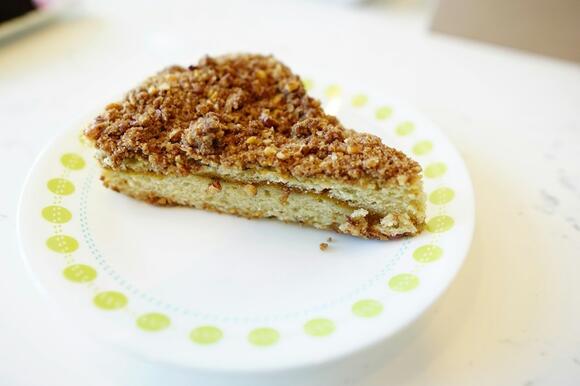
Sugar cake is what the Candle Tea serves with its sweet coffee, cut in squares. It is a yeast cake made with mashed potato, pressed into a pan, dimpled all over with a fingertip, and then filled with brown sugar, cinnamon and melted butter that pools in the holes and bakes into sticky pockets.
Shallow dimples let the butter run off the top, so press down almost to the pan, about every inch. The cake keeps a day or two well wrapped, and it is best warm the morning it is baked.
Ingredients (Makes one 9x13-inch cake, about 24 squares)
- 1 medium russet potato (about 8 ounces), peeled and cut in chunks
- 2 1/4 teaspoons active dry yeast
- 1/2 cup warm potato cooking water (110°F)
- 1/2 cup granulated sugar
- 1/2 cup (1 stick) unsalted butter, melted
- 2 large eggs
- 1 teaspoon salt
- 3 1/2 to 4 cups all-purpose flour
- 1 cup packed light brown sugar (topping)
- 2 teaspoons ground cinnamon (topping)
- 1/2 cup (1 stick) unsalted butter, melted (topping)
Instructions
- Boil the potato until very tender, about 15 minutes. Save 1/2 cup of the cooking water and let it cool to 110°F. Mash the potato, measure 1 cup, and let it cool until just warm.
- Stir the yeast into the potato water and let it stand 5 to 10 minutes until foamy.
- In a large bowl, combine the mashed potato, sugar, melted butter, eggs and salt. Stir in the yeast mixture.
- Add the flour 1 cup at a time until a soft, sticky dough forms. Beat it with a wooden spoon for 2 minutes. Cover and let rise until doubled, about 1 1/2 hours.
- Grease a 9x13-inch pan. Press the dough evenly into it with oiled hands. Cover and let rise until puffy, about 45 minutes.
- Heat the oven to 375°F. Press deep holes all over the dough with a fingertip, about 1 inch apart, nearly to the bottom of the pan.
- Mix the brown sugar and cinnamon and sprinkle it evenly over the top, pushing some into the holes. Drizzle the melted butter over everything.
- Bake 20 to 25 minutes, until golden and bubbling. Cool 15 minutes in the pan before cutting.
6. Moravian lemon wafers
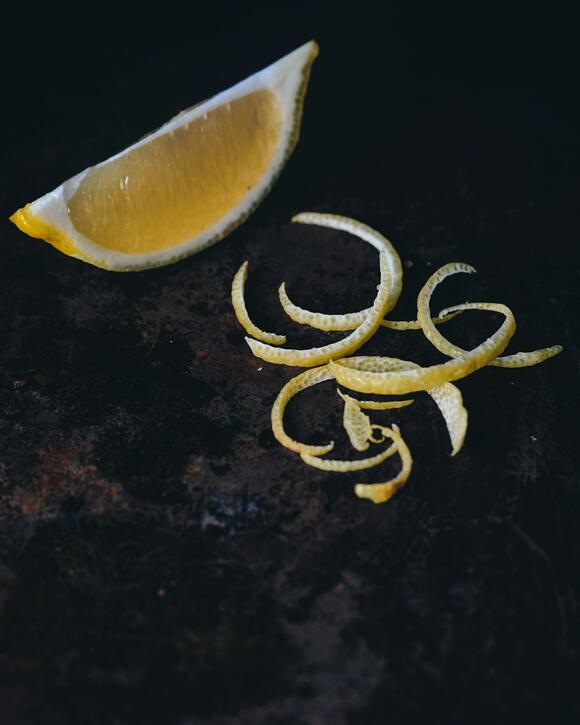
Spice is the classic, but Moravian cookies also come in sugar, lemon, black walnut and chocolate, and the lemon is the bright one on a Christmas plate full of molasses and cloves. It is rolled thin like the spice cookie, though not quite as thin, because a butter dough without molasses tears more easily.
Both the zest and the juice go into the dough, and the extract carries the flavor through the bake. Chill the dough well, roll it between two sheets of parchment if it cracks, and pull the cookies while they are still pale with barely golden edges.
Ingredients (Makes about 10 dozen 2-inch cookies)
- 1/2 cup (1 stick) unsalted butter, softened
- 1 cup granulated sugar
- 1 large egg
- 1 tablespoon grated lemon zest
- 2 tablespoons fresh lemon juice
- 1/2 teaspoon lemon extract
- 2 1/4 cups all-purpose flour, plus more for rolling
- 1/2 teaspoon baking powder
- 1/4 teaspoon salt
Instructions
- Beat the butter and sugar until light, about 2 minutes. Beat in the egg, lemon zest, lemon juice and lemon extract.
- Whisk the flour, baking powder and salt, then stir into the butter mixture until a smooth dough forms.
- Divide into two disks, wrap, and refrigerate at least 2 hours.
- Heat the oven to 350°F and line baking sheets with parchment.
- Roll one disk at a time to about 1/16 inch thick. Cut with a 2-inch cutter and place 1/2 inch apart on the sheets.
- Bake 6 to 8 minutes, until the edges are barely golden. Cool on a wire rack and store in an airtight tin.
7. Apple butter
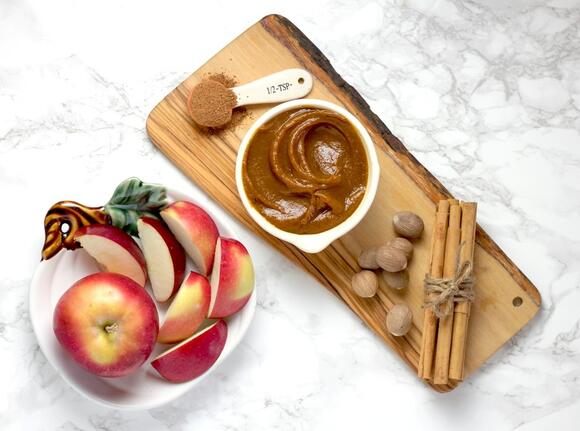
The first Moravians in North Carolina came south from Pennsylvania in 1753, and Pennsylvania German apple butter came with them. It is applesauce cooked until most of the water is gone, the color shifts from pale gold to deep reddish brown, and the sugar concentrates enough to hold a mound on a spoon.
The first 45 minutes at a gentle simmer are forgiving. Once it thickens, the concentrated sugar can scorch against the bottom of the pot within a couple of minutes, and a scorched batch carries that taste into every jar. Keep the heat low and scrape the bottom in a figure-eight at least once a minute until it is done.
Ingredients (Makes about 3 half-pint jars)
- 4 pounds tart apples (Stayman, Winesap or Jonathan), peeled, cored and quartered
- 1 cup apple cider
- 1 1/2 cups granulated sugar
- 1 1/2 teaspoons ground cinnamon
- 1/4 teaspoon ground cloves
- 1/4 teaspoon ground allspice
- 1 tablespoon fresh lemon juice
Instructions
- Put the apples and cider in a large, heavy pot over medium heat. Cover and cook, stirring now and then, until completely soft, 25 to 30 minutes.
- Pass the apples through a food mill or blend smooth with an immersion blender. You should have about 4 cups of puree.
- Return the puree to the pot and stir in the sugar, cinnamon, cloves, allspice and lemon juice.
- Cook uncovered over medium-low heat, stirring every few minutes. After about 45 minutes it will be darker and thicker; reduce the heat to low.
- From here, stir and scrape the bottom in a figure-eight at least every 60 seconds. It is done when it mounds on a spoon and a dab on a plate shows no ring of liquid around it, 1 to 1 1/2 hours after the sugar goes in.
- Ladle the hot apple butter into hot, clean half-pint jars, leaving 1/4-inch headspace. Wipe the rims, apply new lids and bands, and process in a boiling-water canner for 5 minutes (add 5 minutes at 1,001 to 6,000 feet, 10 minutes above 6,000 feet). Or skip the canner and refrigerate up to three weeks.
The lovefeast bun and coffee still go down the pews every Christmas Eve, and the sugar cake, chicken pie and thin cookies still come out every December in Winston-Salem.
 Add to Preferred Sources

