undefined
Posts
undefined
Followers
7 Romanian Dishes Midwest Families Cooked on Sundays
I use AI to help draft these articles. Every recipe and every fact in them is checked before publishing.
Romanian families settled in industrial Midwest cities in several waves during the early twentieth century, and by the 1950s the communities in Cleveland, Detroit, and Chicago had long had their own Orthodox churches, social clubs, and butchers who knew what ciolan meant. Cleveland's St. Mary's parish dates to 1904 and Detroit's St. George to 1912, and the church halls and family kitchens around them kept the cooking alive.
The food those families made on Sundays and for holidays never crossed over into restaurant culture the way Italian or Greek food did in the same cities. What it had instead was real specificity: soups soured with a fermented wheat-bran liquid called borș, a cornmeal porridge that went on the table alongside pork or cheese, holiday breads that needed most of a Saturday to rise and bake. The seven dishes here are the ones that turned up on those Sunday and holiday tables in the 1950s and 1960s.
1. Mămăligă cu brânză și smântână (cornmeal porridge with sheep's cheese and sour cream)

Plain mămăligă, just coarse cornmeal cooked thick in salted water, was weeknight food in Romanian households in Cleveland, Detroit, and Chicago. You put it on the table the way other families put out bread: because it stretched whatever else you had, and a cup and a half of cornmeal fed four. The version layered with brânză and finished with smântână was a different proposition. On Sundays, that same cheap porridge got crumbled sheep's cheese pressed between two layers of it, the whole pan slid into the oven until the top set and caught at the edges, and it came to the table looking like you had spent the afternoon on it.
Cornmeal was one of the cheapest dry goods in any Midwestern grocery store in the 1950s, cheaper than rice, cheaper than dried pasta by weight. Sheep's cheese cost considerably more and wasn't always easy to find. Families who couldn't locate Romanian brânză at a deli used Greek feta instead, which Greek-owned grocers in Cleveland, Detroit, and Chicago stocked in brine by the mid-1950s. Sour cream was inexpensive everywhere. Six ounces of cheese gives the pan enough salt to season the cornmeal all the way through, though four ounces still works if that is what the budget allows.
At the table, the baked version held its shape well enough to lift out in squares, which gave it the look of a real side dish rather than a bowl of porridge. Corner pieces browned more and held together better than center cuts, so guests got those. On days when the oven was taken up with something else, the stovetop version came out instead: just hot porridge with cheese stirred directly into it while it was still loose, sour cream ladled over the top, nothing baked. That version was faster and used fewer dishes, but it was the baked one that made it to the Sunday table. In Romanian the baked layered form is usually called mămăligă la cuptor, oven mămăligă. The starch base of a pan that fed four cost only pennies.
Ingredients (Serves 4 to 6)
- 1 1/2 cups coarse-ground yellow cornmeal
- 5 cups water
- 1 1/2 teaspoons kosher salt
- 3 tablespoons unsalted butter, divided
- 6 ounces feta or brined sheep's milk cheese, crumbled
- 3/4 cup full-fat sour cream, divided
Instructions
- Preheat the oven to 375°F. Grease a 9-by-9-inch baking dish with 1 tablespoon of the butter.
- Bring the 5 cups of water to a boil in a heavy-bottomed pot. Add the salt and stir to dissolve.
- Reduce the heat to medium-low. While whisking constantly, pour the cornmeal in a slow, steady stream into the water to prevent lumps.
- Switch to a wooden spoon or sturdy spatula. Cook over low heat, stirring frequently, until the mămăligă pulls away from the sides of the pot and holds its shape when a spoon is dragged through it, about 20 to 25 minutes. It should be thick enough to mound on a spoon.
- Remove from heat and stir in the remaining 2 tablespoons of butter until melted.
- Spread half the mămăligă into the prepared baking dish in an even layer. Scatter half of the crumbled cheese over the top.
- Spoon the remaining mămăligă over the cheese layer and spread it flat. Scatter the remaining cheese evenly over the surface.
- Spoon 1/2 cup of the sour cream over the top in dollops. Do not spread it.
- Bake until the top is set and the edges are golden, 25 to 30 minutes.
- Let the dish rest for 5 minutes. Cut into squares and serve with the remaining 1/4 cup sour cream alongside.
2. Ciorbă de perișoare (sour meatball and vegetable soup)

Ciorbă de perișoare is a sour meatball soup, and the sourness is not a background note but the whole point. The meatballs are soft and rice-extended, and they give slightly when you bite through them; the broth around them runs hot, lightly salty, with an acid brightness that lifts the whole pot. The rice goes into the meatball mixture uncooked and swells directly in the simmering broth, which keeps the texture loose and gives the liquid some body. In Romania the souring was usually borș; in American kitchens fresh lemon juice was the common stand-in. With the souring, it pays to start with less lemon than you think you want and taste right before serving, because the acid reads differently once the soup has sat in the bowl for even a minute. I'd rather add a second squeeze at the table than fix a pot that went too sharp.
Ingredients (Serves 4 to 6)
- 1 pound ground pork
- 1/4 cup short-grain white rice, uncooked
- 1 large egg
- 1 small yellow onion, grated (about 1/4 cup), for the meatballs
- 1 teaspoon salt, plus more to taste
- 1/2 teaspoon black pepper
- 2 tablespoons fresh flat-leaf parsley, finely chopped
- 2 tablespoons sunflower oil or vegetable oil
- 1 medium yellow onion, diced, for the broth
- 2 medium carrots, peeled and diced
- 1 medium parsnip, peeled and diced
- 2 stalks celery, diced
- 2 tablespoons tomato paste
- 6 cups chicken broth
- 3 tablespoons fresh lemon juice (from about 1 1/2 lemons)
- 1/2 cup sour cream, for serving
- 1/4 cup fresh dill fronds, for serving
Instructions
- Combine the ground pork, uncooked rice, egg, grated onion, 1 teaspoon salt, black pepper, and parsley in a large bowl. Mix with your hands until just combined. Roll into balls about 1 inch across. You should have 30 to 35 meatballs. Set aside.
- Heat the oil in a large pot over medium heat. Add the diced onion and cook, stirring occasionally, until softened, about 5 minutes. Add the carrots, parsnip, and celery. Cook for 3 to 4 minutes more, until slightly softened.
- Stir in the tomato paste and cook for 1 minute, stirring constantly so it does not scorch.
- Pour in the broth and raise the heat to bring the pot to a gentle boil.
- Lower the meatballs one at a time into the simmering broth. Do not stir for the first 5 minutes; they need time to firm up before they can take any movement. After 5 minutes, reduce the heat to a steady simmer and cook for 25 to 30 minutes, until the rice inside the meatballs is fully cooked and the meatballs hold their shape when gently pressed with the back of a spoon.
- Stir in the lemon juice. Taste the broth and add salt as needed. It should have a noticeable tartness.
- Ladle into bowls, top each with a spoonful of sour cream and a scatter of fresh dill, and serve hot.
3. Mici (grilled garlic beef and lamb rolls)
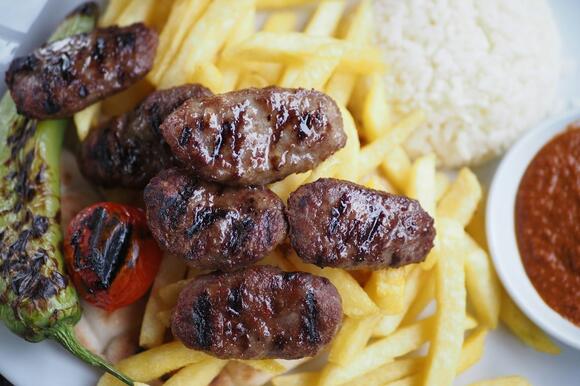
Mici showed up on a weekend, when someone had the afternoon and the charcoal. In Romanian-American households in Cleveland, Detroit, and Chicago, they were the kind of food that got made in quantity, two or three dozen at a stretch, for whoever came through the gate. No casing, no skewer. Just a cylinder of seasoned meat that went straight onto a hot grate.
The blend that makes them work is beef and lamb together, with enough fat in both to keep the rolls from seizing up over the heat. Baking soda is not optional: a small amount goes into the mix, along with cold sparkling water or cold broth, and together they give the finished rolls a texture that is loose and a little springy rather than dense. The garlic is generous, and cumin and savory are both in there, which puts them closer to a Balkan grilling tradition than to anything in a German or Polish meatball style.
They were not holiday food, not exactly. Christmas and Easter had their own preparations, the braided breads and the soups that took all day. Mici were for a Sunday in July when the backyard was the plan. You made them the night before, let them sit in the refrigerator overnight so the spices had time to settle in, and pulled them out the next afternoon. Mustard on the side, not ketchup.
Ingredients (Makes about 20 rolls, serves 6)
- 1½ pounds ground beef (80/20)
- ½ pound ground lamb
- 6 cloves garlic, minced
- 1½ teaspoons kosher salt
- 1 teaspoon freshly ground black pepper
- 1 teaspoon ground cumin
- ½ teaspoon dried savory
- ½ teaspoon dried thyme
- ¼ teaspoon ground coriander
- ½ teaspoon baking soda
- ¼ cup cold sparkling water (or cold beef broth)
- Yellow mustard, for serving
Instructions
- Combine ground beef and ground lamb in a large bowl.
- Add garlic, salt, pepper, cumin, savory, thyme, coriander, and baking soda. Mix until the spices are evenly distributed throughout the meat.
- Add the cold sparkling water and work it into the meat with your hands until the mixture holds together and feels slightly sticky, about 2 minutes. Cover the bowl tightly and refrigerate for at least 4 hours, or overnight.
- Shape the chilled meat into cylinders about 3 inches long and 1 inch wide. You should get about 20 rolls.
- Heat a charcoal or gas grill to high, around 450°F. Oil the grates well.
- Grill the rolls, turning every 2 to 3 minutes, until browned on all sides and cooked through to 160°F at the center, 10 to 12 minutes total.
- Serve immediately with yellow mustard.
4. Cozonac (sweet braided holiday bread with walnut filling)
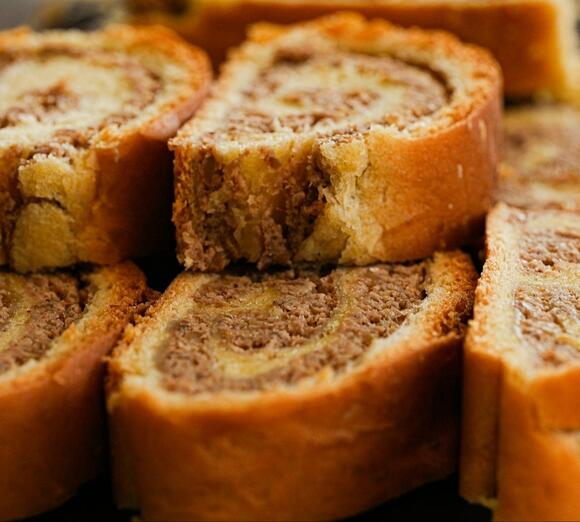
Cozonac came out of the oven once or twice a year, at Easter and at Christmas, and the whole apartment knew it was happening long before the loaves were done. The dough is a rich, eggy one, kneaded by hand until it pulls clean from the bowl, then left to rise before being rolled flat, spread with a thick walnut and cocoa filling, and shaped into a braid. Romanian women in Cleveland and Detroit often started the night before, proofing yeast and letting the butter come to room temperature so nothing would shock the dough into toughening.
The leftover slices, and there were always leftover slices, lived on the counter under a cloth for three or four days after the holiday. By Monday they were slightly stale, which was fine, because stale cozonac makes better French toast than most bread you could buy. Beat two eggs with a little milk, drag a thick slice through the mixture, and fry it in butter until both sides are golden. Families called it frigănele, though it answers to "French toast" if that is easier. The walnut filling softens back into the crumb and the whole thing smells like the holiday warmed up again.
Ingredients (Makes 1 large loaf, serves 10 to 12)
- For the dough:
- 4 cups all-purpose flour, plus more for kneading
- 2 1/4 teaspoons active dry yeast
- 1 tablespoon granulated sugar (for proofing the yeast)
- 1 cup whole milk, warmed to 110°F
- 1/2 cup granulated sugar
- 3 large egg yolks
- 1/2 cup (1 stick) unsalted butter, softened
- 1 teaspoon vanilla extract
- 1/2 teaspoon salt
- Zest of 1 lemon
- For the walnut filling:
- 2 cups walnut pieces, finely ground
- 1/2 cup granulated sugar
- 3 tablespoons unsweetened cocoa powder
- 3 tablespoons whole milk
- 2 large egg whites
- For the egg wash:
- 1 large egg, beaten with 1 tablespoon whole milk
Instructions
- Pour the warm milk into a large bowl. Stir in the 1 tablespoon of sugar and the yeast and let it sit for 10 minutes until the surface looks foamy.
- Add the 1/2 cup sugar, egg yolks, vanilla, lemon zest, and salt to the yeast mixture and stir to combine. Add the flour one cup at a time, mixing with a wooden spoon or your hands until a shaggy dough forms.
- Turn the dough out onto a lightly floured surface and knead for 3 minutes. Begin adding the softened butter in small pieces, pressing each addition into the dough before adding the next. Continue kneading for 10 minutes more until the dough is smooth, slightly tacky, and springs back when you poke it.
- Shape the dough into a ball and place it in a lightly greased bowl. Cover with a clean towel and let it rise in a warm spot for 1 1/2 to 2 hours until doubled in size.
- While the dough rises, make the filling. Stir together the ground walnuts, 1/2 cup sugar, cocoa powder, and 3 tablespoons milk in a medium bowl until combined. In a separate small bowl, beat the egg whites until frothy but not stiff, then fold them into the walnut mixture. The filling should be thick enough to hold its shape like a paste.
- Punch the dough down and divide it into three equal pieces. On a lightly floured surface, roll one piece into a rectangle about 6 by 10 inches. Spread one-third of the walnut filling over the surface, leaving a 1/2-inch border on all sides. Starting from a long edge, roll the dough tightly into a rope about 10 inches long. Repeat with the remaining two pieces of dough and filling.
- Lay the three filled ropes parallel on the work surface. Pinch the top ends firmly together. Braid by lifting the right rope over the center rope, then the left rope over the new center, and continue alternating until you reach the end. Pinch the bottom ends together and tuck both pinched ends underneath the loaf.
- Carefully transfer the braid to a parchment-lined baking sheet. Cover loosely with a towel and let the loaf rise for 45 to 60 minutes until noticeably puffed.
- Preheat the oven to 350°F while the dough finishes its second rise. Brush the loaf all over with the beaten egg and milk mixture.
- Bake for 35 to 40 minutes until the crust is deep golden brown. If the top starts coloring heavily past the 20-minute mark, tent it loosely with foil for the rest of the bake. The loaf is done when a wooden skewer inserted into the center comes out clean and an instant-read thermometer reads at least 190°F. Cool on the baking sheet for 10 minutes, then transfer to a wire rack and rest for at least 30 minutes before slicing.
5. Papanași (fried cottage cheese doughnuts with sour cream and jam)

The cheese matters more than anything else in papanași, and what Romanian home cooks kept on hand was fresh cow's milk curd cheese, somewhere between farmer's cheese and a very dry cottage cheese with most of the whey pressed out. In Midwest cities like Cleveland and Detroit, the same result came from draining supermarket cottage cheese overnight in cheesecloth, or from picking up farmer's cheese at a European-style deli. The cheese gets pressed in a clean kitchen towel before anything else, because even a little extra moisture turns the dough slack and the rings split in the oil. The dough asks for almost nothing else: eggs, flour, sugar, and baking soda, then hot oil. Keeping the flour at the lower end is what makes papanași tender rather than bready, and I'd add it a spoonful at a time rather than all at once. A plate arrives as a pair, one thick fried ring and one small fried ball, both under a spoon of sour cream and a spoon of sour cherry jam.
Ingredients (Makes 8 papanași in 4 serving pairs, serves 4)
- 1 cup (8 ounces) dry cottage cheese or farmer's cheese, well drained (or about 1 1/2 cups regular small-curd cottage cheese, drained as in step 1)
- 2 large eggs
- 3 tablespoons granulated sugar
- 1/4 teaspoon salt
- 1/2 teaspoon vanilla extract
- 1/2 teaspoon baking soda
- 3/4 cup all-purpose flour, plus more as needed for the dough and for dusting
- Vegetable oil for frying (enough to fill a medium heavy pot 2 inches deep)
- 3/4 cup sour cream, for serving
- 1/2 cup sour cherry jam or cherry preserves, for serving
Instructions
- If using regular cottage cheese, line a colander with cheesecloth or a clean kitchen towel and let it drain for at least 2 hours, or overnight in the refrigerator. Press out as much liquid as possible. You should end up with about 1 cup of dry, crumbly curd.
- Combine the drained cheese, eggs, sugar, salt, and vanilla extract in a large bowl. Stir until the mixture is uniform.
- Add the baking soda and 3/4 cup flour. Mix until a soft, slightly tacky dough forms. If the dough is too wet to hold its shape, add flour one tablespoon at a time until the dough is soft but manageable.
- Lightly flour a work surface. Divide the dough into 4 equal pieces.
- Working with one piece at a time, pinch off roughly one-quarter of it and set it aside. Roll the larger portion into a ball, press your thumb through the center, and gently stretch the dough into a ring about 3 inches across. Roll the smaller piece into a smooth ball. Repeat with the remaining 3 pieces so you have 4 rings and 4 balls total.
- Pour oil into a medium heavy-bottomed pot to a depth of 2 inches and set it over medium heat. Bring the oil to 350°F. A small pinch of dough dropped in should sizzle at once and rise to the surface.
- Working in two batches, slide 2 rings and 2 balls gently into the oil. Fry, turning once, until deep golden brown on both sides, 2 to 3 minutes per side. Transfer to a wire rack or a paper-towel-lined plate to drain. Repeat with the remaining 2 rings and 2 balls.
- Place one ring on each of four plates. Set one ball on top of or alongside the ring. Spoon 3 tablespoons of sour cream over each serving, then 2 tablespoons of jam.
6. Ciorbă de fasole cu ciolan afumat (white bean soup with smoked pork hock)
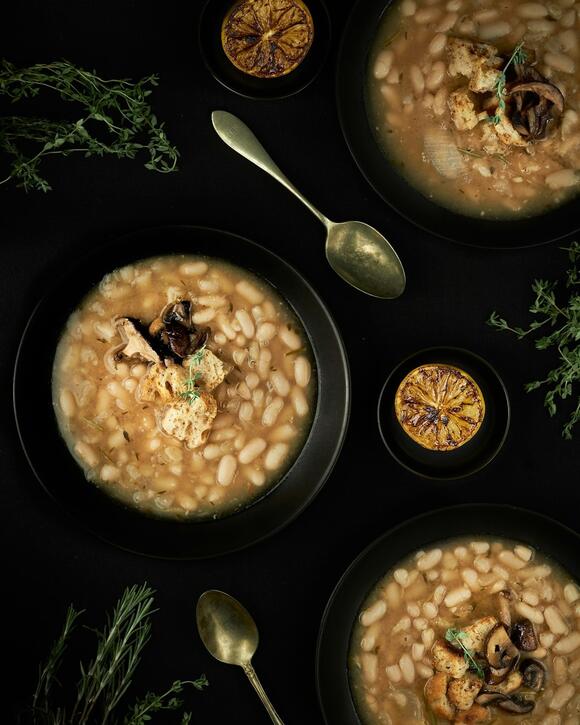
Romanian immigrants who settled near the Cleveland steel mills and the Detroit auto plants in the early 1900s brought ciorbă de fasole cu ciolan with them as something close to muscle memory. Back home it was village food, cooked all day in an iron pot over wood, stretched with whatever root vegetables came from the garden. By the 1950s it was still going every Sunday in Romanian kitchens in Cleveland and Detroit, made by the same women who had arrived speaking no English, or by their daughters who had grown up American and kept the pot going anyway.
What changed was the hock. American smoked pork hocks, the kind sold at a Polish butcher or a corner grocery in any of those neighborhoods, can run salty, so many cooks simmered the hock on its own first and poured off that water before building the actual soup. Skip that drain and the beans, the carrots, and the patience it took to get the pot right could all end up buried under the salt. The dish was the same but the method got one step longer.
Ingredients (Serves 6 to 8)
- 1 smoked pork hock (about 1 1/2 pounds)
- Water, about 10 to 12 cups for the first simmer plus 10 cups fresh water after draining, and more as needed during cooking
- 1 pound dried white beans (navy or great northern), soaked overnight in cold water and drained
- 1 large yellow onion, diced
- 2 medium carrots, sliced into 1/4-inch rounds
- 4 garlic cloves, minced
- 2 tablespoons tomato paste
- 2 bay leaves
- 1 teaspoon dried thyme
- 2 tablespoons chopped fresh flat-leaf parsley
- Salt and freshly ground black pepper to taste
Instructions
- Place the dried beans in a large bowl, cover with cold water by 3 inches, and soak overnight. Drain and set aside.
- Put the hock in a large pot, cover with 10 to 12 cups of water, and bring to a boil over medium-high heat. Reduce to a steady simmer and cook for 1 hour.
- Lift the hock out of the pot and set it on a plate. Pour off and discard all the cooking liquid. Return the hock to the pot and add 10 cups of fresh water.
- Add the drained beans to the pot. Bring to a boil, then reduce heat and simmer, partially covered, for 1 hour.
- Add the onion, carrots, garlic, tomato paste, bay leaves, and thyme. Continue simmering, partially covered, until the beans are completely tender and the broth has some body, about 30 to 45 minutes more. If the soup thickens too much, add more water a cup at a time.
- Lift the hock out of the pot. When cool enough to handle, pull the meat from the bone, discard the bone and any tough connective tissue, and return the meat to the pot. Remove and discard the bay leaves. Taste and season with salt and pepper, stir in the parsley, and serve.
7. Salată de vinete (roasted eggplant salad with raw onion and sunflower oil)

Salată de vinete is not a cooked salad in any way Americans typically mean that phrase. You roast whole eggplants until the skins blacken and crack, peel them while they're still warm, and beat the soft flesh with raw onion and sunflower oil until it goes pale and creamy. Romanian families in Cleveland, Detroit, and Chicago kept it on the appetizer plate alongside bread at Sunday dinners, and on the holiday table between the heavier dishes. Sunflower oil is the traditional fat here, not olive oil. The flavor is lighter and cleaner, and it's the right one.
The eggplant has to drain. After you peel away the charred skin, put the flesh in a colander and leave it for at least thirty minutes, pressing it gently a few times. Eggplant holds a surprising amount of water after it steams inside its scorched skin, and that liquid is both bitter and thin. Skip the drain and the oil will not incorporate properly, leaving the salad watery and dull on the plate. The oil goes in one tablespoon at a time, beaten in hard with a fork, until the whole thing thickens to something you can spread on a slice of bread.
Ingredients (Serves 4 to 6 as a spread or appetizer)
- 2 medium eggplants (about 1 1/2 pounds total)
- 1 small yellow onion, very finely minced (about 1/3 cup)
- 3 tablespoons sunflower oil
- 1 tablespoon mayonnaise (optional)
- 1/2 teaspoon fine salt, plus more to taste
Instructions
- Roast the eggplants directly over a gas burner flame set to medium-high, turning with tongs every 3 to 4 minutes, until the skin is completely charred and the eggplant collapses when pressed, about 15 minutes total. On an electric stove, set the eggplants on a foil-lined baking sheet under the broiler, turning once, until the skin is deeply blackened and the flesh is very soft, about 20 to 25 minutes.
- Transfer the roasted eggplants to a colander set over a bowl. Let them cool until you can handle them comfortably, then peel away and discard all the charred skin.
- Press the peeled flesh gently with the back of a spoon and let it drain in the colander for at least 30 minutes. Press it two or three more times during that window.
- Transfer the drained eggplant to a cutting board and chop it finely with a knife, or move it to a bowl and work it with a fork until the texture is rough and even throughout.
- Add the minced onion and stir to combine.
- Add the sunflower oil one tablespoon at a time, beating vigorously with a fork after each addition until the oil is fully absorbed and the mixture looks creamy and pale.
- Stir in the mayonnaise if using. Season with the 1/2 teaspoon salt, taste, and add more if needed.
- Cover and refrigerate for at least 1 hour. Serve cold, spread on slices of bread.
Most of what these families cooked never got written down in any formal way, which is exactly the reason to put the recipes on paper now.
 Add to Preferred Sources
