undefined
Posts
undefined
Followers
Arizona scientists work with developers to protect raptors
By Mark Moran,
1 days ago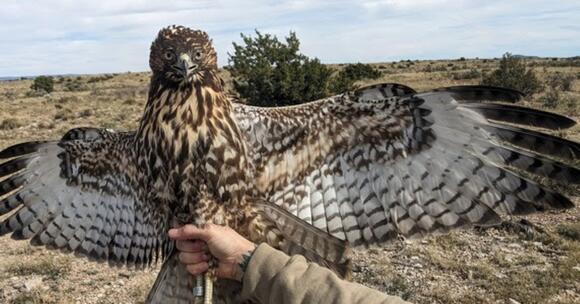
A red-tailed hawk is released by Arizona Game and Fish wildlife biologists near Seligman. (Arizona Game and Fish Department)
Arizona wildlife specialists are attaching GPS collars to large raptors as the birds migrate through the state to determine their travel patterns and sharing the information with developers in an effort to shape how construction projects could impact the birds of prey.
The project is part of a larger effort across the western U.S. It is raptor migration season in the Southwest and scientists have banded hundreds of birds of prey in the seven year effort.
Kyle McCarty, eagle field projects coordinator for the Arizona Game and Fish Department, said biologists will use the information to understand how wind projects could affect the raptors' migration patterns through north-central Arizona's Yavapai County, where wind development is becoming increasingly popular.
"There's a lot of proposals that come through. The more data we have on where these birds are and when they are, we can look at those projects and evaluate them in a better way," McCarty explained.
Raptors are protected by the federal Migratory Bird Treaty Act, which makes it illegal to kill, trap, possess, trade, sell or harm them without a permit. McCarty noted developers have been cooperative in working to protect the raptors, despite the interest in wind project development.
Arizona Game and Fish manages more than 800 species of wildlife but for the current project, the agency is focusing solely on the raptors and how they could be affected by development. McCarty pointed out biologists do not band all the birds migrating through Arizona but focus on Cooper's hawks, great horned owls and American kestrels.
"Also red-tailed hawks, peregrine falcons, prairie falcons, northern harriers. Primarily the medium to larger birds, we're able to put a transmitter on because they're large enough to handle it," McCarty explained.
Raptors' sharp talons and beaks make them great hunters, which benefits the ecosystem, scientists said, because they are able to keep prey and other species in balance with the surrounding environment.
 Add to Preferred Sources

