undefined
Posts
undefined
Followers
The ‘math problem’ facing Sacramento Dems
By Lindsey HoldenNicole Norman,
3 hours ago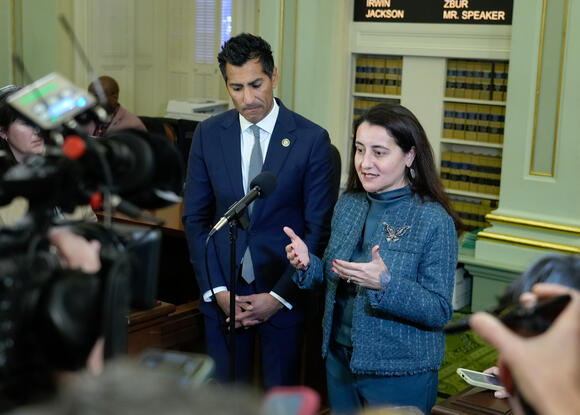
DRIVING THE DAY: NEWSOM AND THE NEW DEMS — Gavin Newsom will meet with the centrist New Democrat Coalition this evening, according to a person with knowledge of the meeting granted anonymity to discuss the plans. The group has previously met with potential 2028 contenders Rahm Emanuel and Maryland Gov. Wes Moore this year.
During his trip to Capitol Hill, Newsom also met with Minority Leader Hakeem Jeffries and discussed disaster relief. — Riley Rogerson
THE MORE, THE MERRIER? Democrats in Sacramento are riding high after expanding their caucus to historic levels. But they may find that governing is harder in some ways with a large, unwieldy caucus.
After the midterm dust settles, Assembly Democrats will likely have grown their caucus by eight seats to 68 members, a size not seen in 150 years. Democrats are set to pick up two seats in the Senate, giving them a 32-member coalition.
But as Republicans in Sacramento are reckoning with annihilation, Democrats are now confronting the challenge of keeping dozens of lawmakers happy and moving together on policy.
Former Assembly Speaker Anthony Rendon recalled his former chief of staff telling him, “We got way more done with 53 members than we ever did with a supermajority. When it’s smaller, everybody's kind of pulling in the same direction, rowing in the same direction. And as it gets bigger, the ideologies get more divergent, and that's very difficult.”
Stretching the caucus could spotlight the progressive-moderate divide, particularly on environment, tech and labor policy.
Tech-funded political action committees spent millions — frequently in conjunction with business groups — to get a half-dozen or so Democrats elected to the Assembly and Senate. But progressive groups and labor unions also saw their candidates win a similar number of Assembly races.
If progressive-leaning lawmakers can stick together, and maybe pick up some middle-of-the-road members, environmentalists are optimistic they can make progress on climate priorities, such as the state’s emissions trading program and making homes more energy efficient, Alex Nieves reports.
The progressive and moderate wings of the party could also sway policies that failed to advance last year and will likely be on the docket for the next session, such as renegotiating wildfire liability, preventing businesses from practicing surveillance pricing and taxing large corporations to raise money for health care.
Kevin Liao, a Democratic consultant, called the swelling caucus a “double-edged sword” for leadership. But he said it also could help get major policies passed, as Democrats facing tough reelection fights now have more cover to vote against controversial measures without jeopardizing their outcome.
“You can even have up to 40% of your caucus not vote for something and something pass,” said Liao, a former press secretary for Rendon. “That’s unprecedented.”
For leadership, especially Assembly Speaker Robert Rivas, steering a larger caucus will present significant challenges. Roger Salazar, a Democratic political consultant, predicted “a little bit of factionalism going on,” while Rendon suggested members in a larger caucus may be more willing to deviate from the party line. “People, when they’re bucking the system, they never like to do it alone,” Rendon said. “So one or two members may not go astray when it’s a smaller group. But when it’s a bigger group, it’s a whole thing, like, ‘Oh, he can’t punish all of us.’ Which is kind of true. It's kind of hard to punish nine or 10 people, but you can sure as hell punish two or three.”
Beyond the votes, a bigger group of Democrats could complicate Rivas and Senate President Pro Tem Monique Limón’s job of assigning committee roles.
More Assembly Democrats will increase competition for opportunities to lead those panels and hold leadership roles on the floor. And with likely 12 Republicans, it will be a challenge for Rivas to fill vice chair roles and ensure each of the body’s 30-plus committees has GOP representation.
“It just becomes a math problem,” Rendon said. “It's difficult to find enough budget for everybody. Obviously, you can’t find chairmanships for that many people, or officer positions. So either people get disappointed, or sometimes you’ve got to be creative and invent things.”
Toni Atkins, who served as Senate pro tem and Assembly speaker, said she had 16 Democrats who wanted to chair the Energy Committee when she led the lower house.
“That’s just an example of, you now have to meet the needs of all of your caucus members, and they all want to be impactful,” Atkins said. “They all want to get things done, and many of them are going to be vying and challenging for the same seats. And you have so many members, you end up doing things like increasing the size of committees. You create new committees.”
IT’S TUESDAY AFTERNOON. This is California Playbook PM, a POLITICO newsletter that serves as an afternoon temperature check on California politics and a look at what our policy reporters are watching. Got tips or suggestions? Shoot an email to Playbook PM writer Lindsey Holden at lholden@politico.com.
WHAT YOU NEED TO KNOW TODAY
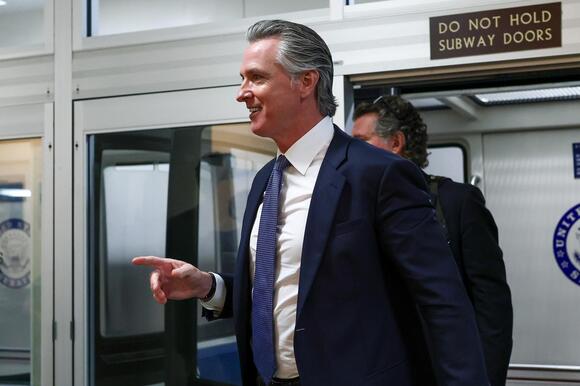
NEWSOM ON NVIDIA: Asked by reporters on the Hill about former Nvidia CEO Jensen Huang stepping down amid reports of an affair with an alleged Chinese spy, Newsom called for an investigation into the situation.
“It’s not just about Nvidia,” Newsom said. “It’s about the economy of my state — we’re the tentpole of the U.S. economy. It’s about the economy of the United States. It’s about your 401(k). It’s about the cross-pollination of Jensen’s investments and the entire ecosystem within the AI industry and, more broadly, the tech industry.”
“So, the impact of what occurred — you can’t overstate it,” he added. “Nor can you overstate the consequences of an investigation and the importance of that.” — with help from Andy Picon
IN OTHER NEWS
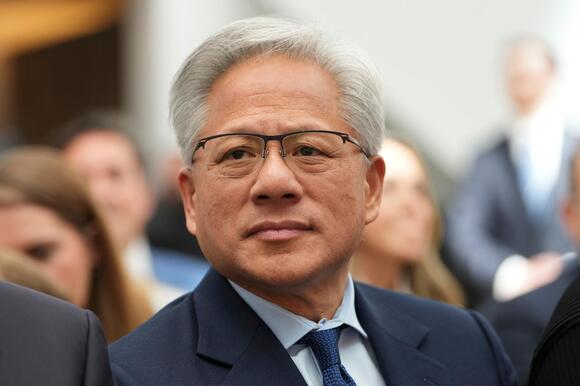
HUANG ON THE HILL: Huang will testify before three House committees on Dec. 1, three GOP lawmakers announced today, Owen Dahlkamp reports.
Huang, who resigned after two affairs came to light, including one with an alleged Chinese spy, will appear before the House Foreign Affairs, Intelligence and China Select committees for a transcribed interview.
Lawmakers have expressed bipartisan concerns that China-based companies gained access to advanced semiconductor technology by leveraging Huang’s relationship with an executive at the computing company Megaspeed. A spokesperson for Huang declined to comment.
LET’S MAKE A DEAL? Texas Democratic Rep. Henry Cuellar is one of several moderate Democrats angling to strike an immigration deal with the White House, especially on reining in ICE officers and creating legal pathways to citizenship for some immigrants, Samuel Benson, Myah Ward and Eric Bazail-Eimil report.
They’re undeterred by President Donald Trump’s elevation of immigration hardliner Stephen Miller to chief of staff. And they’re buoyed by Trump’s recent admission that his deportation policy was “too tough.”
Several of these Democrats have already placed calls to Trump and Homeland Security secretary Markwayne Mullin to express a willingness to work together.
But Democrats’ distrust of Miller will also make it challenging for them to align on any potential deal with the White House.
“Stephen Miller is the mastermind and architect of terror, and death, and illegality in this country, and he is not anyone who even understands truthfully what immigration policy should look like,” said California Rep. Sydney Kamlager-Dove.
“No deals, man. No deals,” she added.
WHAT WE'RE READING TODAY
— Congressional Democrats are hoping the 13 veterans joining their ranks will help the party push back on Trump’s war in Iran and defense policy shifts. (POLITICO)
— Democrats are blaming Health Secretary Robert F. Kennedy Jr. for the United States’ loss of its measles elimination status. (POLITICO)
— Anthropic plans to hike its IPO share price amid significant investor interest. (Wall Street Journal)
AROUND THE STATE
— The California DMV has banned Waymos from operating on freeways, citing a recent incident in which a robotaxi ignored California Highway Patrol vehicles and another involving a vehicle driving into a construction zone. (San Francisco Chronicle)
— A Los Angeles nonprofit law firm is suing the U.S. Department of Housing and Urban Development to block a rule change requiring all public housing residents to prove they’re in the country legally. (Los Angeles Times)
— The San Diego City Council voted to end its use of Flock automated license plate readers. (San Diego Union-Tribune)
POLITICO PRO: California policy moves fast, and the stakes are high. POLITICO Pro offers exclusive California policy reporting, expert analysis, and powerful tools to help professionals learn what’s happening, understand what it means, and act with confidence statewide — all on the POLITICO Pro policy intelligence platform. Learn more.
POLITICO Advertising Solutions: POLITICO Advertising Solutions helps organizations reach and engage influential California policy and political audiences. Through custom advertising, sponsorships, and content solutions, we connect your message with decision-makers across the state. To learn more, contact Jesse Shapiro at jshapiro@politico.com.
 Add to Preferred Sources


