undefined
Posts
undefined
Followers
Cold days for the wildfire liability deal
By Noah Baustin,
4 days agoWith help from Alex Nieves and Riley Ramirez
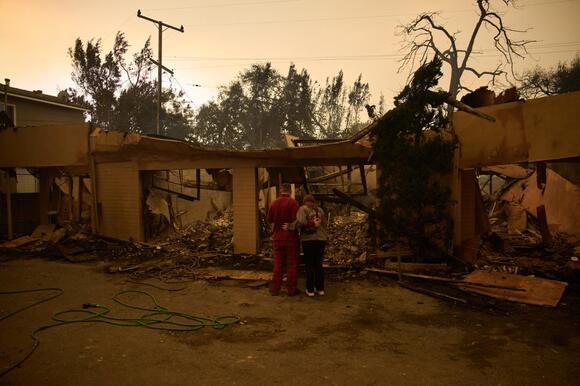
WAKE ME UP WHEN DECEMBER STARTS: California’s power companies launched an all-out pressure campaign to pass a wildfire liability bill before the membership of the state Legislature changes. Now, that push seems to have fallen flat.
During an earnings call last month, Southern California Edison CEO Pedro Pizarro said that Nov. 15 was the final deadline to send a bill to Gov. Gavin Newsom to sign before the current class of lawmakers turns over.
“That current session path is closed,” SCE spokesperson David Eisenhauer said on Monday. “Now, our focus is going to shift to [a] potential special session in December after the newly-elected legislators are sworn in on Dec. 7.”
That shift caps a monthslong effort by the utilities to try to salvage elements of Newsom’s wildfire liability proposal that died over the summer. Power companies negotiated with the insurance industry, one of the chief opponents of Newsom’s proposal, but despite the increased dialogue, they were unable to convince legislative leaders to take another stab at making a deal, though the California Public Utilities Commission published a report warning that “absent near-term action, further fires may bankrupt the [investor-owned utilities].”
Now, the billion-dollar question is whether power companies can land a wildfire deal in the coming four-week period — a short window that includes Christmas and New Year’s Day after a new class of lawmakers are sworn in, and before Governor-elect Xavier Becerra replaces Newsom.
The utilities have a strong incentive to push for fast action.
Newsom made it clear that he wants to vastly reduce the amount of money that power companies have to pay after they spark wildfires. Becerra, despite saying on the campaign trail that he supports “doing wildfire liability right away,” has revealed few details about how he plans to proceed.
But on Friday, Newsom signaled that he might not be in the mood to wrap up a Christmas present for the state’s utilities.
In response to a question from POLITICO about whether he expected to land a wildfire liability deal before he leaves office, the governor said, “I expect when the Legislature convenes in January, they’ll move very quickly.” If lawmakers did take up the issue in January, that’d make it very likely that Becerra would shepherd any final deal, given that he takes over on Jan. 4.
Meanwhile, the utilities have been pushing to place a permanent cap on how much money their shareholders would have to pay out in the wake of future fires, whether or not the firm acted in a way that state regulators consider prudent.
They argue that making the potential costs of future wildfires more predictable is essential to convincing Wall Street financiers that their companies are safe bets, which would allow them to obtain investments at better rates. (This year, additional interest costs due to wildfire risk made up about 1% of the money that Pacific Gas & Electric and SCE were authorized to collect from their customers, according to the CPUC.)
That request has angered ratepayer advocates and some lawmakers, who fear that such a cap would simply transfer the risk from Wall Street firms to everyday electricity customers.
Adopting that type of cap on a rush basis outside of a “grand bargain that actually solves the entire problem” would be “politically negligent,” said Assemblymember John Harabedian.
“I just think that there’s a clear misreading of the situation here by the [investor-owned utilities],” he said. Capping the amount of money that utility investors have to pay out after fires in the short term “would only make sense in the context of a transition to publicly-owned utilities,” he added.
Nonetheless, key participants in negotiations over a deal continue to float the idea of a liability cap for the utilities.
That was the case during a Thursday invitation-only wildfire liability gathering in Sacramento, which the University of California Los Angeles Emmett Institute on Climate Change & the Environment and the University of California Berkeley Center for Law, Energy & the Environment convened in the hopes of sparking conversations among the many groups interested in the issue.
But in a sign of how polarizing the topic continues to be, Joy Chen, the executive director of the Every Fire Survivor’s Network who played a key role in defeating Newsom’s proposal over the summer, was infuriated to see the organizers present the idea of a liability cap as part of a “straw person proposal.” (The proposal was intended as an entryway for discussion, according to Denise Grab, director of the UCLA Emmett Clean Energy Law & Leadership project and a facilitator of the event.)
“The real problem for Californians is not how to shift liability off two companies that keep on burning down communities,” Chen said. “The real problem is to identify what is going wrong. Why do two companies keep burning down communities?”
Mark Toney, executive director of the Utility Reform Network, said in an interview that he also opposes the idea of a shareholder liability cap, unless it’s somehow paired with a ratepayer liability cap and other risk-reducing measures. But policy details aside, there simply is not enough time left for Newsom to land the final deal, he said.
“This behind the scenes, closed doors, released at the last minute, which is what we’ve done since 2019 with wildfire policy — I think that’s part of why it failed this time. People are tired of that,” Toney said. “These policies need to be put into print for weeks or months before they’re voted on.”
Did someone forward you this newsletter? Sign up here!
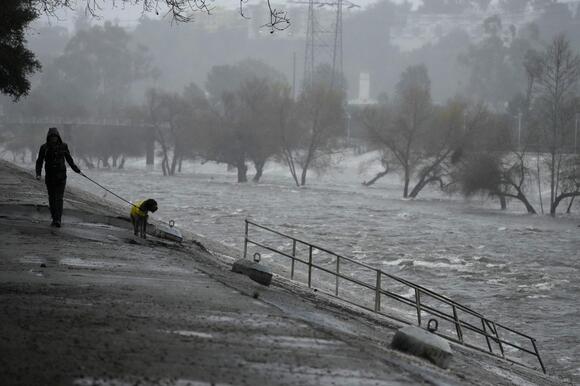
HAZY FORECAST: The federal government’s weather-forecasting offices are understaffed. That’s raising concerns about inaccurate warnings and information as a “super” El Niño threatens to bring more extreme weather to California.
NOAA (which includes the National Weather Service) had a hiring spurt recently, but that failed to return the agency to the pre-2025 staffing levels, Chelsea Harvey and Heather Richardswrite for Morning Environment.
After the Trump administration intervened, NWS lost more than 600 employees last year to layoffs, early retirements and other staff reductions. The White House reversed course later that year, authorizing the weather service to hire 450 meteorologists, hydrologists and electronics technicians. But NWS fell nearly 100 hires short of that target.
There’s evidence that staffing shortages have affected weather forecasts already, meteorologists say. The Trump administration cuts forced some NWS offices to reduce their daily weather balloon launches, which are critical for forecasting and which feed global weather models. Some experts said both U.S. and global forecasts suffered as a result.

EUROPEAN PARTNER: Newsom and Poland’s Secretary of State for Climate and Environment Krzysztof Bolesta signed a memorandum of understanding for a new climate partnership on Saturday.
The two governments agreed to share experts, best practices and knowledge to support each other’s clean energy, pollution reduction and climate resilience goals.
“California and Poland come from different histories but share the same responsibility: to protect our people, power our economies and leave future generations a safer world,” Newsom said in a press release.
ESA LAWSUIT: The Center for Biological Diversity is suing the U.S. Fish and Wildlife Service over what it says is a “systemic and unannounced policy” of refusing to issue overdue protections for imperiled wildlife and plants.
Hundreds of species are stuck waiting for endangered distinctions or habitat protections, the organization says, and over a dozen awaiting action are native to California, including the California spotted owl, the Foothills yellow-legged frog and the Monarch butterfly. Monday’s filing argues that the agency has not publicly disclosed its policy of refusing to finalize new protections and it asks the court to force FWS to stop the policy.
“No other administration in more than 50 years since the passage of the Endangered Species Act has protected so few animals and plants from extinction,” the center said in a statement.
HOLD ON TO THOSE RECORDS: Rep. Zoe Lofgren, the California Democrat in line to chair the House Committee on Science, Space, and Technology, said Friday she sent letters to over 30 companies, individuals and federal agencies requesting they preserve records that could be relevant to the panel’s oversight. The recipients included EPA and multiple former and current Department of Energy officials. — Christa Marshall
— The largest data centers in the United States produce almost as much carbon emissions as entire countries, according to a new study.
— A race to save endangered red abalone from El Niño’s warming waters is underway in Northern California.
— In the debate over who should pay for wildfire loss, lawsuits against utilities have become the de facto recovery strategy.
More from POLITICO in California
POLITICO Pro
California policy moves fast, and the stakes are high. POLITICO Pro offers exclusive California policy reporting, expert analysis, and powerful tools to help professionals learn what’s happening, understand what it means, and act with confidence statewide — all on the POLITICO Pro policy intelligence platform. Learn more.
POLITICO Advertising Solutions
POLITICO Advertising Solutions helps organizations reach and engage influential California policy and political audiences. Through custom advertising, sponsorships, and content solutions, we connect your message with decision-makers across the state. To learn more, contact Jesse Shapiro jshapiro@politico.com.
 Add to Preferred Sources
