undefined
Posts
undefined
Followers
California renewables have a Moss Landing problem
By Noah BaustinRiley Ramirez,
2026-09-24With help from Alex Nieves
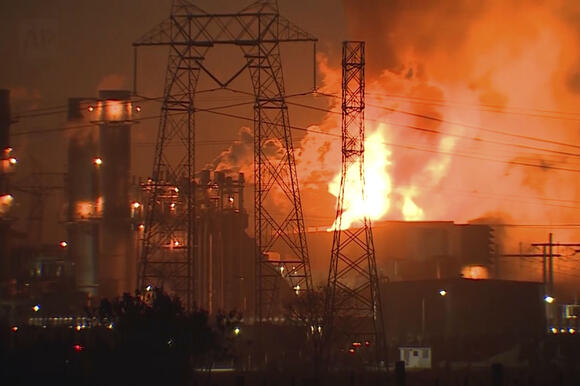
INFAMOUS: California’s top energy officials say the state needs to build more batteries to meet its renewable energy goals. But they have one big problem: The Moss Landing battery storage site keeps catching fire.
The latest blaze sparked Friday, sending smoke into the Monterey County air and prompting officials to issue a shelter in place order. While the fire subsided in less than a day, it led to a slew of headlines recalling a much larger January 2025 conflagration. That fire lasted for several days and shut down what Vistra, the plant’s developer, had once touted as the world’s largest utility-scale battery energy storage system.
Though the site has remained closed since that 2025 blaze, North County Fire Protection District Chief Jeff Cortez said the latest fire lit because roughly 1,200 batteries that were still charged and inaccessible due to prior structural damage spontaneously ignited.
“Crap,” was Arnab Pal’s first thought when he saw Moss Landing was on fire again. Pal, the executive director of the renewable energy advocacy group Deploy Action, said, “It’s a bummer because it’s just a representation of an old version of the technology, [but] all the new technology, which is much safer, is going to get painted with the same brush.”
The latest fire has, indeed, already sparked a new surge of opposition against battery developments across California. Since Friday, a dozen people have submitted comments to the California Energy Commission citing the latest Moss Landing blaze as part of their justification for opposing battery projects in Los Angeles, Santa Cruz and Solano counties.
That’s a serious problem for California energy leaders.
Gov. Gavin Newsom has embraced energy storage as a centerpiece of his push for California to meet 100% of its electricity sales with renewable and zero-carbon sources by 2045. That’s because the state’s vast array of solar power plants stops supplying electricity in the evening after the sun has gone down. By charging batteries when the solar fleet is producing, power companies can then discharge that renewable electricity in the evening, covering for the crucial time when it’s dark out but energy demand remains high.
Last month, Newsom touted the massive growth of battery storage in California during his tenure, with capacity going from 700 megawatts in 2019 to 21,000 megawatts by mid-2026.
“It’s allowed us not to have a flex alert in four years,” Newsom said, referring to situations when the state’s grid managers have to ask electricity users to dial back their use due to strain on the grid. “We’re on the other side of this, that’s what battery storage has done, and we’re just getting started.”
The state’s projected need for energy storage — which includes batteries as well as other in-development technologies for stashing away electricity — is 52,000 megawatts by 2045, according to the CEC, more than double the state’s current capacity.
Reaching that capacity would require a major buildout of batteries across California. But anyone who learns of a battery proposal near their home and begins researching energy storage will inevitably discover photos of the soaring flames during the 2025 Moss Landing fire.
The incident “frequently” comes up as part of local opposition to battery projects, according to Scott Murtishaw, the executive director of the California Energy Storage Alliance, an industry association. “There are a few [projects] that face[d] such strong local opposition that the developers ultimately withdrew them,” he said.
Take the case of the Seahawk Battery Energy Storage System in Santa Cruz County. The project was relatively uncontroversial before the 2025 Moss Landing fire, according to county Supervisor Justin Cummings.
“The Moss Landing fire happened and then people actually learned that there was a proposal for a facility in South County, he said. “Then, people started becoming very concerned.”
The county supervisors delayed voting on the project, and its developer, New Leaf Energy, applied in May for approval through the CEC’s streamlined process instead. Its application is still pending.
Meanwhile, battery projects in the San Diego and Orange County regions have also been derailed amid local opposition.
The situation is frustrating for Murtishaw and other energy leaders who see batteries as a key element of California’s renewable future. They argue Moss Landing is not representative of the energy storage projects that would be built today.
That’s because the state has made significant changes to its fire codes and, in the wake of the 2025 fire, Newsom signed SB 283, a bill by Sen. John Laird, which added rules for energy storage development.
While Moss Landing’s batteries were installed inside of an old natural gas power plant, today’s energy storage facilities are installed in a series of outside containers designed to prevent any fire from spreading to other batteries.
“We would not permit a facility like Moss Landing now,” Laird said.
Did someone forward you this newsletter? Sign up here!
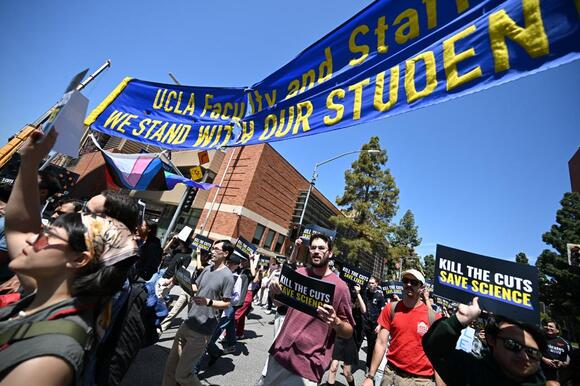
GIVE IT BACK: The Trump administration has settled a lawsuit filed by University of California professors over terminated hydrogen research grants, agreeing to restore funding for around 25 grants worth $19 million, POLITICO’s Eric He reports.
The U.S. Environmental Protection Agency acknowledged in the settlement agreement that it cut the grants because they related to diversity, equity and inclusion programs, a standard a federal judge earlier this year ruled unconstitutional.
The grants are part of the Biden administration’s ARCHES program, a $1.2 plan to boost clean hydrogen production that Trump’s EPA has since canceled. The settlement still needs court approval before it takes effect.
The settlement is the latest turn in an ongoing battle over the cuts to universities. In his second term, Trump has targeted research funding at elite schools to pressure them to change their diversity practices and make other campus reforms.
MORE FOREST FIGHTS: Attorney General Rob Bonta and a multistate coalition of attorneys general are joining the fight to protect national forests from deregulation.
In a letter to the United States Forest Service on Wednesday, Bonta and the other attorneys general opposed proposed revisions to the Travel Management Rule, which regulates where off-road and motorized vehicles can travel in national forests and grasslands.
The changes, which the Forest Service says will expand outdoor recreation access and strengthen rural economies, would loosen current regulations by designating roads and trails open to the public unless specifically deemed otherwise.
In their letter, the attorneys general said that the proposed revisions would “destabilize the clear, consistent framework” that the rule establishes, writing that increasing motor vehicle access would likely harm recreational users.
“The health and wellbeing of our protected lands will not be run over by the President’s overreaching political agenda,” Bonta said in a statement. “The facts overwhelmingly show that more roadbuilding and motorized vehicle usage in our forests will fragment and destroy wildlife habitats, degrade water quality, and increase the risk of wildfires.”
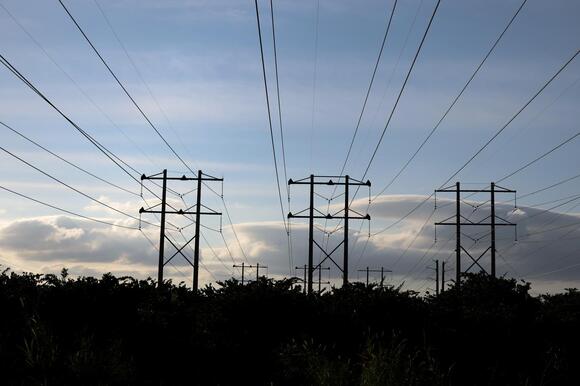
ELECTRIC CASH: The feds are funding a California research organization’s work on advanced grid technology.
The Department of Energy announced on Thursday that it intends to issue $21 million to Electric Power Research Institute, Inc., which is based in Palo Alto. The funding will support a project to deploy technology that can alleviate congestion and unlock extra capacity on power lines. The organization plans to use the tech on power line networks in Pennsylvania and Arizona, according to EPRI spokesperson Aimee Mills.
The funding is part of a larger pool of $2 billion in awards to organizations in 26 states that the DOE announced on Thursday, POLITICO’s Kelsey Tamborrino reports.
BUS STOP: The Los Angeles County Metropolitan Transportation Authority approved the purchase of 220 electric buses on Thursday, the second-largest purchase of its kind in the nation.
The move comes as the region prepares for the 2028 Olympic and Paralympic Games, where access to venues will be limited to public transportation.
LA Metro has set a goal of transitioning 100% of its bus fleet to electric models by 2035, an ambitious target complicated by the need for infrastructure upgrades and range limitations for buses that must operate in remote parts of Los Angeles County.
Once the new buses are in operation, more than 10% of LA Metro’s fleet will be electric, according to Earthjustice.
— The opening of the new people mover train for Los Angeles International Airport keeps getting delayed, and contractors won’t commit to when the passenger service will launch.
— New concerns about the already-battered Southern California coastline are growing as Hurricane Polo gains speed off the coast of Mexico.
— Independent journalist Robert J. Lopez writes that the regulatory system designed to protect farmworkers from pesticides is enforced haphazardly across California, putting them at risk of serious health problems.
More from POLITICO in California
POLITICO Pro
California policy moves fast, and the stakes are high. POLITICO Pro offers exclusive California policy reporting, expert analysis, and powerful tools to help professionals learn what’s happening, understand what it means, and act with confidence statewide — all on the POLITICO Pro policy intelligence platform. Learn more.
POLITICO Advertising Solutions
POLITICO Advertising Solutions helps organizations reach and engage influential California policy and political audiences. Through custom advertising, sponsorships, and content solutions, we connect your message with decision-makers across the state. To learn more, contact Jesse Shapiro jshapiro@politico.com.
 Add to Preferred Sources


