undefined
Posts
undefined
Followers
The G20’s great gas divide
By Benjamin StorrowShelby WebbCharlie Cooper,
2026-09-15With help from Zia Weise in Belgium, Josh Groeneveld in Germany, Emile Marzolf, Alexandre Léchenet and Nicolas Camut in France, Mike Blanchfield in Canada, Brian Dabbs in Singapore, and Sara Schonhardt and Zack Colman in the U.S.
Surge Preview
- Energy divergence makes a scene at Trump's G20.
- The EU considers throwing its weight behind a global electrification target at the climate talks.
- Carney tries to patch things up with President Donald Trump.
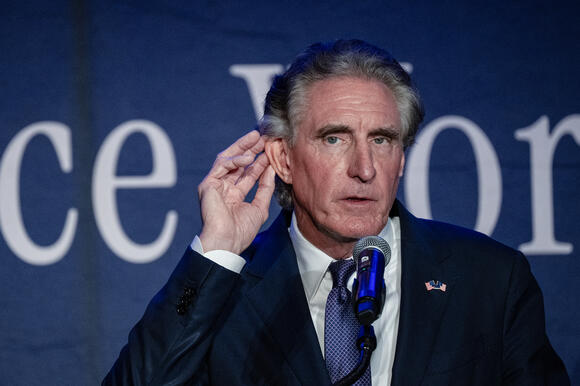
HARD SELL IN HOUSTON: The G20 energy ministerial in Houston this week is displaying a schism in the global gas market: The Trump administration is using the conference as a sales pitch for exporting more fuel, while European and Asian countries are emphasizing alternatives.
“The whole point around the United States achieving energy abundance or energy dominance is to have the energy for prosperity at home and peace abroad,” Interior Secretary Doug Burgum said Monday. “That means that we have enough energy to sell to our friends and allies around the world.”
The world is indeed buying more American LNG than ever. But countries are also looking for alternatives, as officials in Houston made clear.
The European Union’s ambassador to the United States, Jovita Neliupšienė, touted regulations aimed at streamlining the construction of renewable projects. Japan’s representative, Takeshi Sekiya, put it even more succinctly.
“We are promoting the green transformation policy,” Sekiya, the vice minister for global environmental affairs, said Monday. The goal, he said, is to achieve a “stable supply of energy, economic growth, and environmental outcomes.”
The gulf between the U.S. and its allies already existed due to differences over climate policy. That was punctuated by the Trump administration’s high-profile rollback Monday of a climate rule that sought to reduce carbon emissions from coal and gas plants.
It also reflects geology. The U.S. is awash in gas, while Europe and some Asian countries like Japan and South Korea have little of their own. That gap has grown since the U.S. attacked Iran in February, leaving 20% of global LNG supplies bottled up in the Persian Gulf.
The differences are most clearly measured within countries’ storage tanks. The U.S. enters the fall injection season, when gas suppliers stock up for high-demand winter months, with storage inventories comfortably above their five-year average and prices below their decadal average. But European storage levels are near 15-year lows, with gas prices rising to heights not seen since Russian troops crossed the border into Ukraine. Asian LNG prices are also flirting with five-year highs.
That produces different political incentives.
Europe went through the painful experience of being shut off from its then-main gas supplier, Russia, in 2022, said Eugene Kim, an analyst at Wood Mackenzie. “Their fear now is being too reliant on U.S. LNG,” he said.
In the U.S., where gas production is at record levels, the Trump administration is promoting gas as a way to lower energy bills. The United Kingdom, by contrast, became a net importer of gas way back in 2004, as North Sea production began its steady, geological decline.
Even so, Britain remains highly dependent on the fossil fuel for electricity generation (27% of U.K. generation in 2025) and for heating (roughly 3 in 4 homes have a gas boiler.) Almost 60% of its gas is imported, with nearly a quarter of that coming from the U.S.
So the country’s Labour government is turning to domestic clean energy sources as a way to reduce the country’s exposure to spikes in gas prices. New Prime Minister Andy Burnham is weighing plans to eke out some of the last remaining gas in the North Sea; but the bigger picture is a country trying — with mixed success — to shake its gas addiction.
It’s a hard job. While Britain’s exposure to Middle Eastern LNG was small, the wider price shock from the Iran war has sent bills up again. They are due to rise 4% in October, with a much steeper hike coming in January — as much as 25% by some estimates.
“What is frustrating is these rises, as we have seen time and time again, have very little to do with what is happening in Britain. The market is reacting to events thousands of miles away,” said Craig Lowrey, principal consultant at U.K. energy analysts Cornwall Insight.
In Japan, where gas accounts for roughly a third of power generation, wholesale prices are expected to rise more than 40% over the second half of the year.
The country nevertheless remains wedded to the fuel. Japan is expanding its fleet of LNG ships, showing the country expects to rely on the power source for decades.
In the short term, many Asian nations are returning to coal to replace lost LNG shipments from the Middle East, said Kim, the analyst. The International Energy Agency reported last week that global coal demand is on pace to rise as a result of higher LNG prices. South Korean demand, for instance, is expected to rise 6% this year.
Longer term, the question is whether renewables can pick up some of the slack. But a lack of dispatchable resources outside of coal means that many countries will still burn gas to ensure the reliability of their power grids, Kim said.
“We still see global gas demand and global LNG demand increasing in the future,” he said.
Burgum punctuated a press conference in Houston on Monday by calling the energy transition “misinformation.”
“It wasn't true, the idea that somehow there was an energy transition going on in the world, and the energy transition was the highest priority,” Burgum said. “We’re not talking about energy transition because the transition was actually energy subtraction.”
But the Trump administration may have set the transition in motion by launching a war that bottled up LNG. When Poland’s minister of climate and environment, Paulina Hennig-Kloska, spoke in Houston, she touted her coal-reliant country’s investments in “new resources.”
“We are building the first ocean plants in the Polish area of the Baltic Sea, and the first nuclear power plants,” she said, referring to offshore wind and nuclear projects underway in Poland.
In the end, where you stand on the great gas divide all depends on where you sit.
WELCOME TO SURGE: I’m Ben Storrow, your lead author. A special thanks to Shelby Webb, who is reporting on the ground from the G20 in Houston, as well as Charlie Cooper in the U.K. and Brian Dabbs in Singapore. Today is a great example of what our global team at Surge can do. Reach out with tips and ideas at bstorrow@politico.com.
Power Players
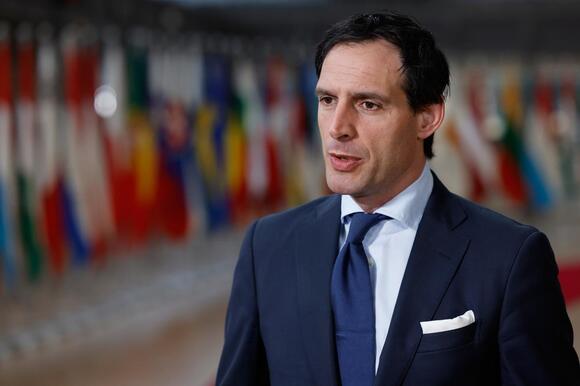
SCOOP: The European Union is considering backing a global electrification target at this year’s United Nations climate conference, according to the bloc’s draft position for the COP31 summit.
Turkey, which co-hosts COP31 together with Australia in November, earlier this year asked governments to support a worldwide target to electrify 35% of the world’s energy use by 2035. (Unless the goal is integrated into the formal negotiations, the effort would not need the backing of all countries.)
Now, the EU’s 27 governments — which must agree on a COP31 stance by consensus — are debating whether to endorse Turkey’s goal, a draft document obtained by POLITICO shows.
Emissions emphasis: The draft position, which can change until ministers sign off on it in mid-October, also indicates that the EU expects a COP31 outcome that meaningfully accelerates global efforts to cut planet-warming emissions, including through “the clean energy transition, the transition away from fossil fuels” and “increased clean electrification.”
The document also welcomes efforts to build more coalitions to accelerate climate action outside the rigid consensus-based U.N. framework. In particular, the EU “recognizes” the importance of the first-ever conference on transitioning away from fossil fuels that took place in Colombia earlier this year.
POLITICO Pro subscribers can read the full leaked document here. — Zia Weise
STILL FRIENDS BUT … : Canadian Prime Minister Mark Carney isn’t forgetting about President Donald Trump as he woos global investors from Europe, Asia and oil-rich Gulf states. But he made clear Tuesday at the end of his two-day investment summit that the U.S. is only one of many potential partners he is seeking to bankroll his “energy superpower” dream for Canada.
“And to our American friends, let me say this,” Carney said in a morning keynote. “We will always be neighbors, and Canada will continue to be the U.S.'s most important partner in many key areas.
“After all, even at times of disagreement over our long shared history, we have always maintained deep ties. These arrangements work best when we engage as true partners that respect each other's traditions and sovereignty.”
Talking to the world: Carney said Canada’s national resources, especially its critical minerals, oil and gas, and nuclear energy technology are in high-demand across the globe, and he’s open to offers. To drive that point home, Carney showcased meetings on Monday with financial service execs from Australia and Singapore with wide-grinned photo-ops.
“We are unleashing our full potential as an energy superpower,” Carney said Tuesday. “In the past year, we have signed over 50 critical minerals agreements with more than 15 countries — unlocking $20 billion in investment while reducing dependence on foreign chokeholds in critical supply chains.”
Eye on Europe: Carney is wheel’s-up for Europe later Tuesday for a date in Strasbourg on Thursday to address the European Parliament. That’s a table-setter for the Canada-EU summit next month in Montreal where “we will begin discussions with the EU, the world's second-largest economy, to build a unique security and economic alliance." — Mike Blanchfield
Driving the (global!) day
HOT MONEY: The private equity industry is collectively responsible for more annual planet-warming emissions than regional powers like Brazil, Japan and Saudi Arabia, a new report found.
The report, from the nonprofit Private Equity Climate Risks Consortium, estimated that the oil fields, pipeline networks, power plants and data centers owned by just 20 private equity firms emit the equivalent of 1.5 gigatons of carbon dioxide per year.
Data details: The emission sources included in the consortium's dataset are owned by a mix of industry titans, like Blackstone and KKR, as well as investment groups that specialize in energy infrastructure, such as Quantum Capital and EnCap Investments.
Private equity firms don't have to publicly disclose their assets or emissions, and some were reluctant to engage with the consortium after previous data disputes. So the new report is mainly based on a combination of press releases, news reports, regulatory filings and data from government or industry sources.
Up in smoke: The report also evaluated the returns of 145 fossil-fuel-focused private equity funds that began investing $190.4 billion between 2001 and 2016. Over their decade-long life cycle, those funds distributed just $192.9 billion to investors — a roughly 1.3% return that was below the rate of inflation over that same period. (Not all of the firms named in the report offer fossil-fuel-focused funds.)
Who loses: "At the end of the day, it's the institutional investors' money that's on the line here," said Amanda Mendoza, a senior researcher at the Private Equity Stakeholder Project, one of the consortium members. The other nonprofits behind the report are Global Energy Monitor and the Americans for Financial Reform Education Fund.
University endowments, pension funds and the people who rely on them will "feel the financial consequences of those investments," she told POLITICO.
Industry response: "We see significant opportunities for private capital to help build the infrastructure needed to support the energy transition," said Blackstone spokesperson Paula Chirhart. She also highlighted the firm's efforts to set emission-reduction targets at certain portfolio companies and invest in renewable energy.
KKR declined to comment. Quantum, and EnCap didn't respond to requests for comment. — Corbin Hiar
FRANCE WANTS YOUR DATA CENTER: France is “not concerned” by the backlash against data centers, said Anne Le Hénanff, French digital minister, during an event Tuesday on the technology’s environmental impact.
More consultation about data center siting is planned ahead in France, she said, adding that “nothing is forced.” Europeans tend to be more concerned about energy and water consumption, “land frugality,” and “reindustrialization” than their American counterparts, Le Hénanff told our colleague Émile Marzolf. Her comments come as the U.S. House is scheduled to vote on a bill Tuesday that would shield ratepayers from the energy costs associated with data centers.
France has not witnessed the rapid pace of data center development in the U.S., but that could change. The country has the power and water resources to support the energy-hungry facilities.
A law passed six months ago was meant to simplify data center construction, but so far no developer has used it to circumvent some environmental obligations. French opposition to the facilities has largely been focused on their water and land use, due in part to the country’s abundance of nuclear power.
Mathieu Lefèvre, deputy minister for environment, warned against imposing more environmental safeguards. “We can’t ask for more sovereignty only to then prioritize environmental requirements that our competitors don’t apply to themselves”, he said, adding that if the data centers aren't built in France, they will be built somewhere else with lower environment standards. — Émile Marzolf
GERMANY'S TRUMP PROBLEM: The German fund tasked with financing the disposal of the country’s nuclear waste aims to have a climate-neutral portfolio — but Trump’s rise to power has made that a challenge, its chief investment officer, Anja Mikus, told our colleague Joana Lehner in Berlin.
“We’ve managed to reduce our CO2 footprint by 59% in the last five years,“ Mikus said. But further progress would be difficult — especially since the Trump administration’s decision to leave the Paris climate agreement. “As a result, efforts to reduce CO2 emissions are likely to slow significantly,“ says Mikus, citing Trump’s order to kill subsidies for wind and solar farms that the Biden administration’s Inflation Reduction Act had provided.
“Consequently, companies in other countries are no longer setting targets as stringent as they were before,“ Mikus points out. “At the same time, energy demand is rising, driven, for example, by the significant increase in the number of new data centers.“
The growing demand from those data centers could never be met by wind and solar power alone, she argued. “This means that the path to climate neutrality in our portfolio is not an easy one.”
As a consequence, the fund, which manages assets totaling €25.5 billion, has divested its portfolio. Forty percent is invested in the U.S., 40% in Europe, 20% in the rest of the world. “This has made us miss out on top returns in the U.S. technology sector,“ says Mikus. “But it has significantly reduced periods of weakness.“ — Josh Groeneveld
Our open tabs
OIL DISRUPTIONS MULTIPLY: The Trump administration is left with only bad choices after Iranian-backed Houthi militants seized more strategic territory and further squeezed world energy markets, writes Daniella Cheslow. Yemeni forces, supported by Saudi Arabia, failed to repel the Houthis’ capture of the Red Sea port of Mokha and three islands key to controlling the waterway. The White House could join the fray — or leave the region to sort out the Houthis alone and bear the pain of oil prices that are soaring past $100 a barrel. As Scott Waldman and James Bikales report, frustration is growing in the White House over the few options available to ease the rally in oil prices that has imperiled the GOP hold on Congress.
FIGHT FOR SURVIVAL: The United Nations' acknowledgment last week that the world is going to breach 1.5 degrees Celsius of global warming formalized a dire outcome for some of the world’s poorest and most defenseless countries. As the New York Times reports, the countries most vulnerable to climate change are confronting not only rising sea levels and intensifying disasters, but also cutbacks in aid from wealthy nations like the U.S.
RESEARCH: Surging fossil fuel prices pose the most significant inflation risk in almost all of the 13 European countries analyzed, research published Tuesday by the New Economics Foundation found.
That’s all for today. Thanks for reading!
Did someone forward Surge to you? Sign up here.
 Add to Preferred Sources