undefined
Posts
undefined
Followers
Labor’s new front in the AI fight
By By Tyler Katzenberger,
2025-03-04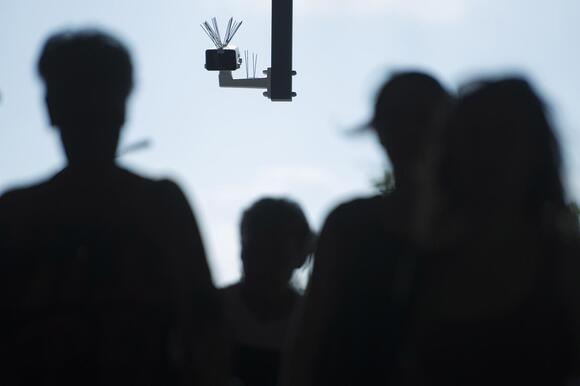
SACRAMENTO, California — California’s powerful Labor Federation is channeling George Orwell in its latest fight to influence how and where surveillance tools are deployed in the workplace. The goal: keep big bosses (and Big Tech) from becoming Big Brother.
“We need guardrails and we need regulation that applies to everybody,” Labor Fed President Lorena Gonzalez told POLITICO’s California Decoded newsletter in an exclusive interview laying out the group’s 2025 priorities.
“It doesn't matter where you work. You should have that right to privacy.”
The Labor Fed has for years been a regular driving force behind workers’ rights legislation in the nation’s most populous state, though it has also faced political headwinds from California’s homegrown, lucrative tech industry, which often has the ear of Gov. Gavin Newsom.
Gonzalez said the group is sponsoring three first-in-the-nation bills in Sacramento this year that could inspire efforts in other states as well, aimed at limiting how companies can use AI-powered monitoring systems to track their employees’ movements.
It’s a notable strategy shift for the Labor Fed. The group of 1,300 unions representing more than 2.3 million workers has previously thrown its weight behind AI bills on issues within a specific sector like call centers or trucking.
That approach was mostly a dud last year: Only one of the five bills in the Federation’s tech and AI package became law. Two of those measures — Assemblymember Cecilia Aguiar-Curry’s bid to stick human safety operators in driverless trucks and Sen. Lola Smallwood-Cuevas’ proposal to limit the number of self-checkouts in grocery and retail stores — are back this year to round out the Labor Fed’s broader, five-bill package on AI and automation, though both are scaled back compared to their 2024 counterparts.
The labor group is hoping the new approach could improve its odds with Newsom after he rejected the autonomous trucks bill and a handful of other ambitious AI measures last year, citing a need to balance safety concerns with the state’s emphasis on bolstering innovation.
“I don't think anyone can argue innovation should outweigh the right to be able to use the restroom or eat your lunch in private without being watched and surveilled by your boss,” Gonzalez said. “I don't think the governor is going to have that argument, but if somebody wants to, we're happy to have that. That's a winning issue.”
She cited tools like Cisco’s Spaces, which can enable managers to track workers’ location in an office space. And Walmart has considered using facial recognition to identify unhappy customers, according to Bloomberg .
Gonzalez acknowledged Newsom could still foil this year’s efforts, citing the trucking bill and others that have breezed through the Legislature only for the governor to tank them. But she’s optimistic that privacy is a salient issue that could galvanize workers and capitalize on Democrats’ growing mistrust of Big Tech as high-profile leaders cozy up to President Donald Trump. A Pew Research poll from 2023 found voters overwhelmingly opposed employers using AI to track employees’ movements while at work.
“For a long time in California, Democrats were lulled into believing that the Silicon Valley, venture capitalist tech bros were their friends, and I think it's very clear now that they're not,” she said. “They care about becoming billionaires at the expense of working people. Nobody's privacy is ensured.”
The Labor Fed could face pushback from business groups it’s faced before, with companies like Cisco arguing its tech already offers privacy protections in compliance with state and national laws, as well as Europe’s more stringent data security rules.
And there are still plenty of unknowns on the table. Just one of the three bills in the Labor Fed’s privacy package is public so far: Assemblymember Sade Elhawary’s effort to stop companies from monitoring off-the-clock employees. The Los Angeles Democrat’s bill would bar employers from using AI systems or other tracking tools, like devices that record workers’ biometric data, to monitor employees while they’re outside the office or in off-duty spaces like break rooms and cafeterias.
The other two AI surveillance bills from Assemblymember Isaac Bryan and state Sen. Jerry McNerney are still placeholder measures with scant details. Gonzalez declined to share specifics before the full texts drop but said Bryan’s legislation will seek to restrict companies’ use of employee data gathered through AI surveillance tools.
Bryan, a Los Angeles Democrat, told California Decoded his bill reflects worker concerns that employers are using personal data collected without consent to “unfairly put decision-making outside of the hands of managers and real people.”
McNerney spokesperson Bob Gammon said the Stockton Democrat and former representative was “still working on language” for his bill and declined to share details.
Like this content? Consider signing up for POLITICO’s California Decoded newsletter .
 Add to Preferred Sources
