undefined
Posts
undefined
Followers
Pittsburgh’s no-bid contracts, explained
By Charlie Wolfson,
8 hours ago
Pittsburgh’s use of no-bid contracts has drawn scrutiny this year as Allegheny County District Attorney Stephen Zappala has conducted a criminal probe into contracts awarded under former Mayor Ed Gainey.
Pittsburgh’s Public Source analyzed more than 250 contracts submitted for Pittsburgh City Council approval with waivers from competitive bidding, spanning 2020 through the first three quarters of 2026.
The no-bid contracts during that time totaled at least $43.25 million. From 2020 through 2025, they averaged $6.8 million per full year, less than 1% of the city’s projected 2027 operating budget.
“$6.8 million [per year] for a city this big is not a shocking amount,” said George Dougherty, a University of Pittsburgh professor specializing in regional governance and local government finance.
Competitive bidding gives other vendors a shot at city work and lets Pittsburgh compare prices and proposals. When the city skips that step, residents have fewer ways to tell whether it got a fair price or gave a vendor special treatment.
The amount of money committed through no-bid contracts more than doubled from the last two years of Mayor Bill Peduto’s tenure to the first two years of Gainey’s tenure, our analysis shows, though some of that increase ebbed over the following two years.
Neither Gainey nor Peduto responded to requests for comment.
Two large expenses helped drive that increase during the Gainey administration: $4.2 million for software related to the city’s permitting system and $4.8 million in contracts for violence prevention programming in city schools.
Some details about Zappala’s investigation became public in September when a search warrant his office used to obtain documents from the mayor’s office was unsealed. It included testimony from current and former city officials who said the Gainey administration abused no-bid contracting procedures, but did not include evidence of wrongdoing. One person, a nonprofit director, has so far been charged with a crime in the investigation.
Zappala’s chief of staff, Rebecca Spangler, said the DA’s office would not comment on this story because there is a pending charge and the investigation is ongoing.
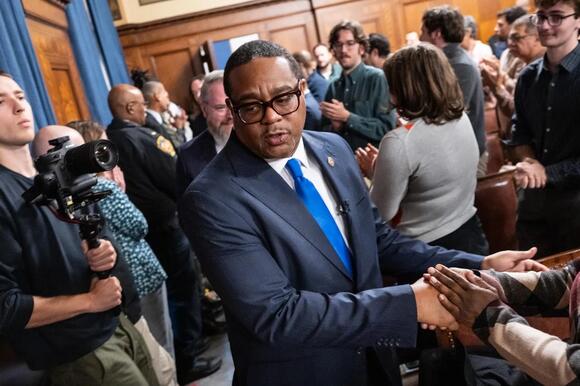
Fewer no-bids due to diligence, luck
In Mayor Corey O’Connor’s first nine months in office, the city awarded no-bid contracts worth $2.3 million.
Dan Gilman, O’Connor’s chief of staff, said the decline may be in part due to luck, with major software and other contracts not coming up for renewal yet this year. But he also cited the administration’s focus on spending control.
“We’ve been very aggressive about trying to renegotiate contracts, about not using waivers of competitive process,” Gilman said, “… to get the best deal for our taxpayers and to really look at why these things are being done.”
He said the city has specifically looked to limit the use of “piggyback” contracts in which the city relies on a price negotiated with a vendor by a different government entity.
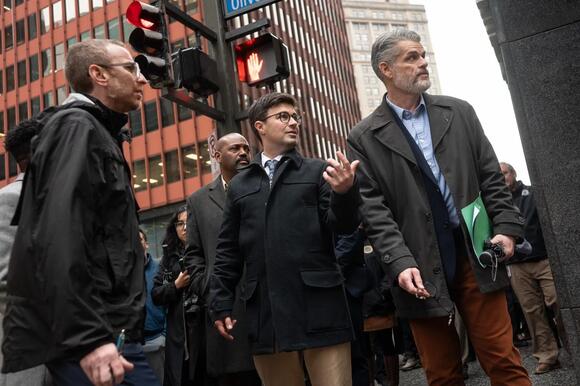
When bidding is optional
Government contracts are typically awarded through a competitive process with built-in transparency and fairness measures. Pittsburgh’s charter permits the city to bypass competitive bidding when the director of management and budget and the city solicitor say a purchase meets one of more than a dozen criteria, such as:
- There’s an emergency
- Only one supplier is a plausible source of a product or service
- The city is seeking legal counsel “including cases in which confidentiality could be compromised by public solicitation”
- The city wants to continue an existing service to maintain “essential functions” of the city, “including but not limited to … software.”
Dougherty said no-bid contracts are a routine part of government, but that the government should provide a detailed explanation for why each is exempted from bidding to avoid public suspicion of improper dealing.
“They have purchasing processes, and they’re purposefully choosing not to follow their own regular process,” Dougherty said. “So just justify it.”
Before it awards a contract for which there wasn’t a competitive process, the administration submits a waiver to City Council, but there are varying levels of detail when it comes to the justification.
“$6.8 million [per year] for a city this big is not a shocking amount.”
George dougherty
For example, one waiver that accompanied a 2022 contract with the National Association of State Boating Law Administrators noted that that group is the only organization that provides the certifications required by law to operate the city’s public safety boats.
Another waiver that accompanied a 2023 contract with law firm Loeb & Loeb LLP simply read, “Contractor is needed for consulting with respect to anticipated, pending or potential litigation.”
“It really doesn’t” tell you why the exemption is justified, Dougherty said. “It doesn’t tell you why that specific consultant, what triggered the exemption … If they put that kind of stuff in any open bid, how many firms could you find that could be better?”
Loeb & Loeb did not respond to a request for comment.
City Council Finance Committee Chair Erika Strassburger said she makes inquiries with administration officials about certain waivers that reach council’s agenda, and has felt the need to object to one, but that council is unable to fully oversee the process.
“No council office nor anyone who works for council has the resources to independently verify every single no-bid contract that comes before us,” Strassburger said. “Similar to the trust that exists between the mayor [and council] around the hidden details of the budget that we might not have access to.”
The most common use for a no-bid contract was software. During the time period analyzed, the city awarded 66 no-bid contracts for software used for budgeting, scheduling, constituent engagement, payment processing, snow plow route planning and many other city functions.
One of the largest vendors was Denver-based Computronix, which council legislation indicates sold the city software to run its online permitting system yearly from 2022 to 2025. The city’s permitting process has been a persistent target of complaints from the development and building community and the subject of promises from several mayors. O’Connor signed an executive order on his first day in office aimed at streamlining the permitting process.
Computronix did not respond to a request for comment.
The city gave $6.3 million in no-bid contracts to law firms, the second-largest category of recipients. The city hired counsel to represent it in employment matters, collective bargaining and lawsuits brought against it. It gave out four contracts worth a total of $120,000 for representation in the federal suit brought against the city over the death of Jim Rogers, which eventually settled with the city paying Rogers’ estate $8 million.
The top law firm on the list was Fisher Phillips LLC, an international firm with a Pittsburgh office that the city brought in for employment matters and collective bargaining. The firm did not address questions sent by Public Source.
Dougherty said it’s standard for a city to go outside its own legal department for cases that require specialized legal services.
“If there was a law firm that specialized in Downtown office redevelopment, and somebody just did that and they were clearly the best, that would make sense as a sole source,” Dougherty said.
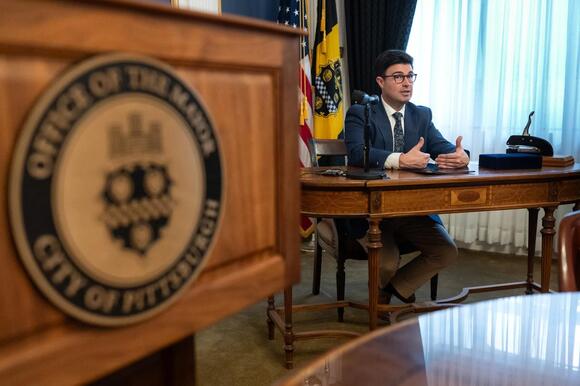
He questioned the city’s frequent use of sole-source contracts for labor issues due to the abundance of relevant law firms in the city and nationally.
Gilman said the city is not required by law to competitively bid for legal services.
“There are many factors beyond the lowest bid that matter,” Gilman said. “There’s a level of incredible trust, confidence, background knowledge and expertise that are hard to measure. That doesn’t mean you don’t make multiple calls and ask prices, and try to get good prices, but you don’t do a [request for proposals] like you would to buy the desk chair I’m sitting in or a fire truck.”
The most money the city dealt to one recipient was $5.1 million to Operation Better Block, a Homewood-based nonprofit founded in the 1970s with the goal of revitalizing that neighborhood. The city contracted the group multiple times from 2021 to 2024 for violence prevention programming in city schools.
Operation Better Block is mentioned once in Zappala’s unsealed search warrant, in the context of a city official allegedly checking an incorrect wrong box on the waiver form.
Operation Better Block’s leadership did not respond to a request for comment.
Editor’s note: Developer Max Chis worked with artificial intelligence tools to scrape information from Pittsburgh City Council agendas for this story. The data and conclusions were verified by fact-checker Emma Folts and Public Source journalists.
Charlie Wolfson is the local government reporter for Pittsburgh’s Public Source. He can be reached at charlie@publicsource.org.
This story was fact-checked by Emma Folts.
Help us keep telling stories like this one. Your gift is MATCHED up to 12x!
We’re Pittsburgh’s Public Source, an independent, nonprofit newsroom. That means we rely on donations from readers like you to help us report accurate, timely and impactful stories for the Pittsburgh region — available to everyone without paywalls.
And right now, you have a limited-time opportunity to supercharge your support. Through Dec. 31, our generous local match pool donors will match your new monthly donation 12 times or double your one-time gift until we reach our $80,000 goal!
We've seen our journalism prompt widespread change in the Pittsburgh region — but none of it would be possible without the support of our community. If you found this story valuable, consider "paying it forward" by making a gift today.
- As Charleroi's Haitians retreat, the Mon Valley town wonders how it will rebound
- West Mifflin school closures plan draws call for superintendent’s termination
- Polish Hill shelter proposal called 'damaging' and 'minimal' in heated hearing
Republish our articles for free, online or in print, under a Creative Commons license.
 Add to Preferred Sources