undefined
Posts
undefined
Followers
A look at the midterm races that remain undecided
By Amna NawazLisa DesjardinsKyle MiduraWinston WildeGenesis Magpayo,
20 hours ago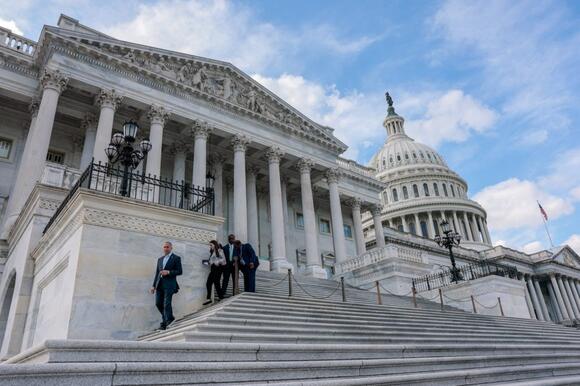
As Democrats prepare to take control of Congress and Republicans grapple with stunning losses, every remaining race matters. Some races are still too close to call, including Senate battles in both Alaska and Mississippi. Congressional correspondent Lisa Desjardins reports.
Read the Full Transcript
Amna Nawaz: As Democrats prepare to take control of Congress and Republicans grapple with stunning losses, every remaining race matters. And some races are still too close to call. That includes tight Senate contests in both Alaska and Mississippi.
Our congressional correspondent, Lisa Desjardins, starts us off tonight.
Lisa Desjardins: In a diner in Mississippi, Democratic Senate candidate Scott Colom displayed the energy that got him here, saying hello to all and joining a morning prayer. He and his Republican opponent, Cindy Hyde-Smith, are in a razor-thin race, but Colom gained several hundred votes overnight.
Both parties are carefully watching the counting of provisional ballots now. Hyde-Smith did not appear today, but Mississippi's Republican Party chairman held a news conference.
Mike Hurst: Any time you have an election that's this close and any time we want to make sure that our laws are being followed, we want to make sure that there's nothing untoward done.
Lisa Desjardins: But Colom was confident of a win and a message from it.
Scott Colom: We're going to show the country that Mississippi matters, right? We have great people that are full of great values, and we have a vision for our country that really people could learn something from.
Lisa Desjardins: Alaska is the other state where a key Senate race still hangs by a razor's edge. A sizable amount of votes are yet to be counted, some from such remote areas, they must be flown in by plane.
Mike Zoske, Alaska Voter: Now, there's a lot of votes that still have to come in from the bush, a lot of votes out there. And they typically vote Democratic, but I don't know how they're going to vote.
Lisa Desjardins: Amidst the blue tsunami, there has been one Republican flip of a current blue House seat in Maine. Democrat Matt Dunlap conceded to the state's former Governor Paul LePage in a race that almost went to a ranked-choice count.
And in a stunning upset in Los Angeles, Democratic Socialist Nithya Raman will be the city's new mayor after young voters surged for her and incumbent Karen Bass conceded. Raman will be L.A.'s first Asian American mayor.
The margin is to be determined, but control of Congress is set for Democrats. And every part of the country is digesting the results, from an Iowa bar, where some drowned out their shock.
Man: I woke up to my daughter saying: "The liberals are taking over." I turned it on, and I saw it as, like, surely not.
Lisa Desjardins: And others chewed on understanding.
Kelia Rice, Iowa Voter: With prices going up and the war and things just building on everybody, they finally decided that maybe we'll give it a chance to the Democratic Party and we'll switch our views for a moment and maybe they will help us.
Lisa Desjardins: To a farmers market near Austin, where voters reckoned with the state's new blue tone.
Carol Belk, Texas Voter: Disillusionment with what Trump has been doing or not doing. So we voted for Trump the last three times. So that really surprised me, the switch. the complete switch-over.
Lisa Desjardins: That swing toward a new team of Democrats in Texas came largely from a new coalition of young voters and Latinos, like this college student.
Sophia Flores, Texas Voter: It's the party that votes for the underdog, I like to say. Like, they vote for the little man. They try for the little man. They fight for us, rather than big corporations, big money, stuff like that.
Lisa Desjardins: The range of Democratic voters was sweeping, including this cattle rancher in Kansas, who had a more watchful message for the party.
Tom Holmquist, Kansas Voter: I was telling my wife this morning, I said, OK, they won. The Democrats won. They have taken 54 seats and 250 House seats. Don't blow it. Don't fall into that same trap, and actually do the things that for us.
Amna Nawaz: As ballots are still being counted, Lisa Desjardins is back at the Super Screen to break down the numbers.
So, Lisa, two days out post-election, what are the numbers when it comes to control of Congress?
Lisa Desjardins: It really is hour by hour. Let's start with the Senate and those two big races a lot of folks are watching. What's going on in Alaska? It is exactly where it was when I talked to you one night ago. We are still waiting for ballots potentially to fly in by mail. This could be at least 10 days, maybe more, depending on how things go, with a possible look at ranked-choice.
But since I have this magical screen, let's fly 3,000 miles away and go to Mississippi. Where is that race? Also where it was last night. We have Scott Colom ahead just by about 1,800 votes. We are waiting for Hinds County still, which looks like it still has 10 percent of its votes out. So this will be a waiting game, but we will keep you updated.
Let's fly to the top of the country and look at the House of Representatives, where we have -- actually had quite a lot of news in the last day. Democrats now are up 40 seats. That is the net number of seats they have flipped. They only needed to flip three in order to get the House into their control.
And as the races I'm watching start closing, there are still seven seats that Democrats right now are poised to flip. So that would be, right, a tremendous gain for them, potentially 47 seats. Republicans are having a couple of flips. There are two in particular. One is here just outside of Dallas in Texas 32, and also in Tennessee's Ninth District right there.
But, Amna, both of these were redistricted specifically to give Republicans an advantage.
Amna Nawaz: Tell us more about that, Lisa, that unprecedented mid-decade redistricting effort led by Republicans. You have been tracking the results. What do we know?
Lisa Desjardins: It's fascinating.
Our team spent the day looking at these numbers. I want to remind everyone, these are the seven Republican states that redistricted. And here we have what their goals were in Texas. They wanted to pick up five, four in Florida, in all, 16 seats that Republicans thought they could flip through redistricting.
What actually happened? Look at this. In Texas, right now, Democrats are poised to pick up a seat in net. No gains for Republicans in Florida. Three-seat advantage for Democrats in Ohio, and it goes on. The only place where Republicans have clearly picked up from redistricting is Louisiana.
Now, Republicans can argue that perhaps they minimized the damage from this, but, overall, all the time and effort spent on this, it was a numerical failure.
Amna Nawaz: Lisa, take us over to North Carolina. We know that some, not all of that state was redistricted. What happened there?
Lisa Desjardins: Right. Let's take a look.
Right now, North Carolina has 14 members of Congress. Of those, 10 are Republicans. But look at where it's going toward. Now it's looking toward a flip. Perhaps nine Democrats could be from North Carolina. And this is a redistricting effect. This district, North Carolina 1, was redistricted to move Democratic voters, many of them Black voters, into another district.
However, we're seeing some of these neighboring districts get the effect, where you have right now a Democrat beating the Republican there. So this is a state to watch, and one of the worst nights for Republicans in North Carolina in a long time.
Amna Nawaz: All right, Lisa Desjardins, thank you very much.
 Add to Preferred Sources

