undefined
Posts
undefined
Followers
Why Do New Englanders Say ‘Wicked’ So Much? The Answer Might Surprise You
By D. Schaller,
1 days ago
If someone in New England tells you something is wicked good, they’re probably not warning you to stay away from it. In fact, they’re saying quite the opposite.
The word “wicked” has a familiar meaning across much of the country, but in New England, particularly Boston, Massachusetts, it often works as a way to emphasize just how good, bad, cold, fast or impressive something is.
It’s one of the region’s best-known expressions, but its widespread use has a shorter history than you might expect.
Related: Why Do Southerners Say ‘Y’all’? The Surprisingly Useful Reason Behind the Word
What Does ‘Wicked’ Mean in New England?
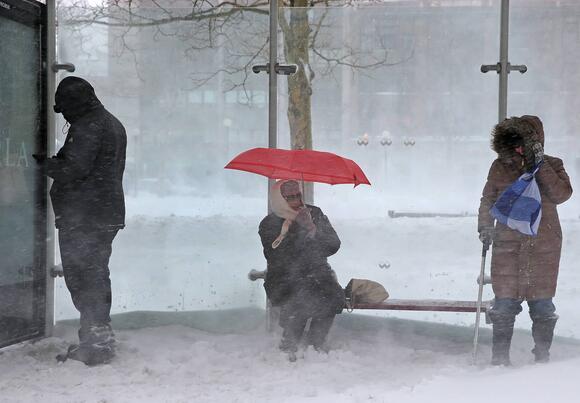
In New England, “wicked” commonly means very, extremely or to an exceptional degree. It’s used as an intensifier, which means it strengthens the meaning of another word rather than describing something as evil or morally wrong.
Merriam-Webster lists the adverbial meaning of the word as “very” or “extremely,” with “wicked fast” as an example. Its adjective entry also includes the meaning “of exceptional quality or degree.”
The regional usage is especially associated with Eastern New England, including Massachusetts, Maine and Rhode Island. Linguists at the Yale Grammatical Diversity Project identify it as a characteristic feature of New England English, noting that the expression is particularly recognizable in the eastern part of the region.
In everyday conversation, “wicked” can take the place of words such as “really,” “very” and “incredibly.” Someone might describe a restaurant as wicked good, a winter morning as wicked cold or a difficult exam as wicked hard. The word adds emphasis without changing the basic meaning of the adjective that follows it.
Related: What Does ‘Hissy Fit’ Mean? The Origin of This Colorful Expression
How Did ‘Wicked’ Come To Mean ‘Very’?
The word “wicked” has been around for centuries, originally referring to something morally wrong or evil. Its association with witches, villains and wrongdoing is familiar from literature, including William Shakespeare‘s Macbeth, which features the famous line, “Something wicked this way comes.”
But the use of “wicked” as an intensifier has a separate history. Merriam-Webster explains that although a few examples of this construction date back to earlier centuries, its widespread emergence as an adverb is largely a late-20th-century development.
The intensifying meaning of “wicked” may have grown naturally out of the word’s negative associations, according to Merriam-Webster. For example, describing something as wicked fast could suggest that it was moving at an almost unbelievable speed, as though something supernatural were involved. Merriam-Webster also points to older English expressions such as “awful” and “terrible,” which similarly developed uses as intensifiers.
Today, the word remains a recognizable marker of New England identity, particularly in popular portrayals of Boston. One famous example comes from the 1997 film Good Will Hunting, in which Casey Affleck‘s character describes Matt Damon‘s Will Hunting by saying, “My boy’s wicked smart.”
Related: Why Do People Say ‘What in Tarnation?’ The Story Behind the Classic Old-School Phrase
How To Use ‘Wicked’ in a Sentence
If you want to use “wicked” the way many New Englanders do, the easiest approach is to put it before an adjective to give that description extra emphasis. It generally works much like “very” or “really.”
Here are a few examples:
- “That restaurant was wicked good.” The food was exceptionally good.
- “It’s wicked cold outside.” It’s extremely cold.
- “She’s wicked smart.” She’s very intelligent.
- “That was a wicked hard test.” The test was extremely difficult.
- “I’m wicked excited for the weekend.” I’m really looking forward to it.
- “He drives wicked fast.” He drives extremely fast.
One thing to keep in mind: In the characteristic New England construction, “wicked” modifies another word rather than standing alone as a synonym for “great.” Saying, “That was wicked good” is a familiar regional expression. Simply saying “That was wicked” to mean something was fantastic is a different use and may not sound authentic to speakers who use the traditional New England intensifier.
Related: What Does ‘Bless Your Heart’ Really Mean in the South?
What Does ‘Wicked Smaht’ in Boston Mean?
“Wicked smaht” is a playful, phonetic spelling of “wicked smart,” a phrase associated with the Boston accent. It means very intelligent or extremely smart. In this expression, “wicked” works as an intensifier, while “smaht” represents the way some Boston speakers pronounce “smart.” WBUR’s guide to the Boston accent explains that the accent is known for dropping the “r” sound after a vowel.
The expression became especially recognizable outside New England through the 1997 film Good Will Hunting, in which a character famously says, “My boy’s wicked smaht.”
Related: What Does ‘Yonder’ Actually Mean? Here’s Why This Word Has Stuck Around
Do Bostonians Still Say ‘Wicked’?
Yes. “Wicked” remains a recognizable part of everyday New England speech, particularly around Boston. A 2024 article from Boston.com describes the word as a familiar feature of Greater Boston, while a 2023 guide from WBUR still lists it among common local expressions.
What Is the Boston Accent Called?
It’s generally known simply as the Boston accent. In linguistic research, it’s called Eastern New England English, one of the two traditional subdialects of New England English. Sabriya Fisher, an associate professor of cognitive and linguistic sciences at Wellesley College, has identified Boston as the “hub” of this dialect.
The best-known feature of the traditional Boston accent is non-rhoticity, meaning speakers often don’t pronounce the letter “r” after a vowel. That’s how “park the car” becomes the familiar “pahk the cah.” Other characteristic features include distinctive vowel sounds, such as the broad “a” in words like “bath.” These pronunciation patterns are more common in Eastern New England than in the western part of the region, according Fisher.
Related: Why Do We Say ‘Ghosting’? The Surprising History Behind Dating’s Cutest (And Worst) Term
This article was drafted with the assistance of AI and thoroughly reviewed, edited and fact-checked by Parade editors. See our complete AI Policy.
 Add to Preferred Sources

