undefined
Posts
undefined
Followers
Could a broken neck bone decide the Sandra Birchmore murder trial?
By Safia Samee Ali,
11 days ago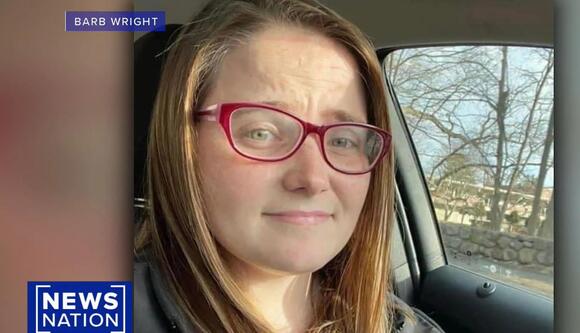
Editor’s Note: This article contains discussions of suicide. Reader discretion is advised. If you or someone you know is struggling with thoughts of suicide, you can find resources in your area on the National Crisis Line website or by calling 988.
(NewsNation) — A tiny fractured bone in Sandra Birchmore's neck could play a key role as jurors prepare to decide whether former Massachusetts police officer Matthew Farwell murdered her or she died by suicide.
Federal prosecutors allege Farwell strangled Birchmore and staged her death to look like a suicide to prevent her from exposing their relationship.
Grooming: ‘The grayest’ gray area the Sandra Birchmore case exposesFarwell has pleaded not guilty, and his defense maintains Birchmore died by suicide.
A crucial point of contention at trial was conflicting medical testimony regarding Birchmore's fractured hyoid bone, a small U-shaped bone in the neck that helps with speaking and swallowing.
Is broken neck bone from homicide or suicide?
William Smock, surgeon and forensic medicine program director with Louisville Metro Police Department, told jurors that the bone fracture was evidence of strangulation.
Smock said the bone is extremely difficult to break in someone as young as Birchmore, who was 23 at the time of her death, because her body was found partially seated, suspended by a strap attached to a doorknob.
He also pointed to Birchmore's hair tangled in the strap, a broken necklace and possible defensive injuries as evidence supporting homicide.
The defense challenged that conclusion, arguing that hyoid fractures can also occur during suicidal hangings.
Forensic pathologist Thomas Andrew testified for the defense, telling jurors Birchmore's death was "absolutely not" a homicide and that the physical evidence was consistent with hanging.
Sandra Birchmore trial could expose wider police misconductThe defense also called forensic anthropologist Heather Garvin, who testified that the fractured hyoid bone alone was insufficient to determine whether Birchmore died by suicide or strangulation.
“There is nothing to indicate one mechanism or another, we cannot say,” she testified, reported The Boston Globe.
“There are too many variables to predict if and how a hyoid would fracture.”
But during cross examination, prosecutors pressed Garvin to identify a study documenting a fractured hyoid bone in someone under 30 who died by partially suspended hanging.
"I couldn't identify any,” she answered.
State medical examiner Maria Capó Martínez, who performed Birchmore's autopsy, also testified that she had never encountered a fractured hyoid bone in someone under 30 who died in a partially suspended hanging.
Sandra Birchmore's death initially ruled a suicide, but later changed
Capó Martínez initially ruled Birchmore's death a suicide, but later changed the manner of death to "undetermined" after receiving additional information from federal investigators.
Sandra Birchmore trial could expose wider police misconductShe told jurors that when she conducted the original autopsy, she was not aware that investigators considered Birchmore's death suspicious.
"I was not asked to consider whether this was a homicide,” she testified.
Prosecutors allege Farwell began grooming Birchmore after meeting her through a police youth program when she was 13 and began sexually abusing her when she was 15 and he was 27.
Federal authorities took over the investigation and charged Farwell in 2024. Federal prosecutors have criticized the original investigation, alleging state police investigators prematurely concluded Birchmore died by suicide and failed to adequately investigate Farwell.
Copyright 2026 Nexstar Media, Inc. All rights reserved. This material may not be published, broadcast, rewritten, or redistributed.For the latest news, weather, sports, and streaming video, head to NewsNation.
 Add to Preferred Sources