undefined
Posts
undefined
Followers
Surgeon catches cancer from patient in 'first-ever' case with experts shocked
By Zahra Khaliq & John O'sullivan,
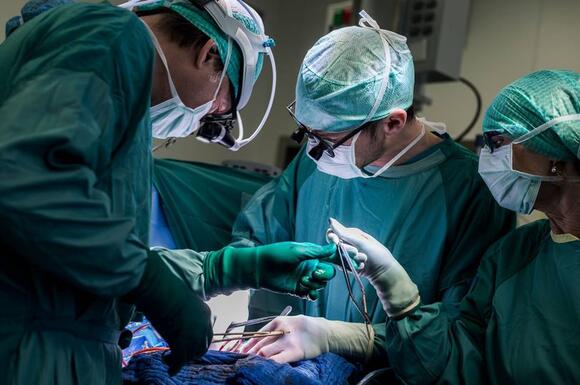
2025-01-04In a shocking turn of events, a surgeon operating on a cancer patient managed to contract the deadly disease in what is believed to be an unprecedented case. The doctor was performing surgery on a 32-year-old German man suffering from a rare type of cancer when he accidentally "transplanted" the disease into himself.
This occurred when cells from the patient's tumor seeped into a cut on the surgeon's hand. Despite immediate disinfection and bandaging, the 53-year-old medic noticed a hard lump developing at the base of his middle finger five months later.
A hand specialist identified the lump as a malignant tumor genetically identical to cancer suffered by his former patient. Doctors treating him concluded that he had contracted cancer when his patient's tumor cells seeped into the cut.
- Doctor says people need to stop eating popular breakfast food as it's 'wreaking havoc'
- Simple skill could help reduce your risk of developing dementia, experts say
The situation was deemed unusual by the authors of the case report because the body typically rejects any foreign tissue during a traditional transplant, and the same would have been expected in the doctor's case. They concluded that the surgeon's body had an "ineffective antitumor immune response" based on the tumor's development and growth.
The remarkable case, highlighted in The New England Journal of Medicine, emerged from an event in 1996 but has attracted fresh attention. Doctors recorded the "accidental transplantation" of the patient's malignant fibrous histiocytoma - an incredibly rare cancer with only 1,400 cases a year, reports the Mirror .
Although the original surgery for the patient was effective, he succumbed to complications. Later, when the physician who performed the surgery developed the same cancer, it sparked intrigue.
Upon examining both cancerous tissues under microscopic review, they were found to be "identical", sharing the same cell types and structure. As stated by the doctors: "Normally, transplantation of allogeneic tissue from one person to another induces an immune response that leads to the rejection of the transplanted tissue. In the case of the surgeon, an intense inflammatory reaction developed in the tissue surrounding the tumor, but the tumor mass increased, suggesting an ineffective antitumor immune response."
They suggested that the tumor had mechanisms to avoid being destroyed by the surgeon's immune system.
Despite successful tumor removal, the surgeon showed no further signs of cancer afterward.
For the latest local news and features on Irish America, visit our homepage here .
 Add to Preferred Sources


