undefined
Posts
undefined
Followers
Ponderosa Pine vs. Bunya Pine Tree: 7 Differences Between These Towering Giants
By Samara Abramson,
2023-11-23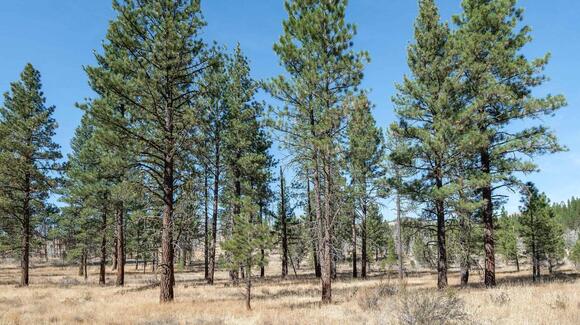
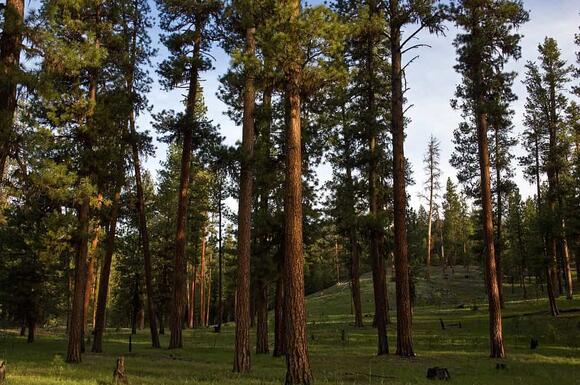
There are several differences between the ponderosa pine tree and the bunya pine tree.
©photogal/Shutterstock.com
There are over 100 different species of pine trees around the world. In many cases, it is difficult to differentiate between them. These species of trees exist all over the world in various regions and climates. When you know their wide range of characteristics, you can start to tell them apart. Let’s look at the seven differences between the ponderosa pine tree and the bunya pine tree.
Comparing Ponderosa Pine vs. Bunya Pine Tree
| Ponderosa Pine | Bunya Pine | |
|---|---|---|
| Scientific Name | Pinus ponderosa | Araucaria bidwillii |
| Needle Description | Bundled in groups of three, measuring five to 10 inches long | Spiral, needle-like leaves measuring up to 10 inches long |
| Cone Description | Egg-shaped cone 3-5 inches long with straight pointed prickles | Large and heavy, weighing up to 40 pounds and measuring up to 12 inches in diameter |
| Bark Description | Thick, brownish orange. Large, blocky fissures split into plates | Thick and flaky, with dark brown or black coloring |
| Conservation Status | Least concern | Least concern |
| Size | Up to 130 feet tall, spread of 30 feet | Up to 100 feet tall, heavy cones |
| Odor | Smells like butterscotch or vanilla | Smells like a Christmas tree |
| Shape | Oblong and open-crowned | Dome-shaped |
| Wood | Hard, dense yellow wood | Cream-colored wood |
| Uses | Medicine, food, and timber | Food and timber |
Ponderosa Pine vs. Bunya Pine Tree: Geographic Distribution
One of the major differences between the ponderosa pine tree and the bunya pine tree is geographic distribution.
The ponderosa pine tree is also known as the yellow pine tree. It is one of the most widely distributed trees in the western United States. Ponderosa pine trees are found across North America from British Columbia to Mexico. This tree adapts well to diverse ecological conditions and thrives in various habitats. It is commonly thought of as a “mountain tree,” but it enjoys living in both lower elevations and subalpine zones. Its adaptability has contributed to its prevalence in landscapes like the Rocky Mountains or the Pacific Northwest.
The bunya pine tree , on the other hand, has a much more limited geographic distribution. It is indigenous to eastern parts of Australia, particularly in Queensland. Its natural habitat is a subtropical rainforest and nearby areas. However, due to the unique appearance and value of its seeds, its saplings are sold as houseplants in many areas. It has been bred in many parts of the world.
Ponderosa Pine vs. Bunya Pine Tree: Size
Another big difference between the ponderosa pine tree and the bunya pine tree is its size.
The ponderosa pine tree is a large tree that can grow to impressive heights, up to 130 feet tall. Also, their root system is wide-spreading, up to 150 feet, allowing it to grow in drier parts of the west. This tree typically features a wide and open cylindrical crown. The size and shape of a ponderosa pine tree make it a dominant iconic species in many North American forests.
The bunya pine tree is a large tree, too, growing to heights of up to 100 feet. Its size, however, is more constrained when compared to the ponderosa pine tree. It is known for its branches’ symmetrical structure, dome-shaped leafy crown, and thick bark. Perhaps most obviously, the bunya pine tree is known for its heavy cones that can weigh up to 40 pounds. The size and shape of a bunya pine tree contribute to its aesthetically appealing appearance. That is why this tree is often planted for ornamental purposes, in addition to its cultural and ecological significance.
Ponderosa Pine vs. Bunya Pine Tree: Classification
The ponderosa pine tree is a member of the genus, Pinus, within the family, Pinaceae. Pinaceae is the pine family of conifers, consisting of about 220 species of trees native to northern temperate regions.
Meanwhile, the bunya pine tree is a member of the genus, Araucaria, within the family, Araucariaceae. Araucariaceae is a small family of coniferous trees. Most of the species in this family that used to live in the Northern Hemisphere vanished in the Cretaceous–Paleogene extinction event. Now, they are largely confined to the Southern Hemisphere.
Ponderosa Pine vs. Bunya Pine Tree: Needle Structure
You can easily tell the difference between the ponderosa pine tree and the bunya pine tree by looking at the trees’ needles.
The needles on a ponderosa pine tree are arranged in clusters of two or three. These are called fascicles. Each fascicle grows from a common point on a twig, giving the tree a distinctive appearance. The needles are long and delicate, measuring around five to 10 inches long. Although the needles are delicate, their flexibility allows them to withstand harsh weather conditions common in the tree’s native range.
Contrarily, the bunya pine tree has simple, needle-like leaves that are arranged in spirals around the branches. While the fascicles of a ponderosa pine tree are long and delicate, bunya pine tree needs are broad. Similarly, however, they can also reach lengths up to 10 inches. Their spirally arranged leaves contribute to the unique and aesthetically appealing crown of the tree.
Ponderosa Pine vs. Bunya Pine Tree: Cone Characteristics
You can also easily tell the difference between the ponderosa pine tree and the bunya pine tree by looking at the trees’ cones.
The cones of a ponderosa pine tree are long and cylindrical, measuring three to six inches long and two inches wide. They have sharp points on the ends of the scales. The cones have a brown color and scales that are armed with a small prickle. They are an essential feature of the tree’s reproductive cycle. Through a reproductive process called serotiny, the cones of a ponderosa pine tree stay closed until they are exposed to high temperatures, such as those generated by a wildfire. At that point, conditions make it so that the tree can release its seeds for germination.
Bunya pine tree cones are noticeably different and are arguably their most defining characteristic. The cones are large and heavy, weighing up to 40 pounds and measuring up to 12 inches in diameter! The cones have a rough surface. Unlike ponderosa pine tree cones, bunya pine tree cones release seeds when the cones naturally break apart on the tree. This process occurs after the cones have matured over several years. Then, the cones disintegrate and release the large seeds.
Ponderosa Pine vs. Bunya Pine Tree: Cone Reproduction
Diving deeper into cone reproduction, you can easily differentiate between the ponderosa pine tree and the bunya pine tree.
As mentioned above, the ponderosa pine tree’s reproductive process is called serotiny. The serotinous cones play a crucial role in the tree’s reproductive strategy. Serotiny is a type of seed release mechanism where the cones remain closed until specific environmental conditions, such as the heat generated by a wildfire, trigger them to open. This ensures that ponderosa pine tree seeds are released when the soil is nutrient-rich and competition with other vegetation is reduced.
Bunya pine trees reproduce much differently. Instead of relying on fire-triggered serotiny, bunya pine tree cones release large seeds when the cones naturally break off of the trees. This process occurs over an extended period of time, once the cones are mature, as detailed above. The seeds, once released, fall to the ground where they can germinate and grow into new bunya pine trees.
Ponderosa Pine vs. Bunya Pine Tree: Economic Importance and Purpose
The last of these seven differences between the ponderosa pine tree and the bunya pine tree is economic importance and purpose.
The ponderosa pine tree is an important tree species for wildlife. Birds, including wild turkeys (Meleagris gallopavo), nuthatches (Sitta), crossbills (Loxia), grosbeaks (Cardinalidae), and grouse (Tetraonini), eat ponderosa pine tree seeds. Squirrels (Sciuridae), chipmunks (Tamias), and mice (Mus musculus) also eat ponderosa pine tree seeds. Native Americans used the inner bark and seeds of the ponderosa pine tree as a food source. Native peoples also used the trees for medicine, dye, fiber, and firewood. Ponderosa pine trees hold significant economic importance because of their versatile wood. The timber from these trees is used in various industries including construction, furniture manufacturing, and paper production. The straight trunk and relatively large size of ponderosa pine trees make them valuable for producing long, straight boards. The wood from ponderosa pine trees is known for its strength and dimensional stability.
Bunya pine trees are primarily known for their edible seeds rather than for their timber. They are sacred trees for indigenous Australians, providing food and timber. The bunya pine tree produces large, edible seeds that many people find delicious. Indigenous Australian communities have been harvesting them for generations. The seeds were a key food source for Aboriginal people, eaten both raw and cooked. The cream-colored wood from bunya pine trees is used for veneers, plywood, and boxes, but it is less economically significant than the timber from ponderosa pine trees.
Up Next:
- The 9 Most Likely Reasons Your Bermuda Grass Keeps Dying
- Discover the Top 13 Most Expensive Types of Wood
- 10 Incredible Trees Native to the Philippines
- Discover the Truth If These Amazing Trees Can Actually Walk… Yes, Walk!
The post Ponderosa Pine vs. Bunya Pine Tree: 7 Differences Between These Towering Giants appeared first on A-Z Animals .
 Add to Preferred Sources

